Alvin Zafra (b.1978, Philippines) creates distinctive works by etching and scratching found objects across the abrasive surface of sandpaper. The resulting marks become the work’s surface information, resonating with the object used in production. Over the years, Zafra has worked with an array of charged and symbolic materials including human and animal bones, steel, bullets, knives, stones, and glass; each contributing its own physical and conceptual weight to the final piece.
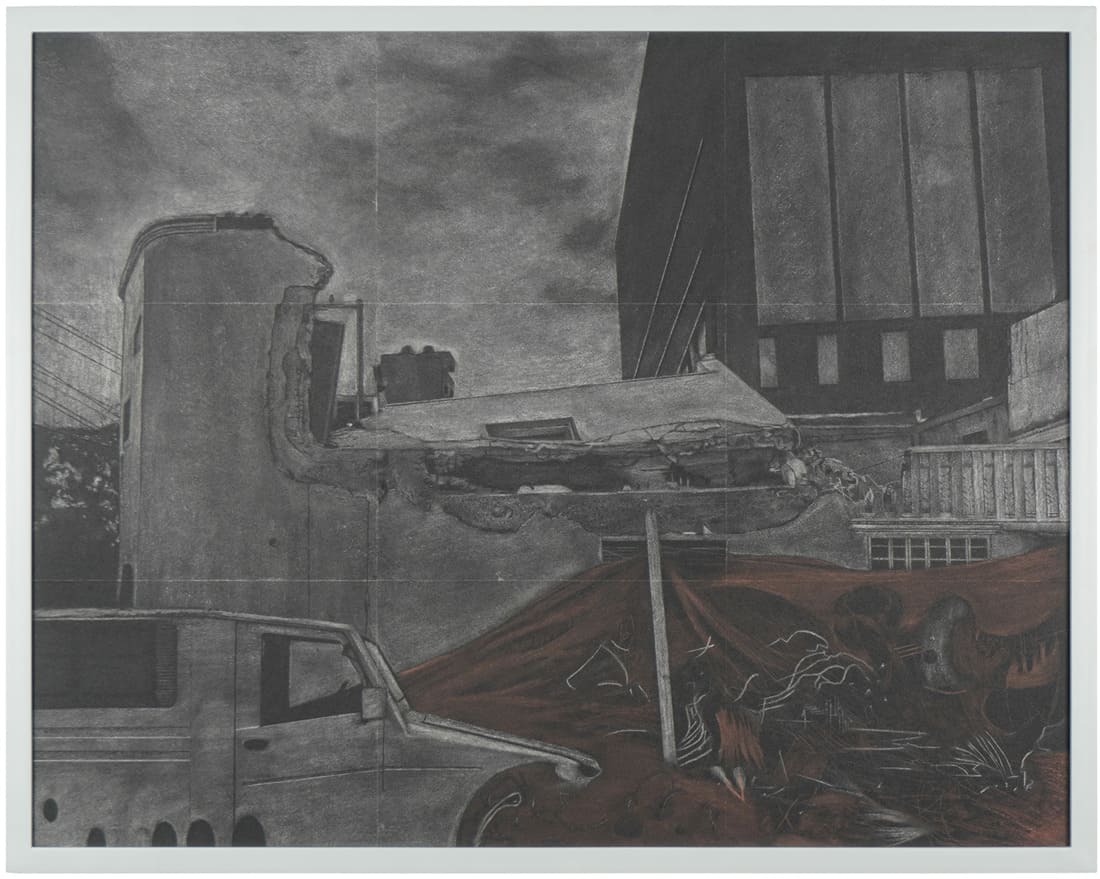
A Turn of Events is a rendering of a scene the artist photographed during explorations of his city. The image captures a house being demolished and built at the same time. The walls of the old house crumble while a new monolith rises. Below, a vehicle rests beside a tarpaulin. Modernism, photography, and psychogeography converge in one plane. Zafra etches this urban scene on black sandpaper using white and red pebbles selected to mirror the durable materials that shape the city. Using a technique he calls ‘Object/Medium’, the artist grinds the pebbles into the coarse sandpaper, using the resulting pigments to replace paint. The layers of powdered stone charge the final image with memory and possibility.
Alvin Zafra’s work has been exhibited at Phantasmapolis, Asian Art Biennial, Taiwan (2021); Art Basel Hong Kong, (2016); For An Image, Faster Than Light, Yinchuan Biennale, Yinchuan, (2016); Thirteen Artists Award Exhibit, Cultural Centre of the Philippines, Manila, (2015); Medicine and Art: Imagining A Future For Life and Love, Mori Art Museum, Tokyo, (2009). Zafra is represented by Artinformal.

ANUnaran Jargalsaikhan (b. 1987, Mongolia) is a contemporary multidisciplinary artist whose practice is deeply connected to nature. Based in Ulaanbaatar, she combines traditional techniques such as embroidery, sewing, and appliqué with photo-based works, using materials including fabric, pen, thread, acrylic, oil paint, and printmaking. Through a poetic exploration of the relationship between humans and nature, she deeply investigates the human inner self.
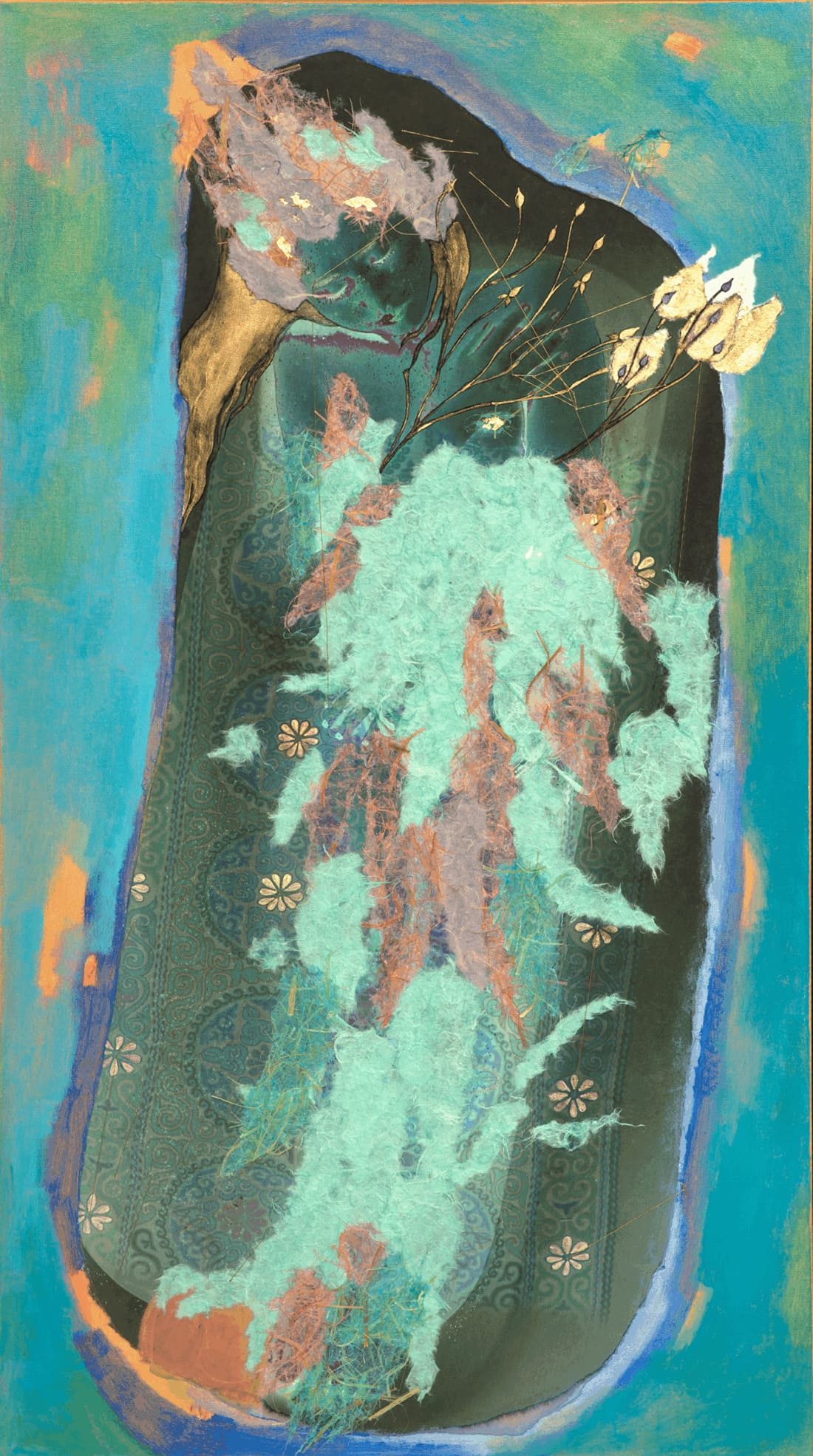
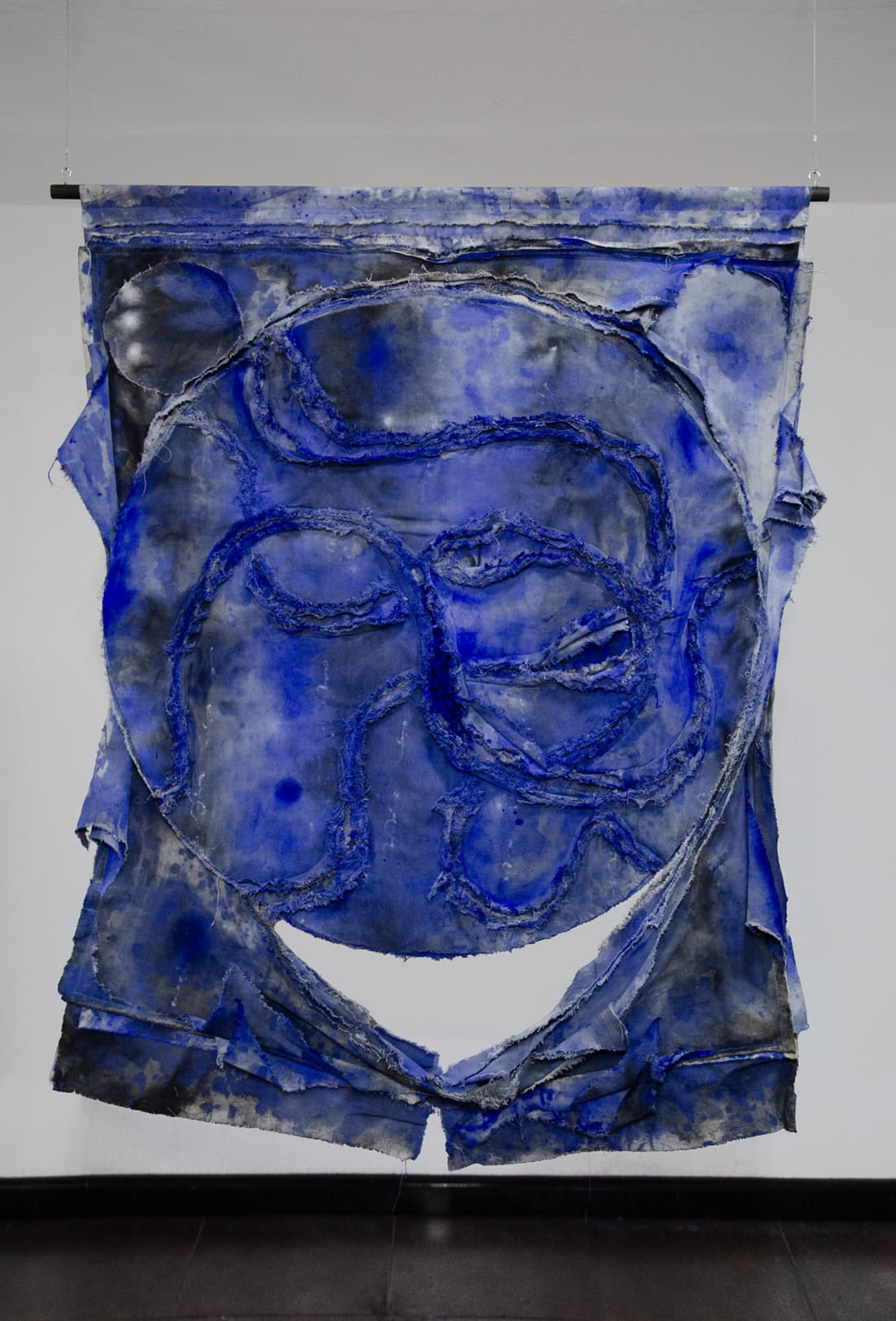
Crescendo of Inner Nature Series-5 explores what lies beneath the visible surface, revealing deeper layers of human experience. It presents a reclining woman with closed eyes inverted the compassionate, benevolent presence of Green Tara. This reflects the organic transformation of human consciousness, suggesting a transition toward a divine state. The work expresses the uniqueness of the human body and spirit, highlighting physical traces such as wrinkles, scars, and moles. Their metaphysical counterparts are depicted as star-like luminous points and symbolic marks connected by invisible spiritual lines, portraying the human body as a microcosm. These elements represent lived experiences, memories, and the soul’s silent testimony to our existence.
ANUnaran’s works have been exhibited at Art Basel Hong Kong 2025; Inner Nature-Return to Innocence, OpenArts Merge Space, Busan (2024); and 10 Chancery Lane Gallery, Hong Kong (2024). She is awarded the 2023 OpenArts Merge International Artist-in-Residency Award (Busan) and the 2025 SACO1.2 Biennale “Dark Ecosystems” (Antofagasta, Chile). She is represented by 10 Chancery Lane Gallery.

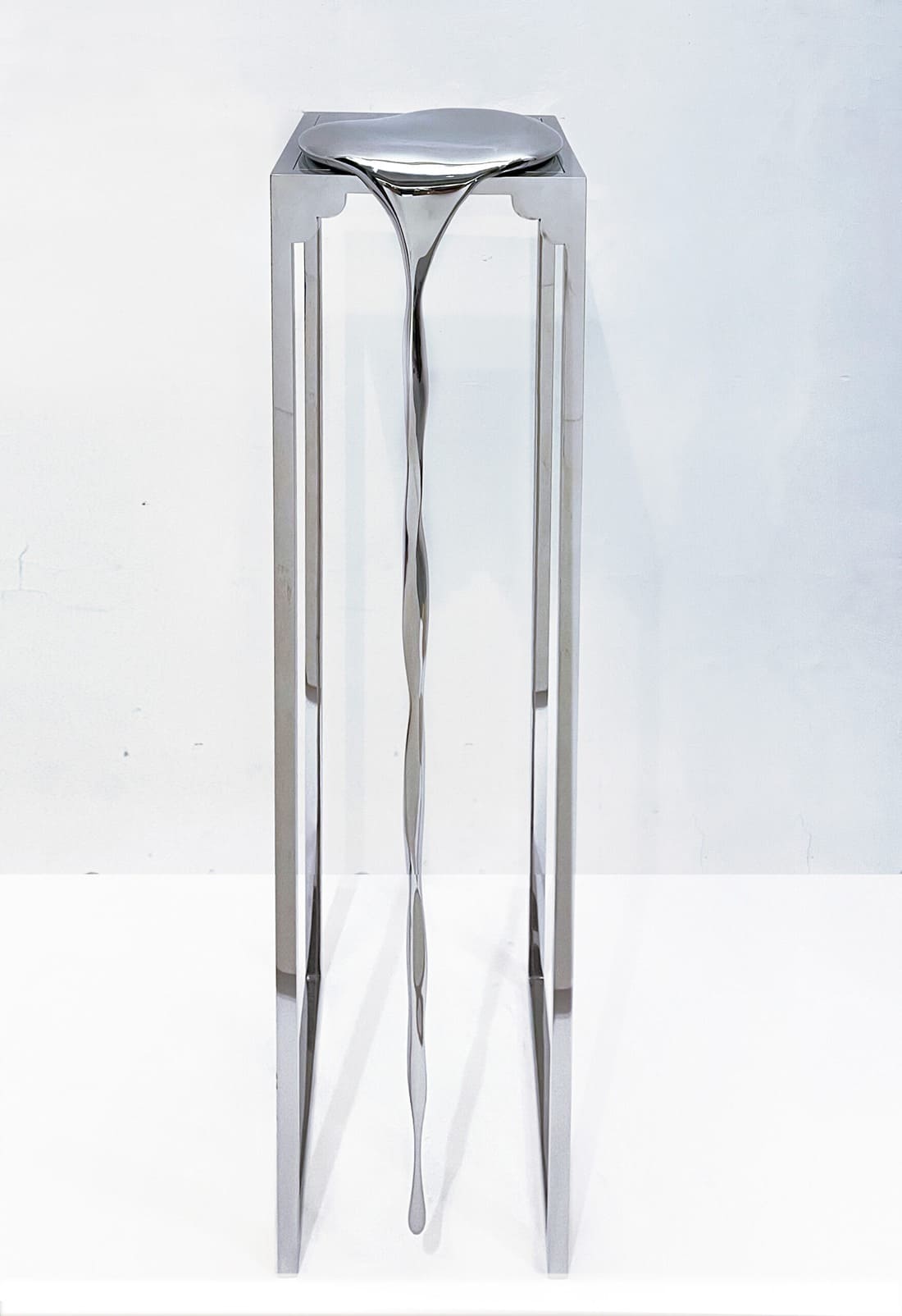
The sculptures of Chin-fai, Danny Lee (Hong Kong) explore the relationship between urban life and nature, blending steel with traditional Chinese aesthetics. His work can be seen as contemporary and three-dimensional interpretation of the language of ink art – an approach rooted in humble observation, where mountains are seen as mountains, and waters as waters, with a quiet and mindful gaze upon the world.
Mountain and Stream draws inspiration from the spirit of Chinese ink art, especially landscape paintings, and critically investigates the dualistic propositions between nature and the city. Lee’s stainless-steel forms, often with smooth and reflective finishes, invite the viewers’ interaction and reflection of their environment. In this work the pedestal, in the form of classical Chinese furniture, stands tall; from it, a single drop of water appears to flow, caught in midair, suggesting the suspension of time. The interplay between the hardness of metal and the fluidity of form, between the rational geometry of furniture and the allusion to landscape paintings, creates a compelling tension and contrast.
Lee’s works have been has exhibited in Fusion 2: sculpture symposium, Asia Society, Hong Kong (2023); Tradition Transformed, Alisan Fine Arts, Hong Kong (2022-23) and Landscape: Karma – Sculpture by Danny Lee-Chin Fai, Hong Kong City Hall, Hong Kong (2006). He represented Hong Kong at APEC Park, APEC Vietnam (2017) and received the Secretary for Home Affairs’ Commendation for making outstanding contributions to the development of arts and cultural activities in 2008. He is represented by Alisan Fine Arts.

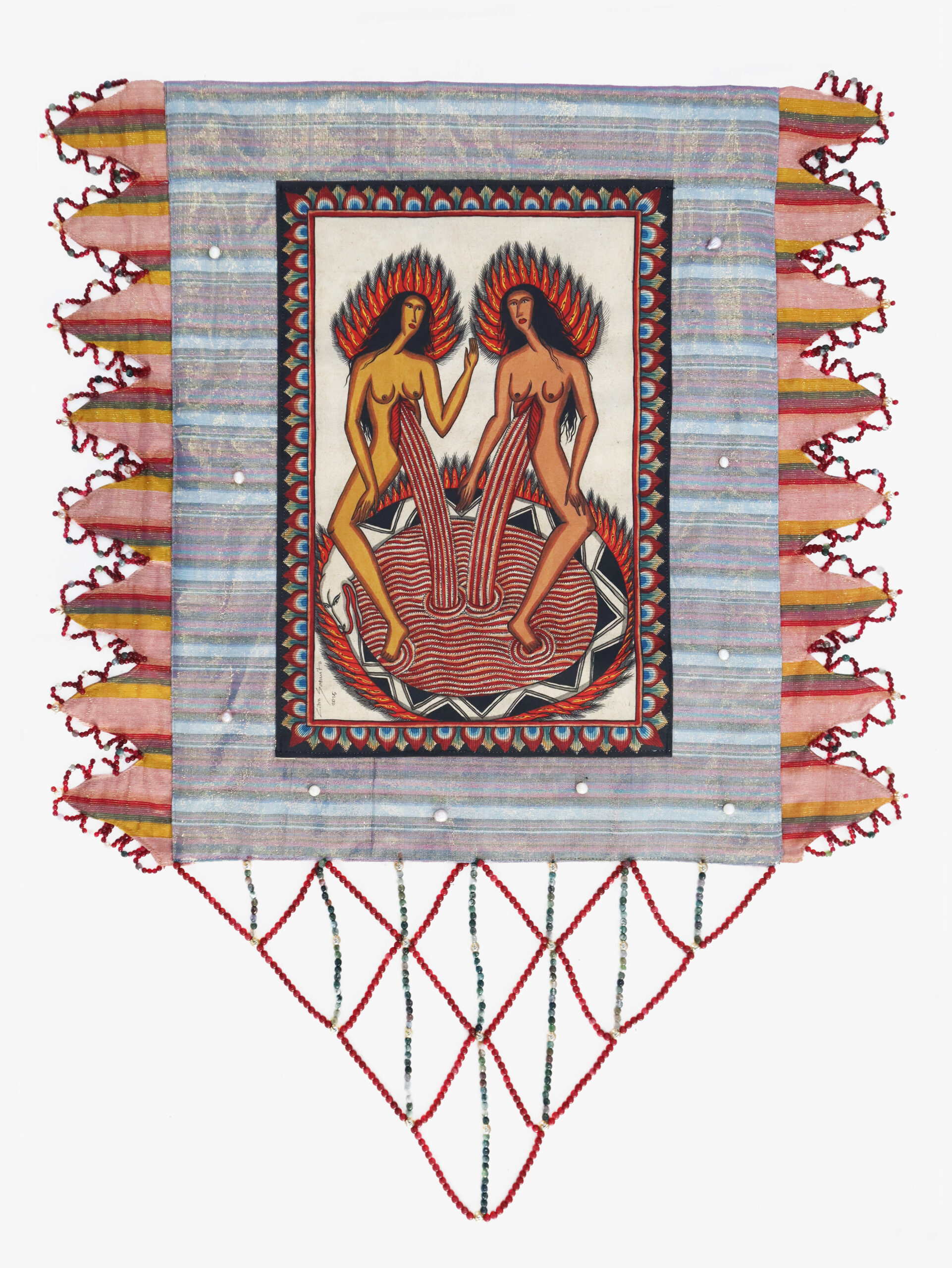
Citra Sasmita (b.1990, Indonesia) unravels the myths and misconceptions of Balinese art and culture, while shedding light on Dutch colonial history, which shaped notions of authenticity in Bali. She questions women’s roles in the social hierarchy and seeks to upend normative gender constructs by reimagining mythical and classical narratives of war and romance to exalt female resistance. Her work reflects the complexities between the Anthropocene and post-human, while simultaneously repositioning women within the historical canon -an action urgently needed in the Balinese environment.
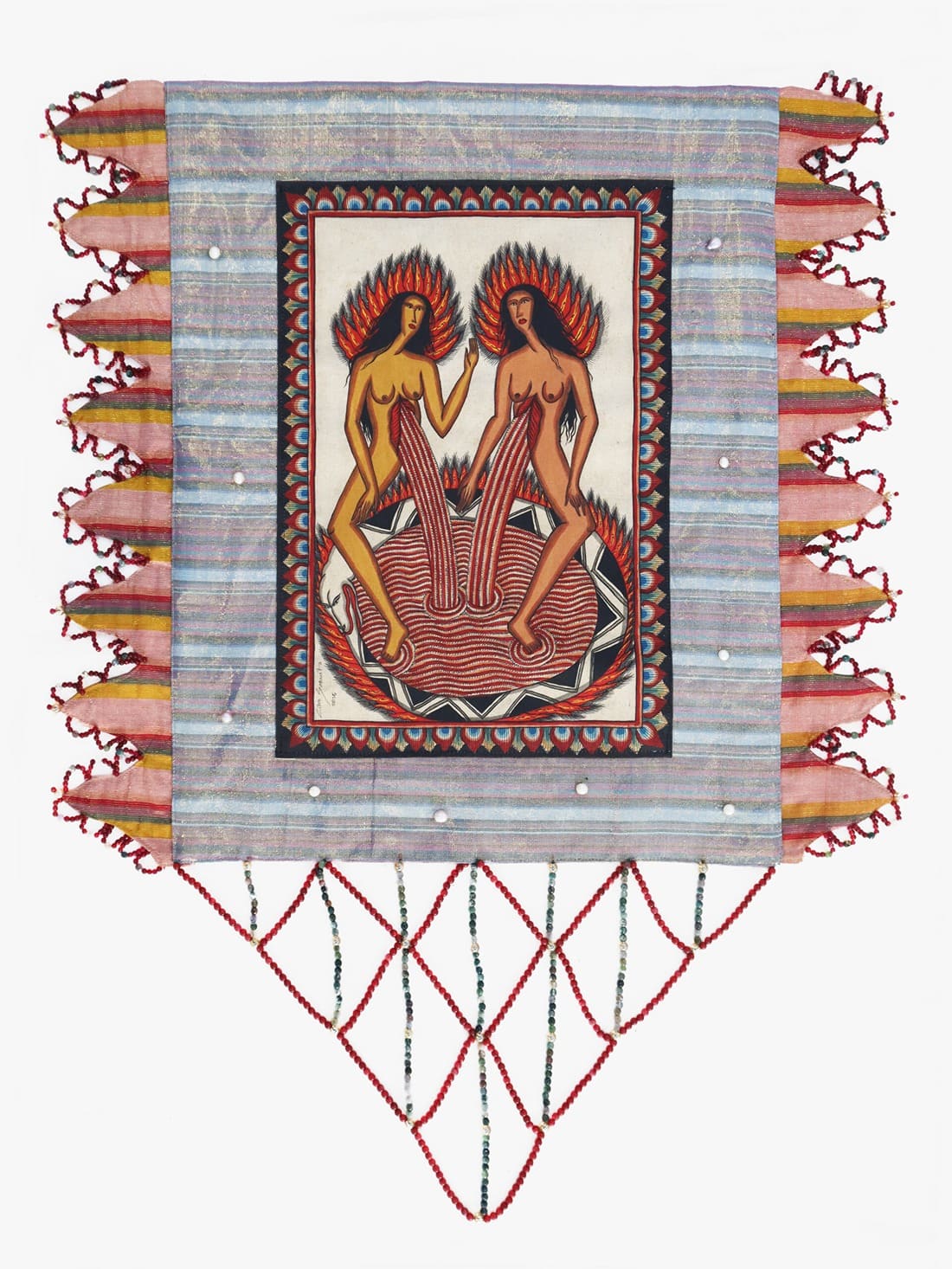
The world is perceived as a connected whole, with tall mountains, fast rivers, and large oceans. In Poetry of the Fountain, Earth-Mother represents goodness and abundance, portrayed as a nurturing figure who provides for humanity, ensuring a bountiful harvest from the land. The relationship between people and Earth-Mother is marked by worship and gratitude, manifesting in various sacred gatherings. These occasions serve as expressions of gratitude and opportunities to share knowledge on maintaining the balance between heaven and earth. Women play an integral role in this cultural narrative, acting as conduits between humanity and the natural world. They uphold and pass down wisdom through rituals and profound beliefs, making them custodians of tradition and guardians of earth’s equilibrium.
Sasmita’s works have been exhibited internationally at The 35th São Paulo Art Biennial, São Paulo, (2023); The Diriyah Biennale, Riyadh, (2024); Into Eternal Land, The Curve Gallery Barbican Center, London, (2025); The Sharjah Biennial, Sharjah, (2025) and Thresholds, White Cube, Hong Kong, (2025). Citra is represented by Yeo Workshop.

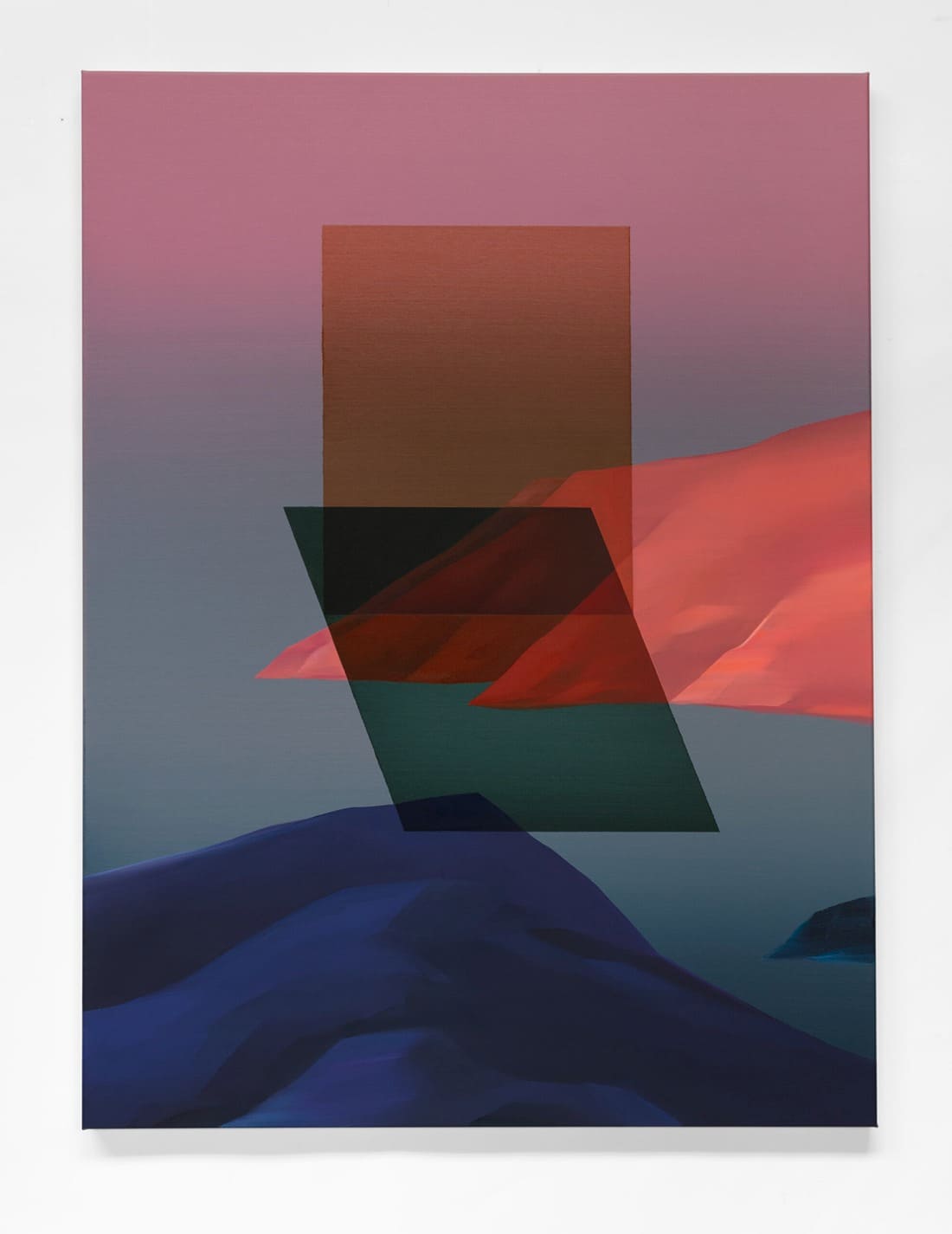
Based in Australia for the past two decades, Dapeng Liu (b.1982, China) approaches painting through a blend of Eastern and Western aesthetics. His practice is grounded in traditional Chinese landscape painting, where the depiction of nature becomes a reflection of inner states. He shifts between observation and abstraction, weaving together historical references with contemporary experience, including influences from colour field and hard-edge painting. His paintings offer moments of stillness – spaces where attention softens and reflection becomes possible.
Gentle Flame extends Liu’s exploration of landscape as a meeting point between perception, structure, and memory. The composition draws on the floating perspective of sandian toushi in classical Chinese painting, where the viewer’s gaze moves through multiple vantage points. Encouraging a slower, contemplative mode of looking, geometric planes intersect mountains and water, introducing a quiet architectural presence that hints at the man-made, while the surrounding terrain reflects natural rhythms. Rather than competing, these elements coexist in delicate balance. Gentle Flame suggests a subtle warmth that emerges where these layers meet – an inner glow marking a moment of stillness, when the landscape becomes both a place and a state of mind.
Dapeng Liu has exhibited in In Light We Dwell, Art Atrium 48, Sydney (2025); Sydney Contemporary (2023); and Art Central, Hong Kong (2021). His work was featured in Harper’s Bazaar Art China (2024), and he was a finalist in the Archibald Prize (2022, 2021, 2014). He was also a recipient of the Nock Art Foundation residency and exhibited at NockArt Gallery, Hong Kong (2015). Liu is represented by Art Atrium and Otomys.

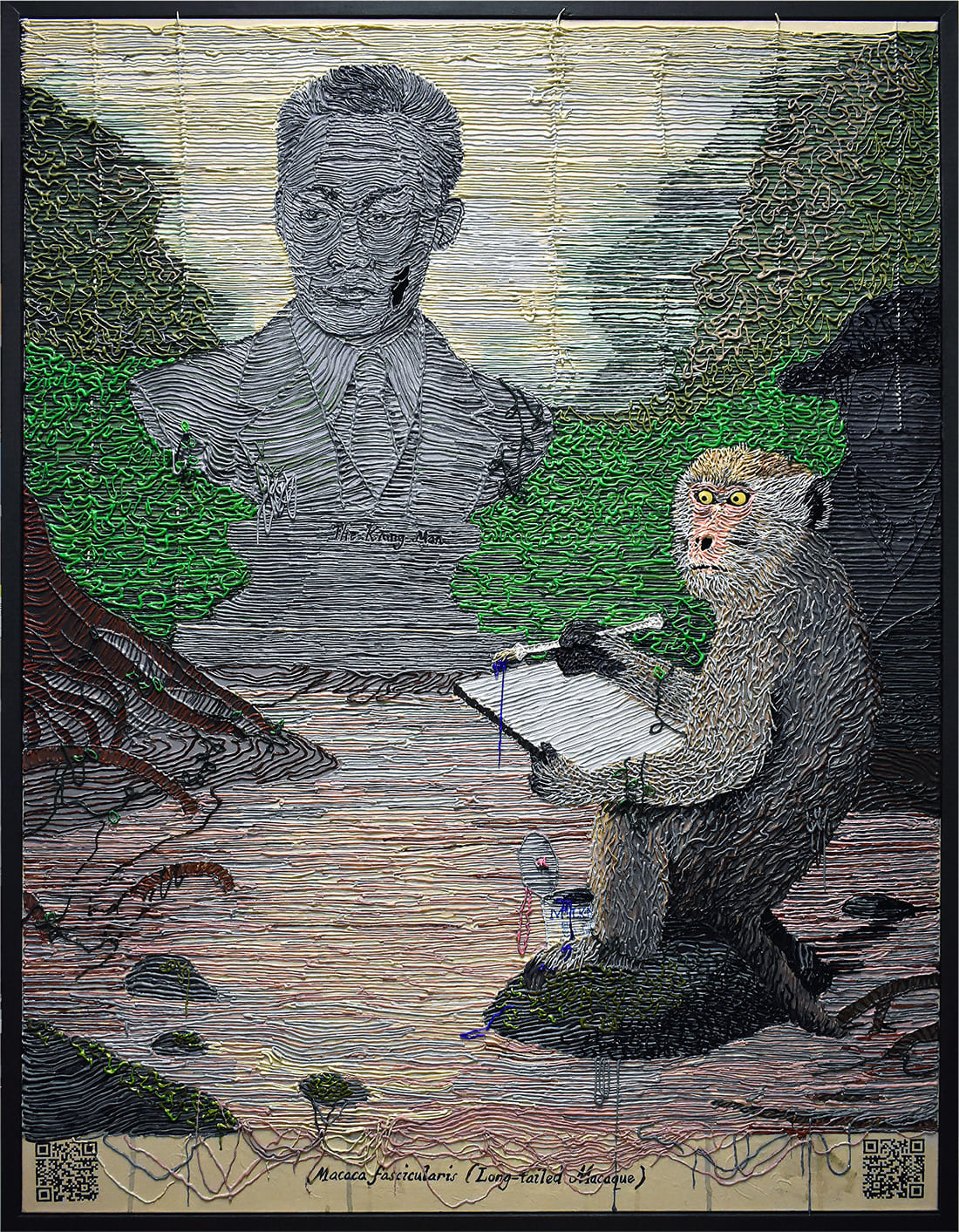
Desmond Mah’s (b.1974, Singapore) practice examines prevailing hierarchies, power structures, and social control. Mah, a Singaporean-Australian immigrant, uses the visual language of the European colonial past to examine power structures that are still essentially Eurocentric. He intervenes with painting, a visual form historically used to depict power. His thread-like lines regulate his ADHD attention while recalling textile work and his mother’s labour as a seamstress. This paint technique substitutes traditional brushstrokes, operating as both construction and deconstruction.
For Still Living Rent-Free, and now as an Australian citizen, Mah examines a psyche still shaped by Singaporean national authority. He recalls his primary school days of the national pledge recitation, a daily educational exercise across Singapore. Over time, the pledge becomes a tool of civic discipline, shaping collective identity and loyalty. This internalised conditioning is staged in a juxtaposed swamp/garden landscape: a long-tailed macaque attempts to sketch Lee Kuan Yew, Singapore’s first prime minister, as a bust titled The Kiang Man (Hokkien for “clever”, a survival trait). The mischievous and instinctive macaque, a proxy for Mah himself, hesitates drawing the bust. This hesitation denotes a moment of self-awareness and restraint, which Mah navigates the conflict between criticism and caution.
Mah has exhibited at ART SG, JW Projects, Singapore (2026); Life Rehearsals, Inside-Out Art Museum, Beijing (2025); Twisted Bodies Tell Their Tales, as part of the Indian Ocean Craft Triennial, Mossenson Galleries, Western Australia (2024). He won The Special Selection Award, E.SUN Bank Awards (2022) and The Southern Buoy Studio Portrait Prize (2021). Mossenson Galleries represent him and he collaborates with JW Projects.

Filippo Sciascia (b.1972, Italy) turns light into the primary artistic medium of his works, across painting, sculpture, video and installation. One of his most extensive bodies of work, Lux Lumina explores light and its relationship to the human condition; integrating reflections on futurity and the increasing entanglement of technology in life’s ongoing evolution.
TABLET (1) is shaped around light’s scientific and metaphorical aspects. Sciascia follows a cyclical evolution, strategically repurposing symbols from previous works, featuring paintings which inform each other spontaneously, His persistent focus on societal concepts informed by anthropology, underscores his belief in painting as an unfiltered medium—a direct translation from the brain to canvas, embodying his curiosity regarding the role of painting and the artist in contemporary times. Sciascia’s chromatic and textured pieces spotlight the interplay of light, human progress, and technology. By challenging the dichotomy between scientific reasoning and the metaphysical, he invites viewers to ponder the essence and meaning of representation through painting in our technological era.
Filipo Sciascia’s work has been shown at exhibitions across Southeast Asia, Europe, and America; including Primitive Learning, Banquet Gallery, Milan, (2025); ARTJOG 2025, Jogja National Museum, Yogyakarta; Primitive Learning, Nonfrasa Gallery, Bali, (2024); TABLET, Yeo Workshop, Singapore (2024) and Italian Artists Of The 2nd and 3rd Waves in Indonesia, Istituto Italiano Di Cultura Jakarta, Embassy Of Italy Jakarta and Museum Pasifika, Bali (2023). Sciascia is represented by YEO Workshop.

Two fundamental elements anchor the paintings of Guocheng Lin (b.1979, China): line and perspective. Influenced by both Eastern and Western masters, he creates intricate linear artworks that convey stories, emotions, and philosophies. His background in software design informs his emphasis on perspective, which bridges his digital practice and his art. Through depiction of nature, landscapes, and remnants of civilization,The relics that appear in his works become meditations on human struggle, revealing his ongoing inquiry into the tension between nature and human civilisation. Lin adopts an extremely slow creative approach in response to the rapid image generation of the AI-driven digital age.
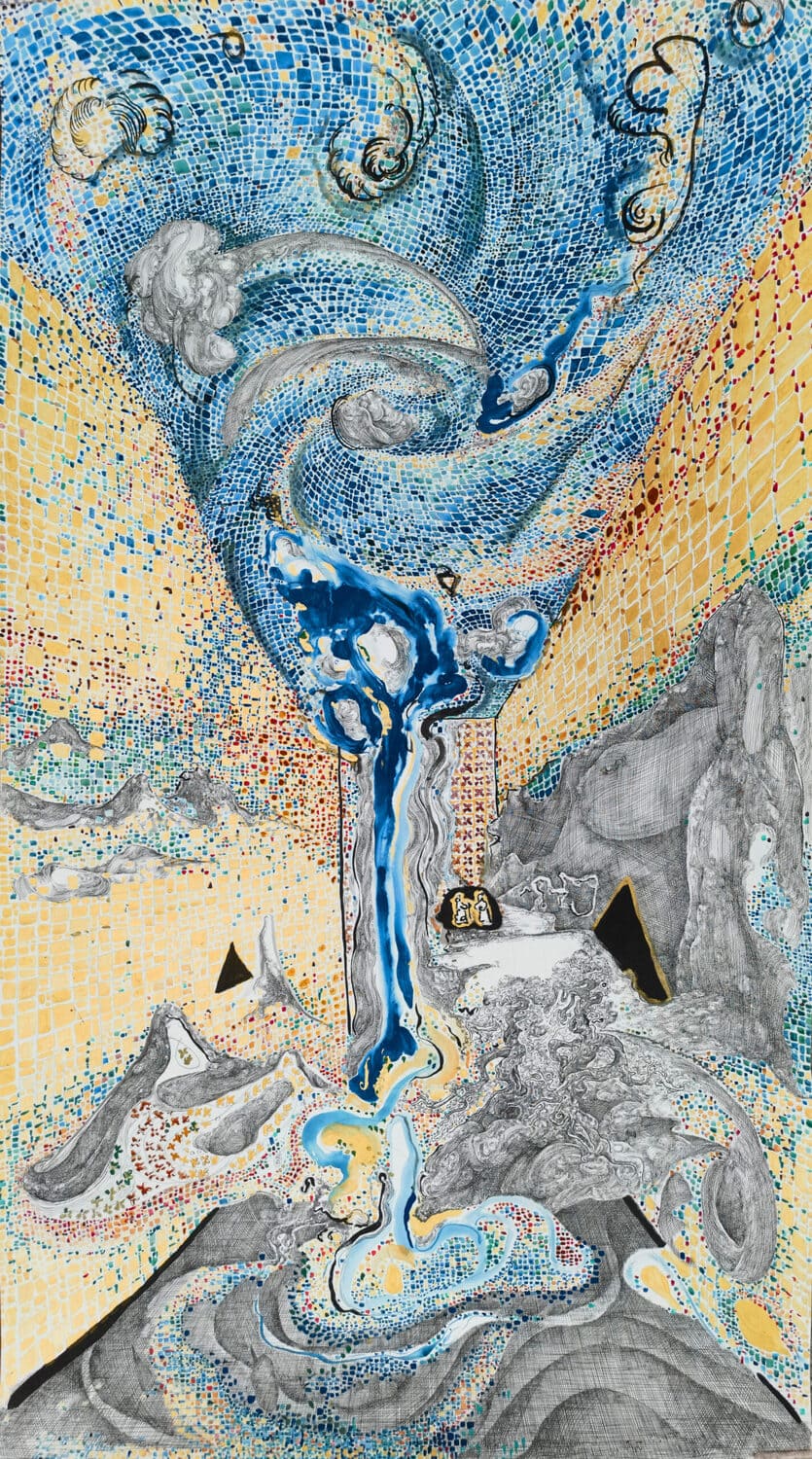
In the background of Digital and Landscape – Canopy, a box-like perspective forms but is gently disrupted by drifting clouds above. At the centre, a stream of blue brushstrokes cascade like water falling from the sky and flowing into the mountains below. On the edge of a cliff, two figures stand, facing one another in a quiet encounter. Behind them, a yellow ‘mosaic’ suggests pixels and the presence of the digital world. Within Lin’s complex universe, technology, nature, and the surreal are seamlessly interwoven together through fluid, expressive lines.
Lin’s work has been exhibited internationally at Metamorphosis: Chinese Imagination and Transformation, China Institute Gallery, New York, (2023); Lin Guocheng: A Dance of Landscapes and Civilisation, Alisan Fine Arts, Hong Kong,(2020); Galaxy of Ink, Guangdong Museum of Art, Guangzhou, (2019); The Tempting Lines, Southern University of Science and Technology Shenzhen, Shenzhen, (2019) and Between Emptiness, David Aaron Ancient Arts, London, (2015). He is represented by Alisan Fine Arts.

Harsha Durugadda (b.1989, India) works across sculpture and performance, exploring visual language through reflections on human behaviour. He has created numerous works that transform recorded sound into tangible, tactile sculpture using stone and glass. Many of his sculptures resist recognisable forms, inviting multiple interpretations as their meanings unfold over time. By asking viewers to peer inside his works, he encourages introspection, sensory engagement, and a reconsideration of perception.
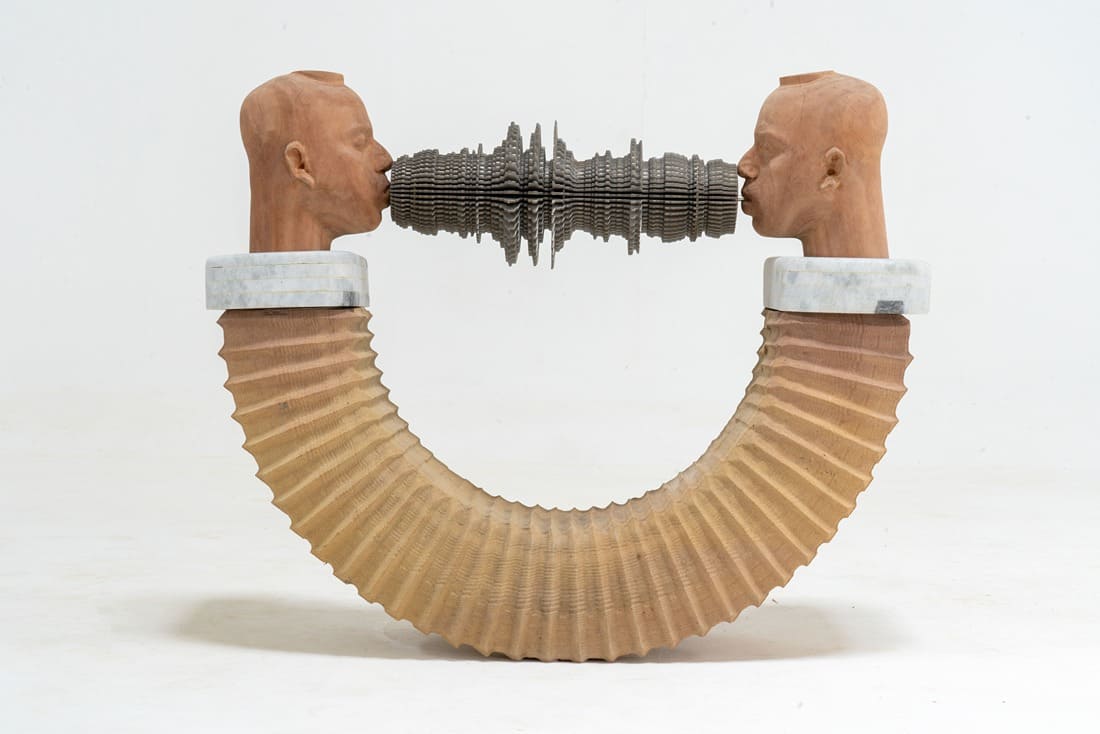
Meta Conversation examines the fate of our inner world when every thought or spoken word is instantly encoded and analysed as data. It is a physical attempt to capture the intimate, fleeting exchanges of the self. Two wooden self-portrait heads face one another, linked as one element by a steel spectrogram – a precise, objective translation of a full minute of the artist’s own voice – turning private acoustic energy into rigid, undeniable data. The inner conversation is reduced to its visible waveform and metadata. The U-shaped, fluted stone base with its alternating ridges and troughs are a deliberate metaphor alluding to binary code, signifying that the entire self-dialogue rests within a digital, encoded reality.
Harsha Durugadda’s work has been showcased internationally at India Art Fair, Geek Art, New Delhi (2025) and Boundless Space: The Possibilities of Burning Man, Sotheby’s and Burning Man Project, New York (2021). He is the winner of the Rio Tinto Sculpture Award in 2017; the Biafarin Award in 2018, and the TAF Emerging Artist Award in 2023. He is represented by Galerie Geek Art.

Huang-Sheng Su (b.1987, Taiwan) works traditional materials such as ink, mineral pigments, paper, silk, and gold leaf. Drawing from digital sketches, photography, Islamic miniature painting and Byzantine art, Su explores the intersections between contemporary image and traditional Asian narratives. His works employ fine brushwork, layered compositions, and the play of void and density to evoke shadowlike spatial rhythms.
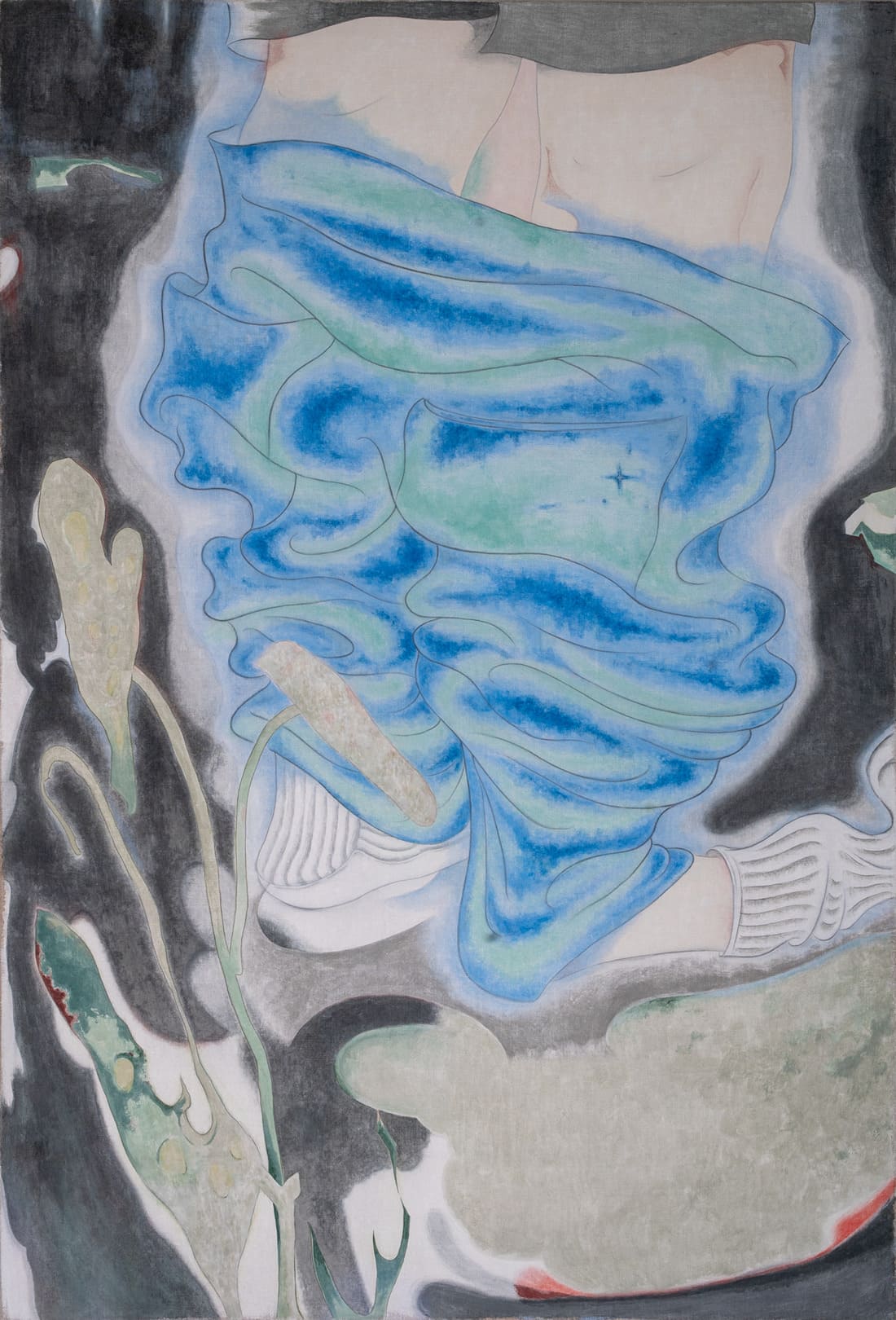
Trousers #2 depicts an ambiguous moment of either putting on or taking off a pair of trousers, exploring the relationship between the body and the folds of fabric. Up close, the layered blue-green forms resemble creases in cloth; from a distance, they evoke the porous structure of Taihu rocks. The fabric ripples like water yet solidifies like stone, placing the garment between figuration and abstraction, and between the body and the landscape. This suspended moment of half-undressing suggests a boundary between the intimate and the public. Like our own bodies, we move through the world never fully ‘dressed,’ continually adjusting our stance amid vulnerability, uncertainty, and the shifting currents of identity.
The work of Huang-Sheng Su has been exhibited in Too Loud a Solitude: A Century of Pathfinding for Eastern Gouache Painting in Taiwan, Taipei Fine Arts Museum, Taipei (2024); Art Basel Hong Kong (2023); Visual-Log, INKstudio, Beijing (2020); Memories Interwoven and Overlapped: Post-Martial Law Era Ink Painting in Taiwan, National Taiwan Museum of Fine Arts, Taichung (2017). Su was awarded a five-month Individual Fellowship granted by the Asian Cultural Council and completed the Residency program in New York, United States in 2019. Huang-Sheng Su is represented by INKstudio.

Ishita Chakraborty’s (b.1989, India) artistic practice focuses on how existential questions of human life morph into ecological ones, and on their symbiotic interrelation, through a diverse array of mediums including drawing, sculpture, installations, poetry, and sound. At the core lies an engagement with stories of resistance, survival, and belonging that often remain unheard. She seeks a language that encompasses the complexities of displacement, climate migration, and the traumas of colonialism, and that engages identity politics between the Global South and the North in post-migrant societies.
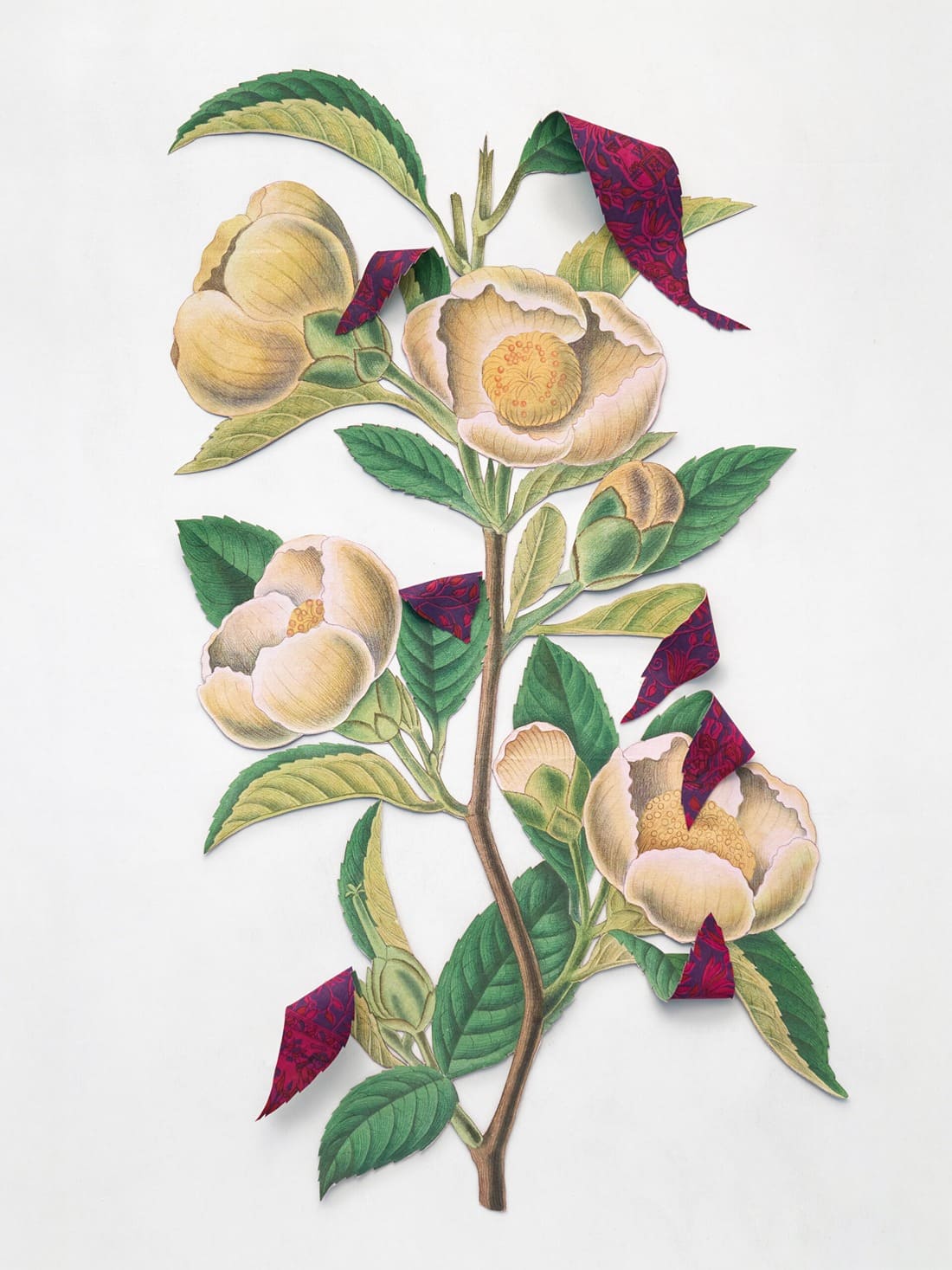
Where the Wild Things Roam, Tea reflects on the interplay of nature, culture, and gender through a postcolonial framework by foregrounding women’s roles in plantations and agriculture in the Global South. An archival scientific cutout of the tea plant pasted onto an Indian cotton saree fabric function as a visual conduit into the entangled histories of botanical and human migration. Deeply rooted in her Himalayan childhood, Chakraborty invites a reading of tea’s cultural significance in India and China in relation to its later commodification under extractive colonial plantation practices. Through an ecofeminist lens, she fuses scientific illustration with a Chappa saree that embraces brown bodies, its bold floral prints reclaiming the layered histories embedded within them.
Notable exhibitions include Manor Art Prize Solo exhibition, Aargauer Art Museum, Aarau; Frieze London, Galerie Peter Kilchmann (2025); Seeds and Souls, Kunsthalle Charlottenborg, Copenhagen (2024); Sleeping in the Bed of Salt, Gallery Espace, New Delhi (2023). Chakraborty was awarded The Visiting Artist Fellowship granted by the Harvard University in 2020. Chakraborty is currently represented by Gallery Espace and Galerie Peter Kilchmann.

Drawing on Buddhist traditions, Fahn (b.1973, Australia) seeks to create presence through ambiguity. His flow-state, gestural, non-representational floor drawings invite shifting interpretations that appear topographic, elevational, and portrait-like. These drawings evolve into relief paintings in collaboration with a 3D cutting machine, crafting complex artworks that invite misperception. As a former architect and inventor, Fahn has long worked with abstraction, flipping perspectives and scales within each drawing. He observes that contemporary visual culture – shaped by drone footage, microscopic imagery, and views of the cosmos – continually re-trains our way of seeing, producing what he describes as a “perspectival flip” Drawing on these influences, his work embraces ambiguity, inviting moments of unknowing alongside heightened states of presence.
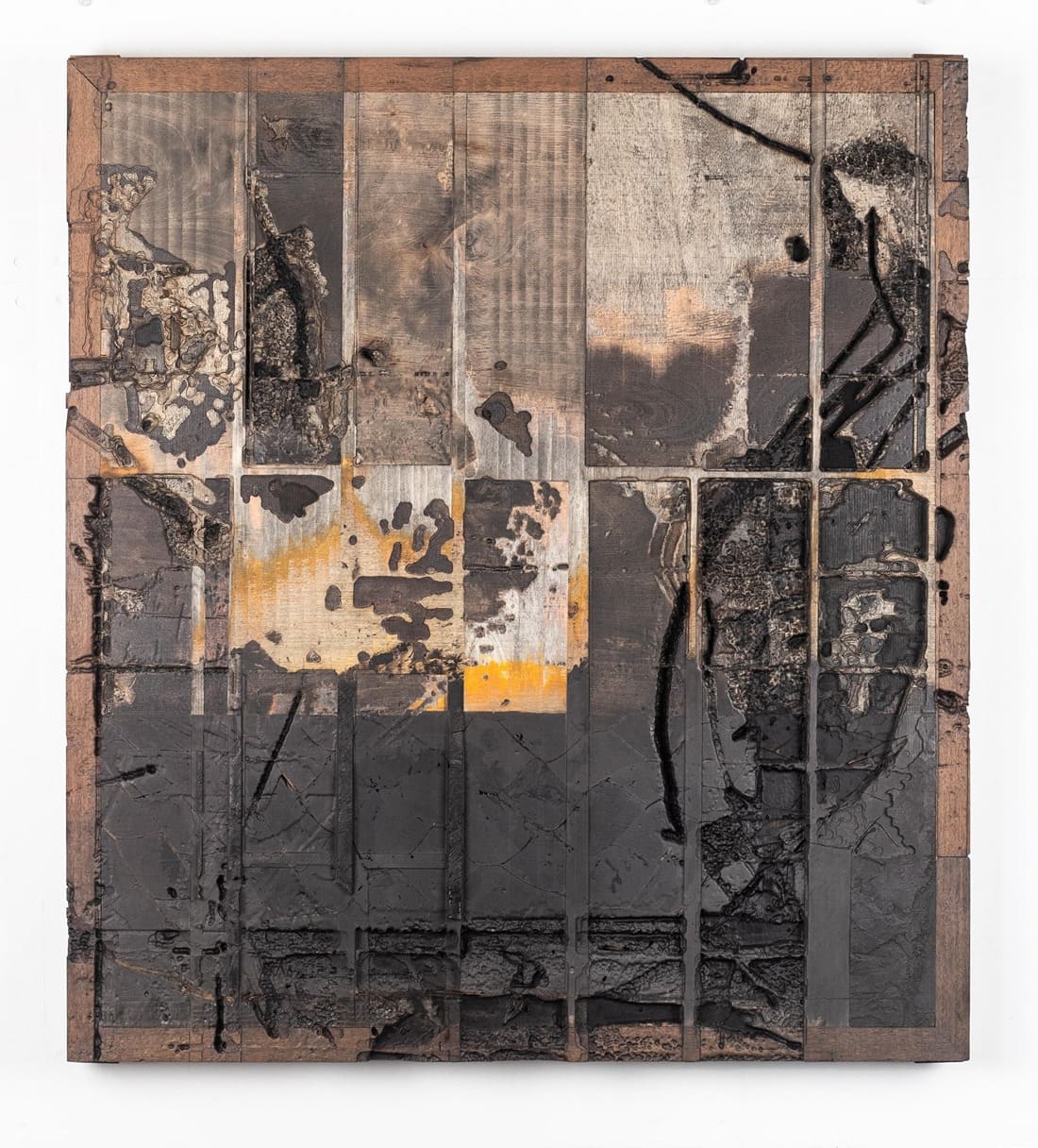
Presence Pr25-04 transforms humble, recovered materials, including a hollow-core door, pigmented resin, plywood and weathered hardwood, into a painting. The work was created in collaboration with timber craftsman Pablo Lomeli Angel, who built the frame using Japanese friction fit techniques. This frame was then further transformed by translating a floor drawing into the material through both hand and machine carving, a process that reveals the layered strata within the wood, abstracting drawing and material alike. Through a collaborative, process-driven approach, ordinary materials are honoured and transformed, allowing the work to emerge through acts of attention and presence.
Fahn has exhibited in Presence, Art Atrium 48, Sydney (2025); The 24th Japan International Art Exchange Exhibition, Tokyo Metropolitan Museum of Art, Tokyo (2025); Scape exhibition, Arthouse Gallery, Sydney (2019); Sculpture by the Sea, Bondi, Sydney (2018); Out of Hand-Materialising the Digital, Museum of Arts & Sciences (MAAS), Sydney (2016-17). He is currently represented by Art Artium.

Rooted in a haunting sense of nostalgia for lost or imagined civilisations, the work of JeeMin Kim (b.1993, South Korea) explores desires for ancient emotions that have never been directly experienced. Her practice unfolds within a stage-like constructions composed of interwoven forms drawn from diverse civilisations and ruins, where history appears fragmented and unsettled. Through these constructed environments, Kim questions the fictitious nostalgia shaped by Western archaeology and colonial modes of looking, revealing how longing for the past is produced and aestheticised.
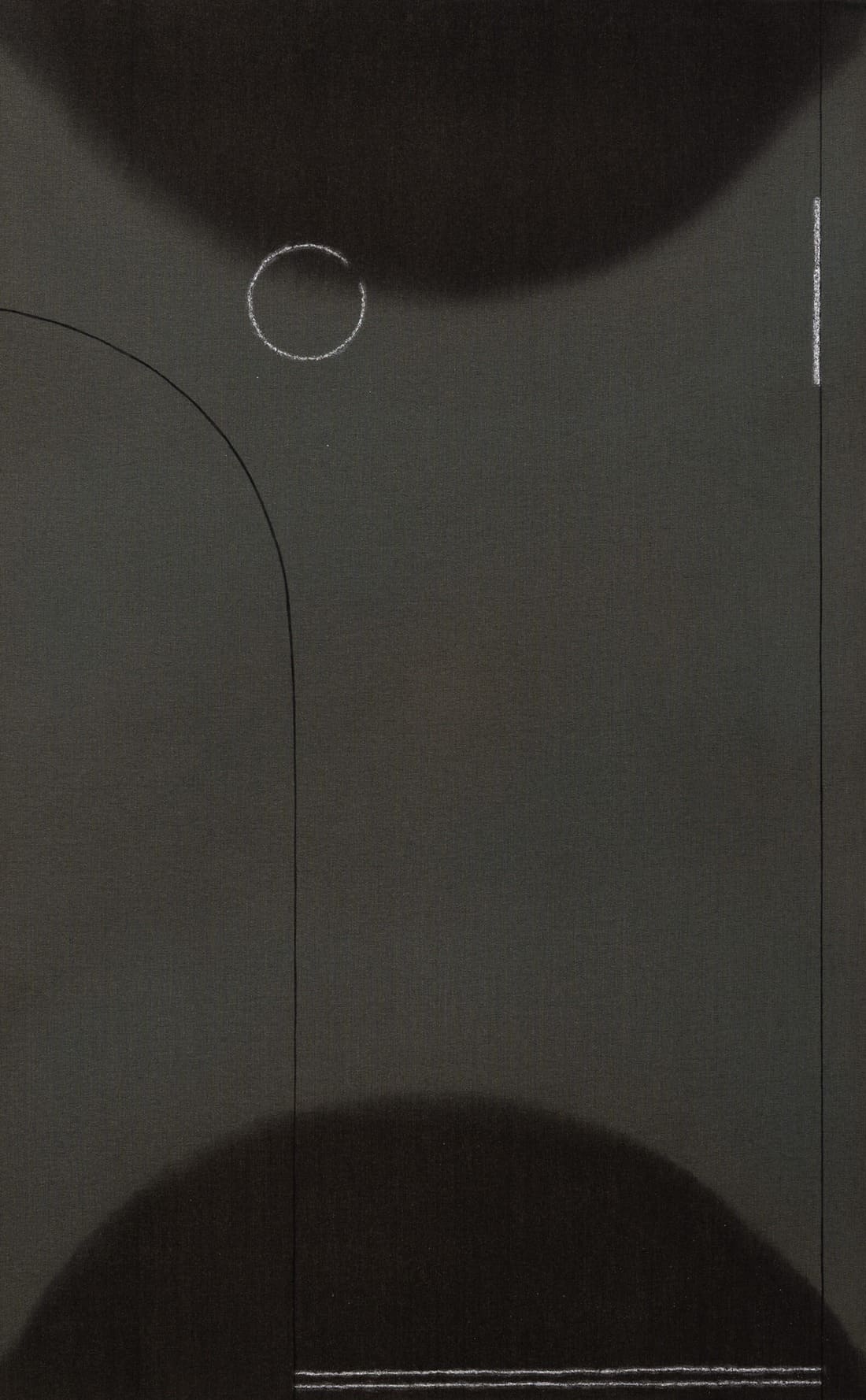
No. 124 presents a restrained visual field of muted tonal surfaces, shadowed arcs, and fine linear marks, creating an ambiguous composition that suggests absence and suspension. Part of her Prototype Temple series, the work draws upon classical references from multiple cultural contexts to reimagine nineteenth-century archaeology through a contemporary lens. Rather than offering reconstruction, Kim stages archaeology as a site of excavation and an act of longing. By tracing the uncertain forms and origins that drift between history, mythology, and archaeology, she reveals how memory, ruin, and desire become entangled across constructed and imagined geographies.
JeeMin Kim’s notable exhibitions include Displaced Nostalgia: Impermanence, Platform L, Seoul (2025); Displaced Nostalgia: Not So Personal, WMA Space, Hong Kong (2025); Bad Timekeepers, Toronto (2024) and TINC (This is Not a Church), Seoul (2024); Public Art New Hero (Winner’s exhibition), K&L Museum, Gwacheon (2023) and Nuclear Disarmament Declaration vol.1, (Outstanding Exhibition Grant by Arts Council Korea), Namsan Library, Seoul (2023). Kim is currently represented by Sahng-up Gallery.

JIAN’AN WU (b.1980, China) seeks to bridge the individual and the collective, the past and the present, the artificial and the natural. Experimenting across various medium including paper, wax, metal, cotton thread, leather, ink, feathers, and glass, he attempts to convey a sense of interconnectedness. His practice is not solely a material existence but a medium leading to the mysterious and the transcendent.
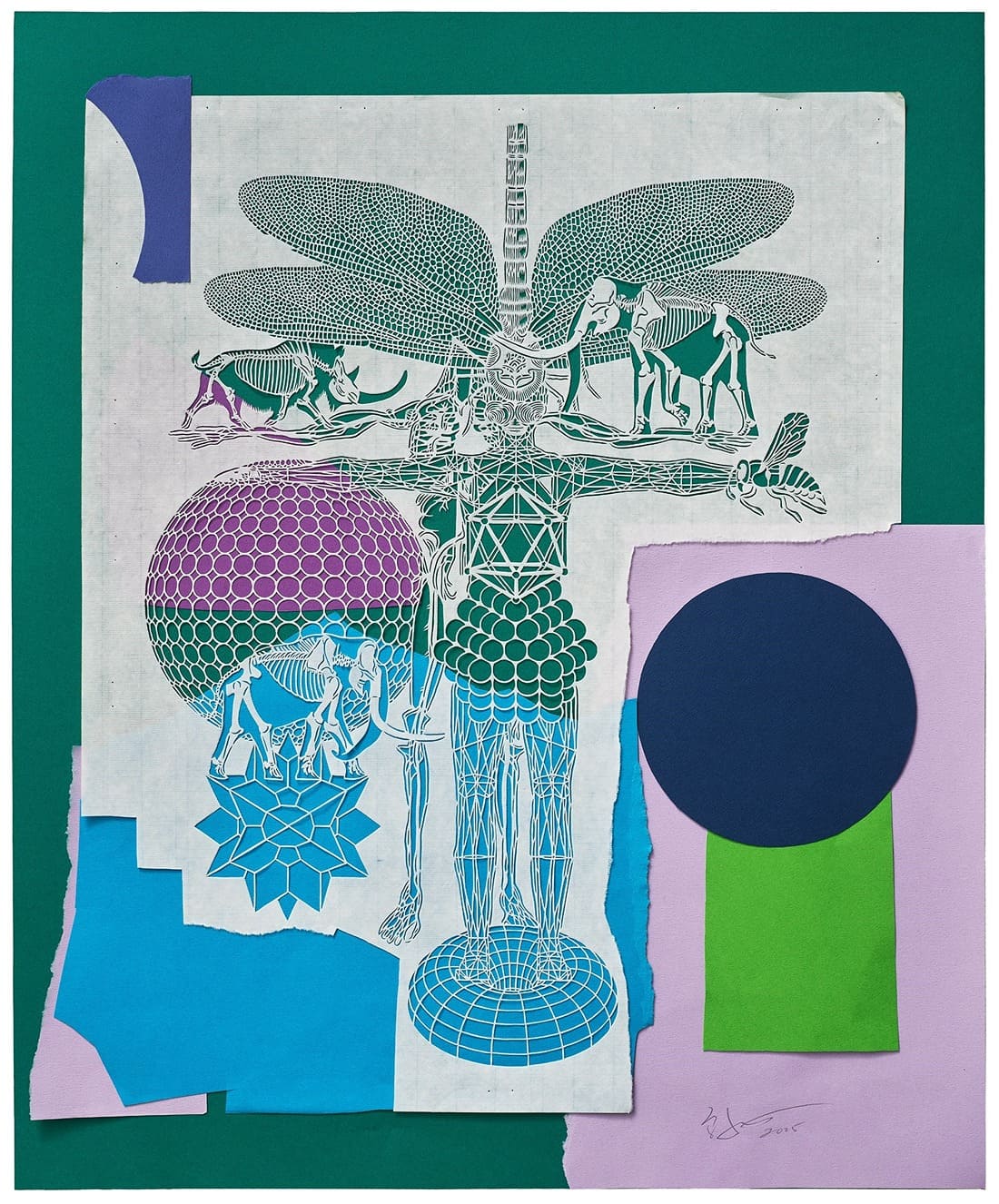
In Digesting Planet IV: Ancestors, humans are placed within a surreal framework of natural history and physics. Abstracted neural and circulatory networks, reshaped into regular geometric forms, coexist with the skeletal remains of ancient mammals and insects that cling to the head and limbs. This creates a logical tension, akin to the warping of space-time in a wormhole, that challenges our understanding of the ‘past’ and the ‘future’. The title hints at the metaphor of human origins, where the source of our ancestors has been buried by the dust of time. Yet, they are always inherited by our bodies, which are connected to all things in the universe and time, flowing with more than one thread of ancestral traces.
JIAN’AN WU has exhibited internationally in 500 Brushstrokes: An Abstract Portrait of Peru, Museo de Arte de Lima (MALI), Lima (2025); A Bridge Between Two Worlds: Works by Wu Jian’an, Kalamazoo Institute of Arts, Michigan (2023); Glasstress: Window to the Future, The State Hermitage Museum, Saint Petersburg (2021); The 7th Echigo-Tsumari Art Triennale, Echigo-Tsumari, Fukuoka Asian Art Museum, Fukuoka (2018); Continuum: Generation by Generation, The 57th Venice Biennale, China Pavilion, Venice (2017). Wu is currently represented by PIFO Gallery and Chambers Fine Art.

Through sculpture and wall-mounted relief, Jiannan Wu (b.1990, China) portrays contemporary urban life and social events with realist craft through playful, satirical narratives that expose the absurdity of our present. His practice moves between two compositional modes: re-staging collective memories via public imagery, where each picture bears both the event and its representation, and scenes drawn from private life that are fictional, dreamlike, and unmoored from public references.
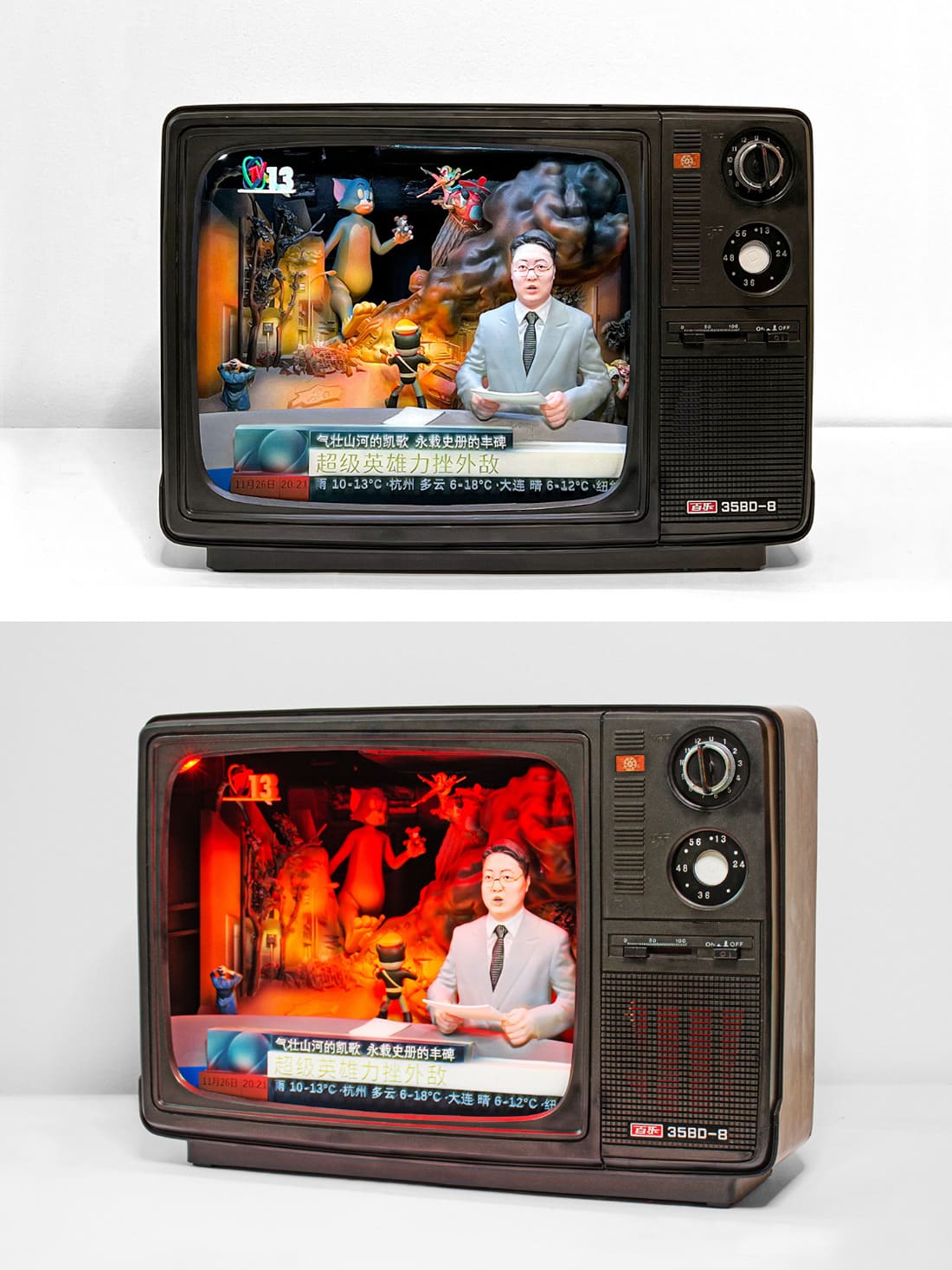
Feb. News treats the news as stagecraft. Housed in a genuine 1990s TV shell, a hyper-real anchor desk performs credibility while a fabricated backdrop pits Sun Wukong and Black Cat Detective against Tom & Jerry under incendiary headlines. A switch lets viewers tint the internal light, color-grading ‘reality’. Living between China and the United States, Wu witnesses how media in both countries deploy political, economic, and ideological tools to shape citizens, amplify fear, and sell certainty. The same event splinters into incompatible narratives; the ‘other’ is routinely cast in shadow. This relief makes the machinery visible: exaggeration, distortion, omission, and curated visibility, letting audiences see only what power wants them to see. The work questions authenticity and the costume of neutrality, asking: what are you seeing, why are you seeing it, and who decided so?
Wu has exhibited in The Venice Biennale, Venice (2024); Take Home a Nude, Sotheby’s, New York (2024); Carnival, Leo Gallery, Shanghai (2023) and The Holding Environment, Bonner Kunstverein, Bonn (2021). He was awarded The Elizabeth Greenshields Foundation Grant in 2019. Wu is represented by Leo Gallery and Gallery Poulsen.

Joey Cobcobo (b. 1983, Philippines) works across painting, printmaking, and woodcarving, developing a practice shaped by accumulation and return. His surfaces carry a restless energy, where memory, identity, and inheritance are continuously reworked. Born in Umingan, Pangasinan and based in Mandaluyong, he navigates the tension between indigenous lineage and contemporary urban life.
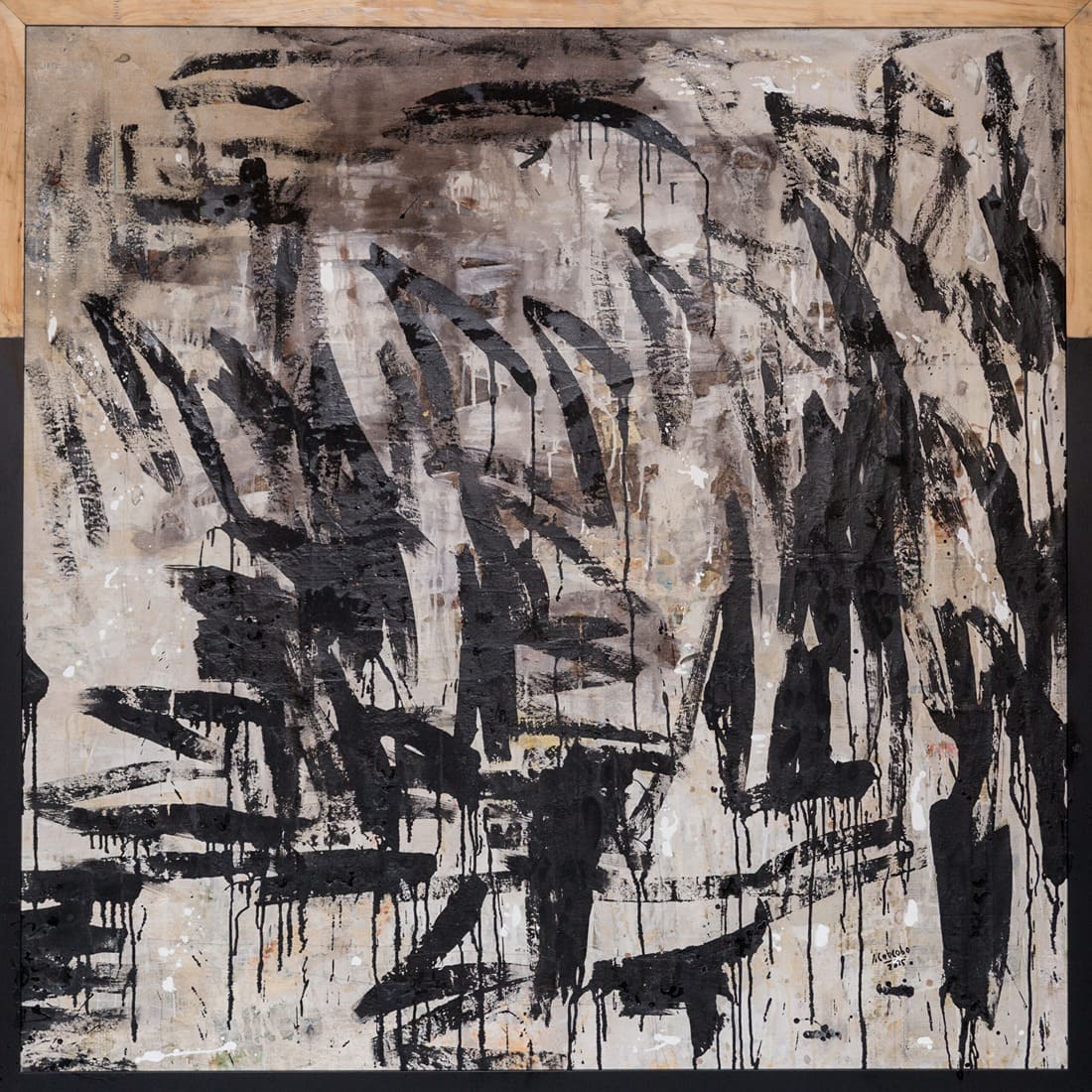
About IKA-8 UTOS: WAG KANG KUKURAP (THOU SHALL NOT STEAL): Kukurap, meaning “to blink”, also echoes kurap (corruption) and kurakot (looting public funds). In this linguistic slippage lies the work’s core: what is lost is not always taken by force, but surrendered in fleeting moments, in hesitation, in the act of looking away. This condition unfolds through a dense, worked surface. Muted earth tones are disrupted by heavy, dark strokes that assert force and repetition. The marks accumulate with a sense of fatigue and unease, as if something has occurred repeatedly, leaving traces that resist erasure. The work situates the viewer in a space where awareness and complicity blur, suggesting that integrity often falters not through grand acts, but through silence. To not “blink” becomes an act of vigilance, a refusal to turn away.
Cobcobo is one of the Thirteen Artists Awardees from the Cultural Center of the Philippines (2012), finalist at the 2nd ASEAN Graphic Arts Competition in Vietnam (2016), and Selected Artist at the Printmakers’ Assembly at Singapore Tyler Print Institute (2020). He is also a recipient of the Ateneo Art Gallery Marciano Galang Acquisition Prize (2020), with works exhibited at the National Museum of Fine Arts Philippines (2025).

Josephine Turalba (b. 1965, Philippines) is a Manila-based transdisciplinary artist whose work moves across performance, installation, experimental video, tapestry, photography, and painting. Across these forms, she draws from myth, personal history, and sociopolitical realities, often returning to questions of connection, fracture, and coexistence.
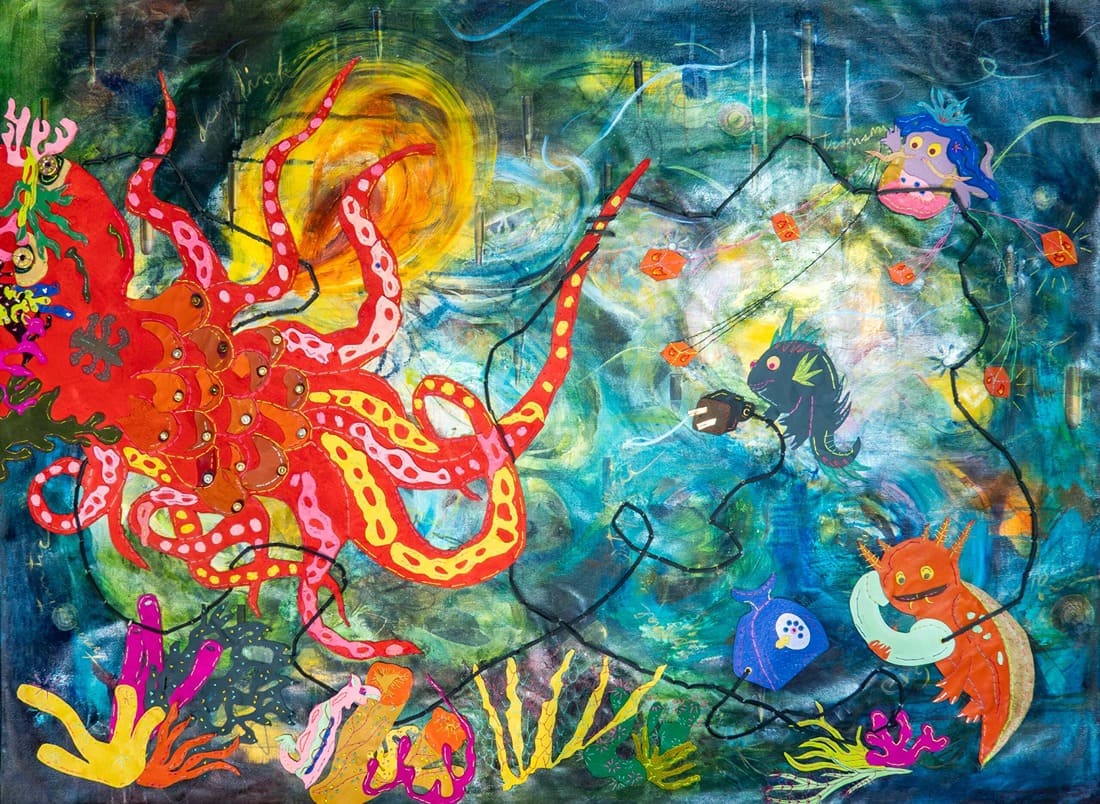
The Cables She Wears imagines the ocean as a site where connection is not abstract but physical, laid, looped, and lived with. A cable moves across the composition as both current and boundary, turning the sea into a diagram of passage and constraint. Within this charged environment, hybrid creatures encounter the line as something to live with. At the center is an octopus-like mother figure whose multi-breasted body draws from Mebuyan, the Bagobo figure associated with the underworld. Her multi-breasted form draws from Mebuyan, the Bagobo figure associated with the underworld, here re-situated within a contemporary seascape. Seductive colour and buoyant forms invite attention, while the materials bring in density, residue, and a quieter sense of threat beneath the surface. When global networks are routed out of sight, under water and beyond public scrutiny, the work asks us to consider who, and what, must live within their entanglement.
Josephine Turalba’s work has been shown internationally in Click.Share.Tag., Salcedo Private View, Makati City (2024); The 10th Nakanojo Biennale, Nakanojo (2025); Beauty Will Save the World: Eight Artists from Southeast Asia, 10 Chancery Lane Gallery, Hong Kong (2025) and In Search Of, Galerie Northburga, Innsbrück (2025). She is currently represented by 10 Chancery Lane.

The work of Mayur (b.1992, India) and Tushar Vayeda (b.1987, India) draws from the Indigenous Warli tradition, a visual language rooted in storytelling, land, and cosmology. They reinterpret ancestral knowledge to reflect on ecology, memory, and the evolving relationship between humans and nature. Transforming the traditional Warli idiom into a contemporary dialogue, they bridge the ancient and the modern. The Vayeda Brothers’ work is a celebration of continuity, where painting becomes a living act of preservation, reminding us that to care for art, culture, and the earth is to keep all three alive together.
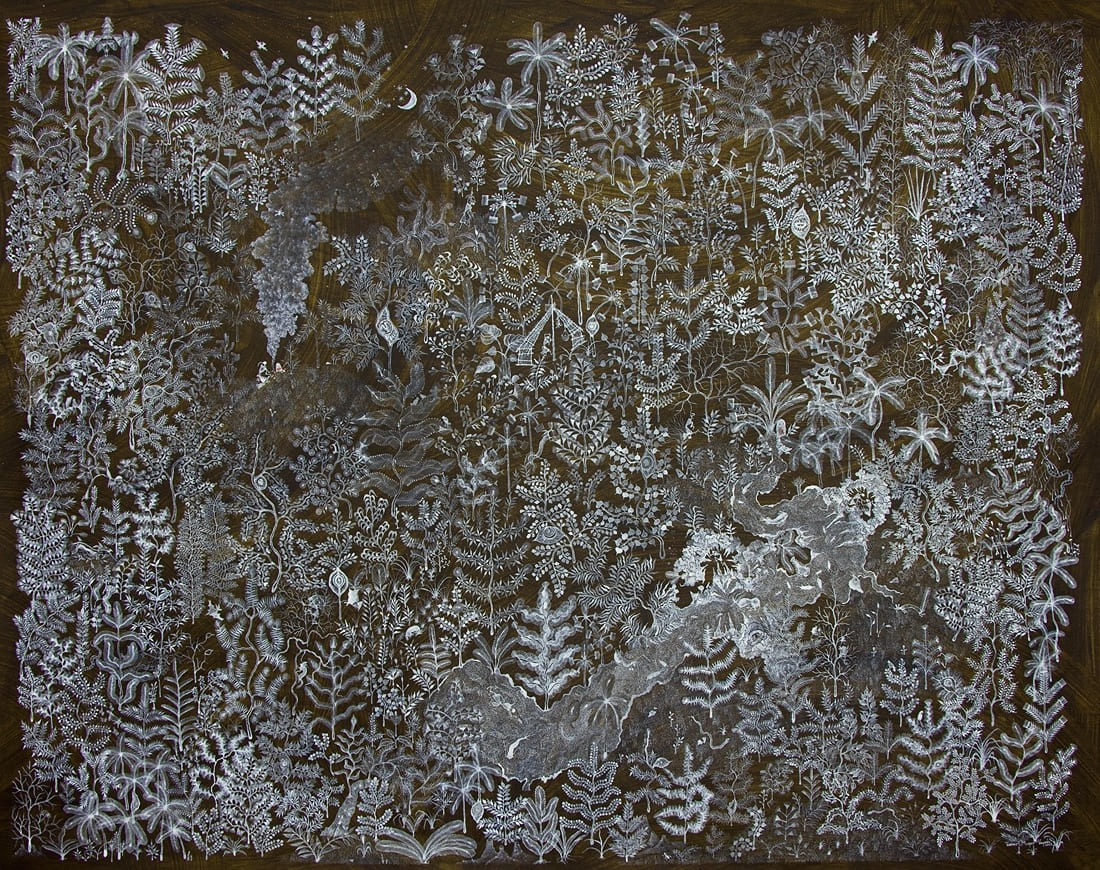
The Eyes of Forest reflects a way of seeing where the forest is not a backdrop but a living presence. In the Warli worldview, every tree, river, and mountain holds spirit and memory; each with eyes that watch over the balance of life. These eyes remind us of our shared existence with all that grows from the same fertile soil. The painting speaks of landscape, memory, and time, how generations have lived in rhythm with nature through Indigenous knowledge systems that teach balance and respect. Created with white acrylic on cow-dung-treated cotton cloth, the work honours traditional materials born of the earth. It continues a community effort to understand, preserve, and pass on Indigenous wisdom of nature.
The Vayeda Brothers have exhibited in The Cosmic Canopy, Modesti Perdriolle Gallery, Brussels (2025); Sacred Lines, Ojas Art Gallery, Delhi (2025); Waral Prakalp – The Guardians of Forest, Spore, Berlin (2024); Seed Odyssey, Tsomoriri Bunko, Tokyo (2024) and The 10th Asia Pacific Triennial of Contemporary Art, Brisbane (2022). The Vayeda Brothers are currently represented by Ojas Art and Modesti Perdriolle Gallery.

Michele Chu’s (b.1994, Hong Kong) multidisciplinary artistic practice engages with intimacy and ritual, exploring what makes us human. Her works probe and disrupt unwritten social rules and invisible boundaries across diverse cultural contexts and seek to create spaces and situations to create moments of deep emotional closeness with the self/other/collective through street interventions, participatory installations, sculptures, and performances. She often draws attention to the subtleties of touch, proximity, and vulnerability. Through these embodied encounters, Chu prompts viewers to confront their own comfort zones and relational habits.
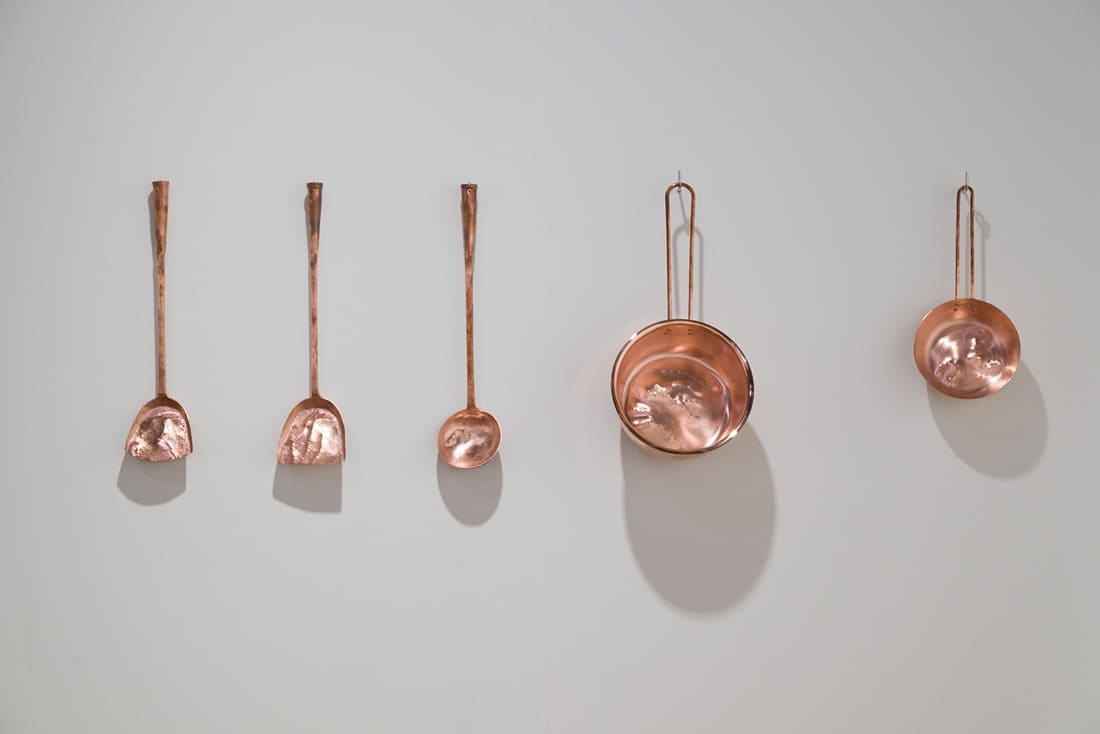
Drawing from Banana Yoshimoto’s novel Kitchen and Rirkrit Tiravanija’s social art practice, tracing your veins and blisters work reimagines the kitchen as a sanctuary for communal grief, exploring its intersection with gastronomy. The copper pots and pans are transformed through the repoussé technique, their surfaces hammered with patterns traced from the blisters and veins on the artist’s mother’s hands and feet. These impressions become tactile records of care, sacrifice, and the invisible work that sustains domestic life. The work invites viewers to consider how domestic labour shapes emotional landscapes, transforming ordinary tools into vessels of shared remembrance.
Michele Chu’s recent exhibitions include Art Basel, Hong Kong (2025); The Embrace and the Passage, Para Site, Hong Kong (2024) and you trickling, PHD Group, Hong Kong (2023). Her work was featured in ArtReview, March (2023) and The New York Times, March (2023). Chu is currently represented by PHD Group.

Nomin Zezegmaa (b.1992, Germany) is a multidisciplinary artist, researcher, writer, and silversmith based in Ulaanbaatar, Mongolia. Her work moves along the sinews of deep time, drawing from Mongol cosmogony to speak through matter, spirit, and ancestral memory and knowledge practices. These workworlds become forms of mediation: between presence and absence, form and formlessness, the human and other-than-human. These inquiries unfold across sculpture, painting, drawing, calligraphy, land art, performance, film, metalsmithing, scent, and site-specific installation.
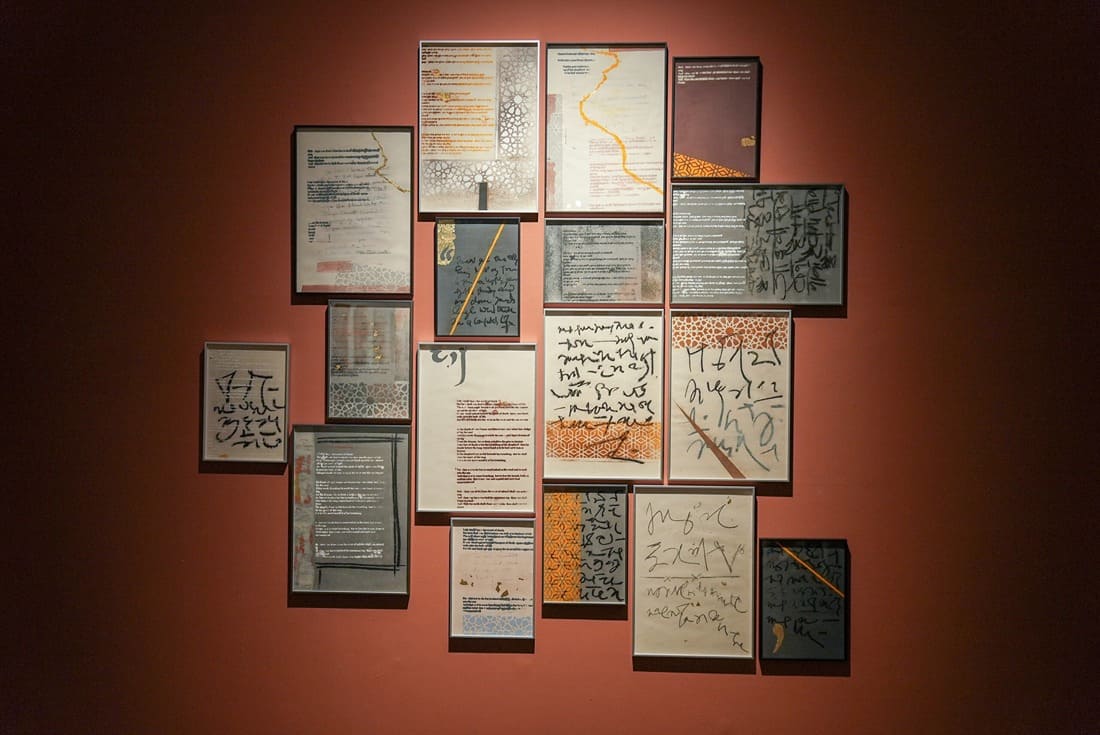
A Million Petals of Rebirth explores continuity, memory, and transformation. The piece unfolds through eight layers born from the meditative practice of writing traditional Mongolian script, Mongol bichig. The act of writing dissolved into gesture and texture, as water, a universal carrier of life, guided the transformation from language into matter, and matter into spirit. Infused with melted copal inspired by Mexican ritual traditions, the work bridges worlds, uniting Mongolian and Mesoamerican cosmologies. Through its convergence of ink, smoke, and textile, the work becomes a living meditation on the endurance of language, the cyclical journey of the soul, and the unseen threads that bind all beings across time, earth, and spirit.
Zezegmaa has exhibited in Bukhara Biennal, Bukhara (2025); Ulaanbaatar Biennale, Ulaanbaatar (2025); ᠴᠢᠨᠠᠳᠤ ᠰᠠᠯᠬᠢ (The Wind on the Other Side) Galerie Bart, Amsterdam (2024); different mountains, different encounters, Lkham Gallery, Ulaanbaatar (2023), later published under same title as a collection of essays and poems by The Future Publishing in 2024. Zezegmaa is the recipient of the RAK Art Foundation Prize in 2025 and is currently represented by Galerie Bart and NIKA Project Space.

Oh Chai Hoo’s (b.1960, Singapore) artistic journey is deeply rooted in nature and philosophy. Living near Bukit Timah Hill, he draws inspiration from rock formations, mountainscapes, and the lush tropical landscape, which he reimagines through ink, clay, and calligraphy. For Oh, ink painting is the Yesst form of expression; each brushstroke an indelible mark of presence, honesty, and meditation. His ceramic sculptures and seal carvings echo this sensibility, embodying both the permanence and impermanence of natural forms. His works transcend mere representation, offering contemplative spaces where identity, memory, and nature converge.
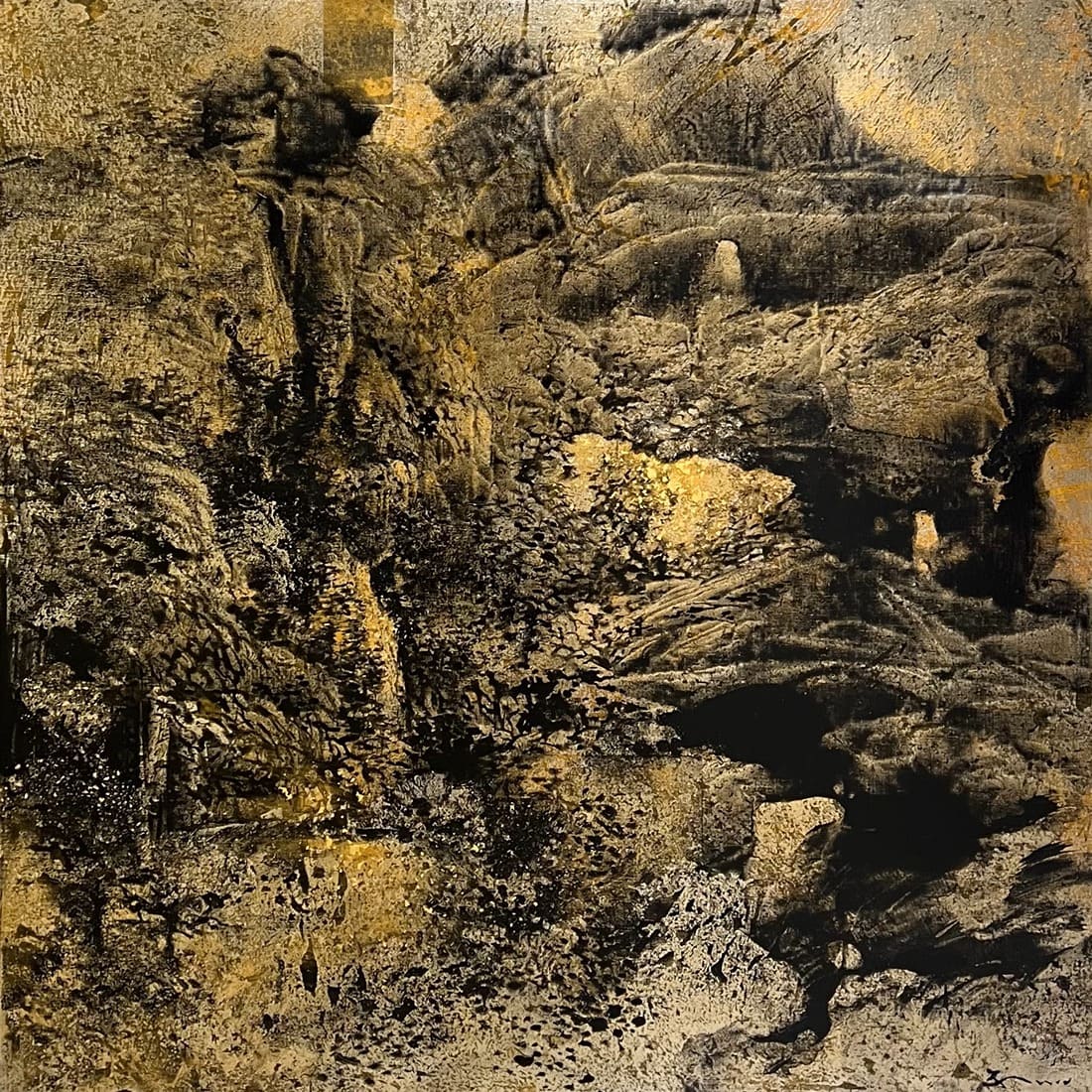
Into the Unknown 林深不知处 delves into the profound interplay between the forces of nature and the relentless march of time. Using black and golden-brown pigments, Oh captures the ephemeral yet profound dialogue between fleeting moments and the enduring concept of eternity. The immersive black foundational tone acts more than just a backdrop – it’s a canvas for existential contemplation. Onto this, the artist carefully applied the paints, allowing them to intermingle and flow with an organic freedom. This calculated choreography creates layered formations reminiscent of geological formations and a vast, enigmatic emptiness, an artistic mimicry of the timeless rhythms of the natural world.
Oh Chai Hoo’s work has been exhibited in Epiphany, iPreciation, Singapore (2025); Timeless Present, iPreciation, Singapore (2023) and Marks on Earth, iPreciation, Singapore (2021). He was awarded the Siaw-Tao Best Artwork Award in 2013 and the Highly Commendable Award in the Abstract Medium category at Sinapore’s18th UOB Painting Competition in 1999. He is solely represented by iPreciation, Singapore.

Trained as a potter, Rahul Kumar (b.1976, India) reimagines natural forms as a personal visual language, allowing clay to assert its own presence through the traces of both the creator and material. Working with clay allows him to step beyond the cerebral and rational pursuits of his profession in the art world, reclaiming parts of himself that erode in the mundanity of everyday life. His recent body of work draws extensively on the script, informed by his parallel vocation in art journalism, where he spends considerable time working with words. In turn, his art reflects the very limits of language, using its shortcomings as a metaphor.
Language has played a crucial role in humanity’s development, yet it is inherently limited. pages from my diary explores what lies beyond speech – the unsaid, the untold, and the unarticulated – asking whether these residues of meaning exist in a space of their own. Using gibberish, the work probes whether marks that resist comprehension can still transmit emotion. Created through a highly intuitive process, the series employs dry clay and ceramic pigments, materials traditionally shaped with water and hardened by fire. The unfired clay remains fragile, underscoring the impermanence and vulnerability of all things. Lattice elements partially veil the background, further echoing the evasive and unstable nature of language itself. Rahul Kumar has exhibited ‘the untold resides somewhere, assembling fragments’ Exhibit 320, New Delhi (2023); Artissima, Accademia Albertina Belle Arti museum, Turin (2021); TerraGeometrics, The First Indian Ceramics Triennale Jaipur (2018); The Fourth ASNA Clay Triennial, Karachi (2013), and Inspired by India, Sotheby’s, London (2012). Kumar is currently represented by Exhibit 320.

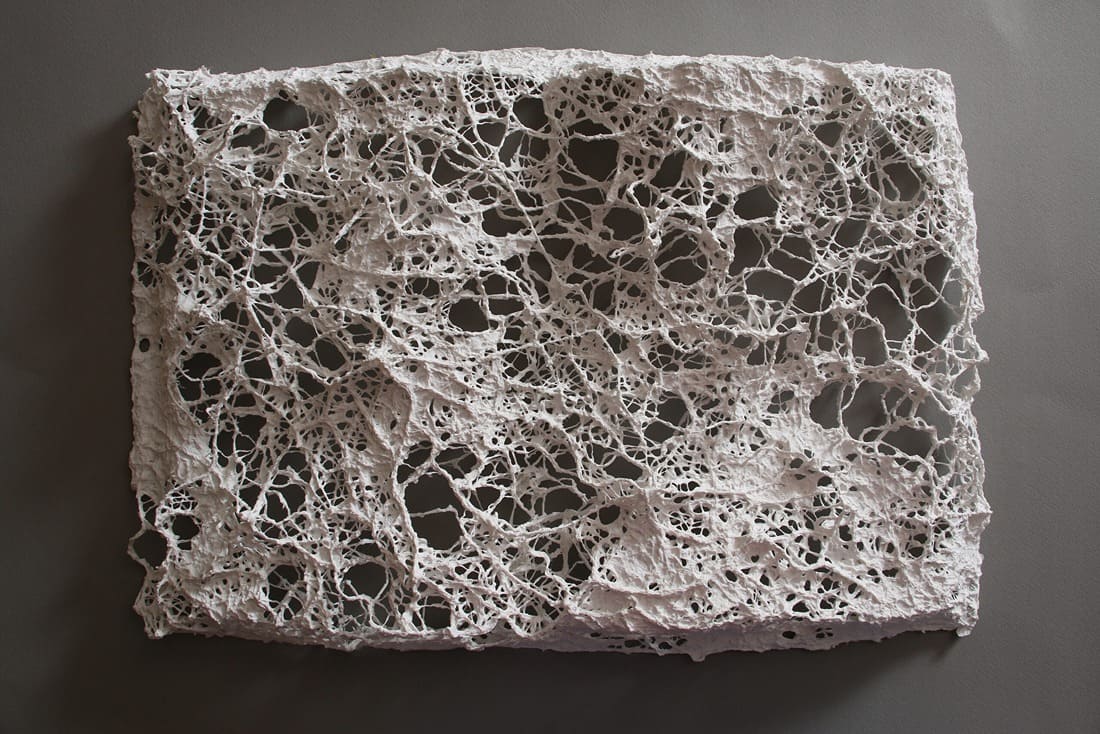
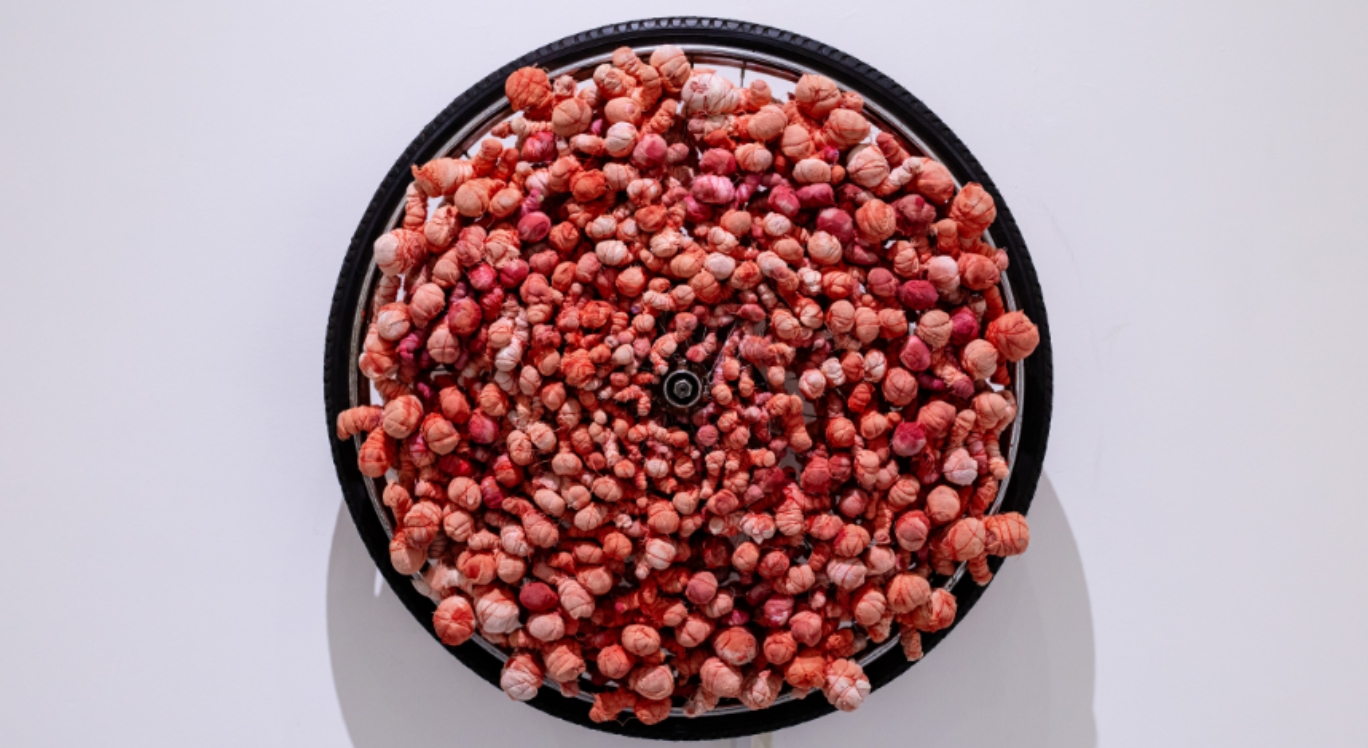
Ravikumar Kashi (b.1968, India) uses a multidisciplinary practice spanning painting, sculpture, photography, and installation, with a particular focus on paper. Working with paper pulp, he transforms the material into intricate, three-dimensional forms, where visual experience takes precedence, with meaning emerging gradually through layers of materiality, language, and bodily reference. Themes of ephemerality recur, drawing parallels between the vulnerability of paper and the transient nature of the human body.
Visceral Paths 7 explores the intricate interconnectedness of inner and outer worlds through natural and anatomical imagery. At its core, the piece is a visceral image, evoking elements of both human anatomy and nature. The intricate links and intersections within the artwork recall the complex and interconnected networks found in living organisms, such as the brain, lungs, blood vessels, or plant root systems, as well as the fibrous structure of paper itself when viewed microscopically. As a visual metaphor, the work shows how stimuli and nourishment flow inward while responses move outward, highlighting the continuous exchange between individuals and their surroundings, and the shared connections that bind humanity.
Kashi’s work has been exhibited in the International Paper Art Biennale, Silkeborg Bad (2026); the Shanghai International Paper Art Biennale, Shanghai Fengxian Museum, Shanghai (2025); Minnesota Centre for Book Art Prize Exhibition, Minnesota (2024); Edge of Desire: Recent Art in India, cross-continent travelling show across Europe, United States, Mexico, Australia, and India (2004-6). He was awardedfirst prize in ‘Ventipertrenta’ at the International Festival of Digital Art, Belforte Del Chienti (2017). Kashi is currently represented by GalleryThreshold. He had his first museum solo show in Museum of Art and Photography MAP Bangalore in 2025.

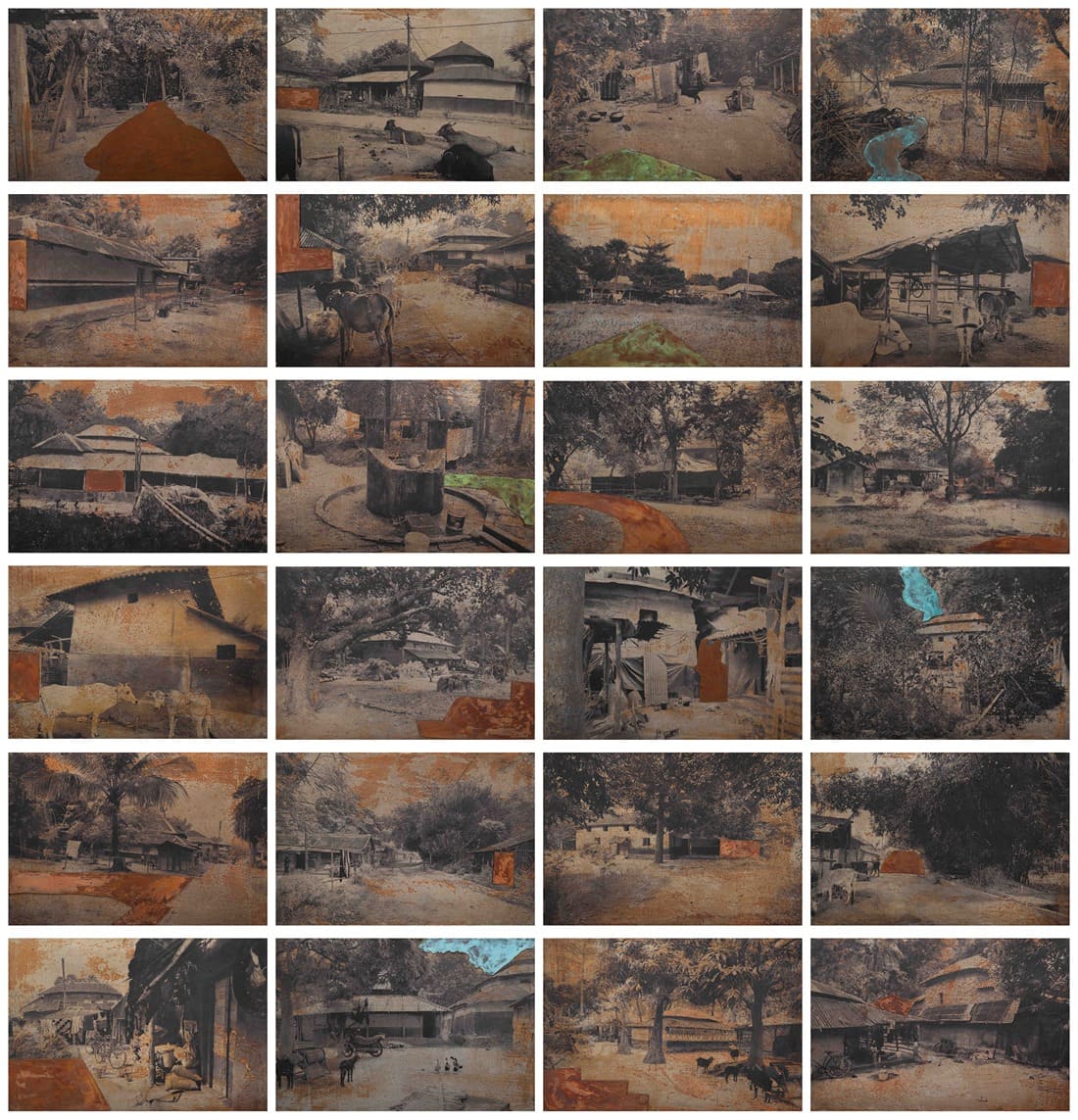
Sangita Maity’s (b.1989, India) practice examines the socio-cultural, political and environmental costs of rapid industrialisation and indigenous displacement. Her inquiry spans the Chotonagpurplateau across Jharkhand, West Bengal and Orissa, one of India’s richest mineral zones, where mining and hydroelectric projects are altering ecologies, drying riverbeds and causing droughts and floods. Her works arise from community narratives and employ region-sourced materials such as soil, brass, iron sheets, terracotta and etched copper, reflecting both erasure and resilience and cultural memory.
Restricted areas depicts a recently resettled village in the Chotanagpur region of West Bengal, where communities were displaced from ancestral lands due to government-led iron ore mining. Residents now live on khas (state-owned) land with limited rights, often receiving only a fraction of their original holdings and remaining subject to bureaucratic control. Photographs of the village are transferred onto iron sheets, allowing the material to register the violence of displacement. Developed through close engagement with the community, Restricted areas reflects altered relationships to land and livelihood, incorporating brass elements, and varied patinas to mark shifts in terrain. The material becomes both surface and witness, carrying traces of extraction, resettlement, and altered landscapes.
Maity has exhibited in Art Basel, Hong Kong (2025); The Weight of Stillness, Ames Yavuz, Sydney(2025); (Un)Layering the Future Past of South Asia, SOAS Gallery, London (2025);Colomboscope, Colombo, Sri Lanka (2024); Now they Stopped building Granaries, Shrine Empire, New Delhi (2022). Maity is currently represented by Shrine Empire Art Gallery.

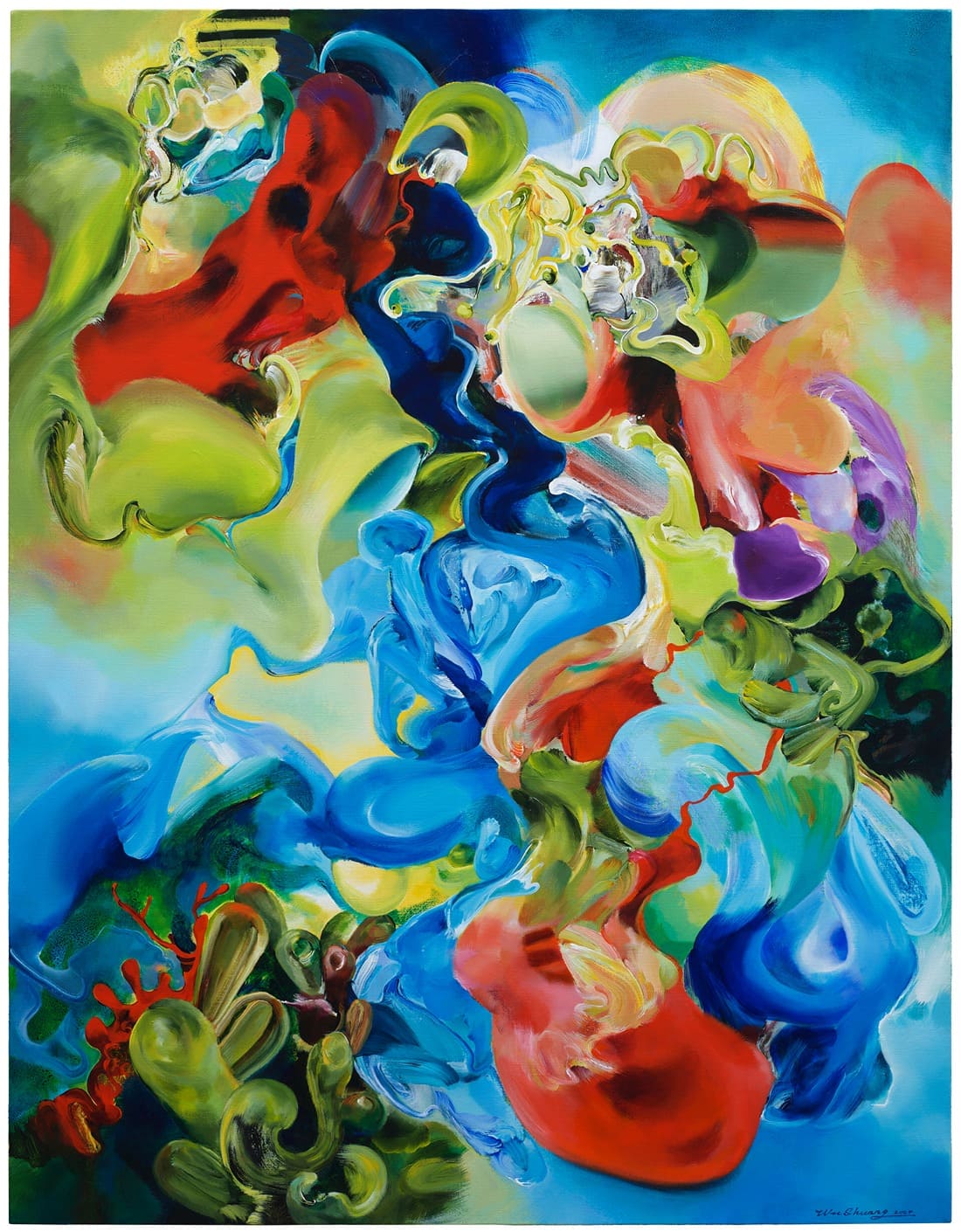
Wu Shuang (b.1986, China) is an acclaimed abstract expressionist painter known for her use of intense contrasting colours and surreal imagery. She graduated from the Oil Painting programme at the Sichuan Fine Arts Institute in 2009 and later completed a MA in Engraving at the Central Academy of Fine Arts, Beijing in 2014. Employing highly saturated colour as a primary formal language, her compositions balance visual intensity with a sense of harmony.
In Living Organism, fluorescent tones and concentrated hues shift between light and dark in a composition that feels dynamic yet controlled. This tension is central to Wu’s practice, where light functions not only as a formal device but also as a carrier of emotions and experiences. Drawing on impressions gathered from her travels, Wu translates these encounters into organic motifs, such as cacti and flowers. Beyond literal depiction of the natural world, they suggest states of growth, resilience, and transformation. Their layered and fluid presence lends the painting a sense of movement and vitality that unfolds gradually over time.
Wu Shuang’s works have been exhibited in Else Where, Whitestone Gallery, Seoul (2025); Splendid Journeys, Whitestone Gallery, Beijing (2024); Whirling Light, Whitestone Gallery, Taipei (2023); 50-90: The Tenth Anniversary of the Long Museum, Long Museum Shanghai & Chongqing (2024-2025); Official New York Times Square LED Screen, 1560 Broadway (2021). She is represented by Whitestone Gallery.

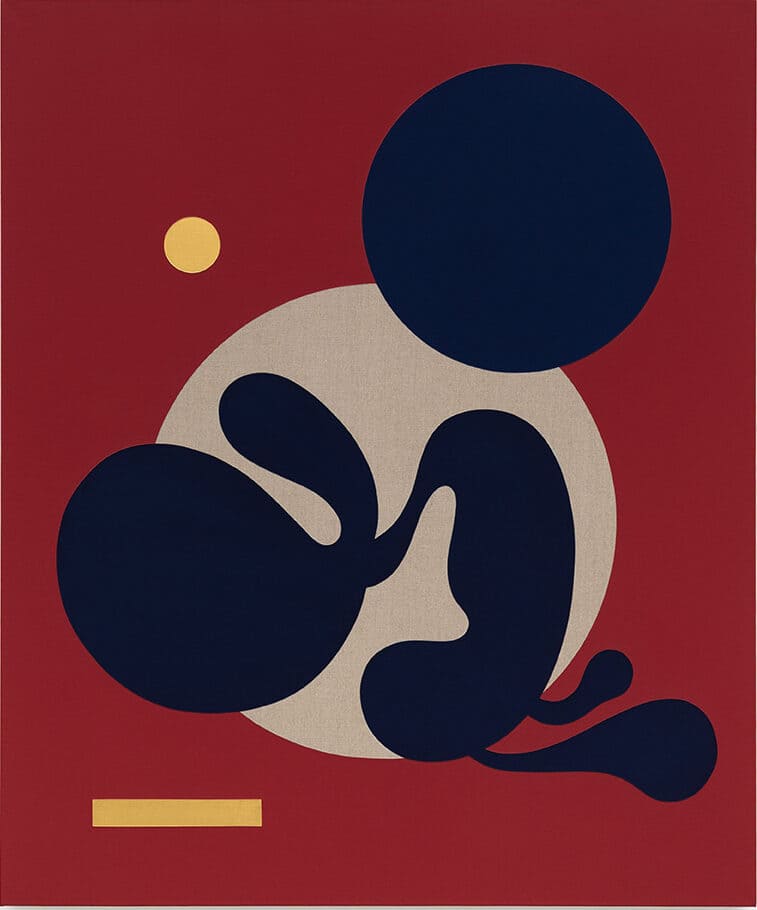
Sinta Tantra (b. 1979, United Kingdom) is a multidisciplinary artist whose practice seamlessly bridges painting, sculpture, and installation. Born in New York to Balinese parents and raised in London, Tantra’s artistic identity is informed by her cultural heritage and global upbringing. She trained at the Slade School of Fine Art in 2003 and continued her MA at the Royal Academy Schools in 2006, where she began to develop a distinctive visual language combining formal abstraction with personal and cultural narratives.
In My Memory for Life brings together organic forms and fluid movement with a luminous spirituality. Part of her recent series of red paintings, Tantra creates works that read as rituals expressed through colour and shape. Working with tempera on linen with 24-carat gold leaf, she introduces circles and orbs as symbols of cycles, moons, and meditative focus, set within undulating, leaf or petal-like abstractions that evoke both botanical life and cosmic expanses. Red plays a significant role in her practice. In traditional Indonesian arts and Balinese culture, the colour signifies vitality, strength, and spiritual energy. At the same time, red resonates on a national level, recalling tanah air, an Indonesian term meaning land and water which expresses a deep emotional connection to homeland, identity, and collective belonging.
Tantra’s works have been exhibited in Some Like It Hot, Kristin Hjellegjerde Gallery, Miami (2025); The Light Club of Batavia, Pitzhanger Manor and Gallery, London (2024); Light is Therefore Colour, Turner’s House, London (2025); Shadow and Void: Buddha 10, Esea Contemporary, Manchester (2025) and All You Could Hear, Richard Koh Gallery, Bangkok (2023). She is represented by ISA Art Gallery.

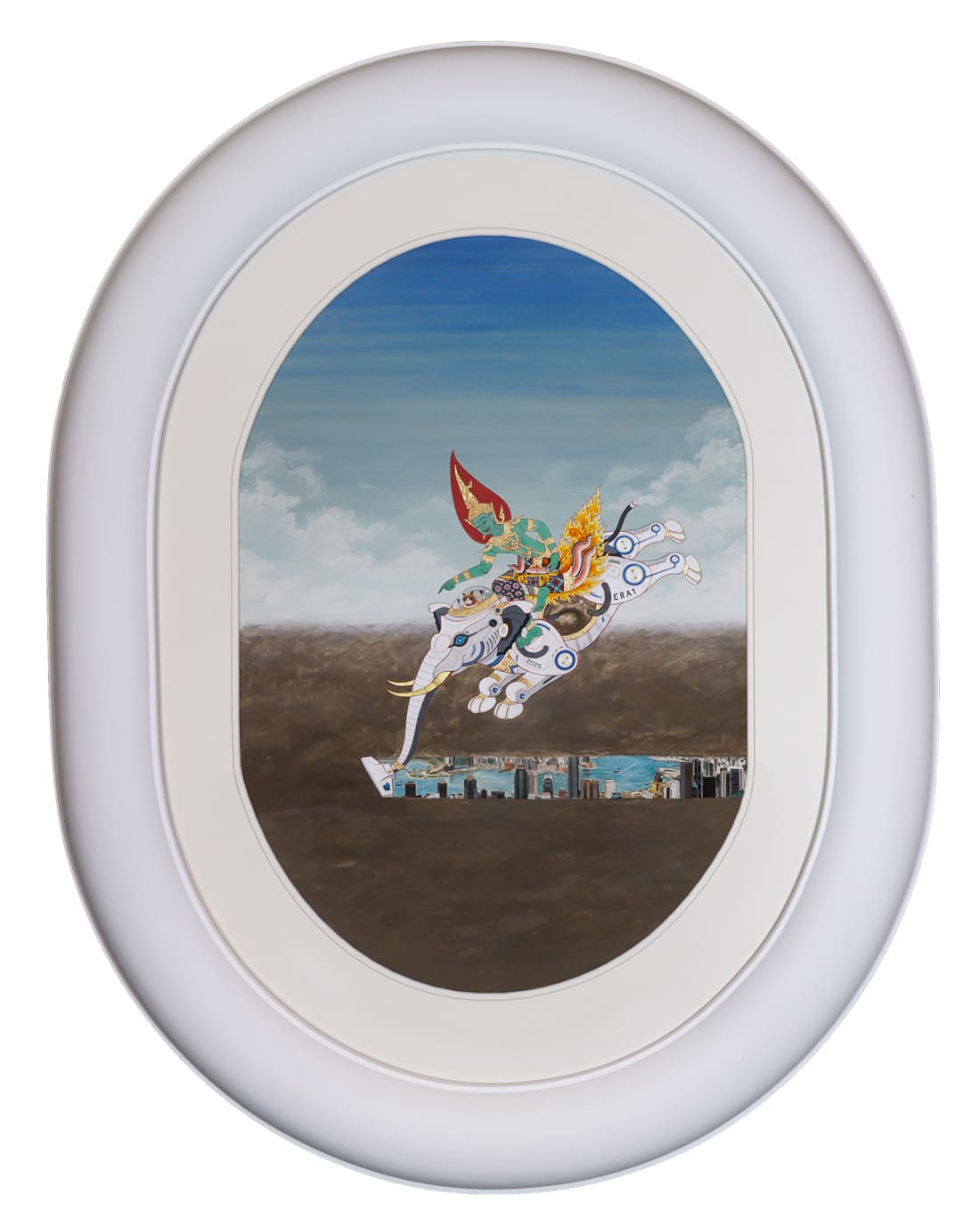
Fascinated by Thai art since childhood, Subannakrit Krikum (b.1994, Thailand) has developed an artistic practice grounded in traditional methods while engaging critically with contemporary life. He works primarily with miniature paintings made using natural pigments that he produces himself, extracting colour from soil, rocks, minerals, shells, and plants. These materials are ground, filtered, or boiled by hand following ancient mural-painting techniques. Through this materially rooted process, Krikum reinterprets tradition by recording the present, employing dark humour and satire to comment on social, political, and cultural issues in contemporary Thailand.
Divine Air Pollution Control envisions Indra, the Hindu god of the heavens, riding a mechanical Erawan elephant as it vacuums toxic dust from skies above a contemporary metropolis. Viewed from an airplane window, the scene reflects humanity’s escalating struggle with an environmental crisis of its own making. As air pollution worsens beyond human control, the work questions whether faith in global cooperation and technological solutions remain sufficient, or whether salvation is imagined through forces beyond human agency. Created using natural pigments mixed with real PM2.5 dust, the work transforms pollution itself into both a warning and a plea for the world to breathe again.
Krikum’s work has been exhibited in Time Machine, HEAD HIGH Second Floor Gallery, Chiang Mai (2025); The 100th anniversary celebration of the Trinity collection, Cartier, The Arts House, Singapore (2024); The Many Faces of Thai Art, Vogue Thailand, Table, Bangkok (2024); Traditions Transformed, ATT19, Bangkok (2023) and Sweet Dystopia, Joyman Gallery, Bangkok (2021). Krikum is represented by HEAD HIGH Second Floor Gallery.

Zhang Yanzi (b.1967, China) is a Beijing-based artist and Professor, PhD and Postgraduate Supervisor in Central Academy of Fine Arts. She is also the Director of Social Studio (School of Experimental and Sci-Tech Arts) at the Central Academy of Fine Arts. Her practice explores the relationship between medicine, the body and the capacity of art to heal emotional and psychological states. Across her practice, art becomes a quiet site of care, holding open questions about the human condition that unfold through material, gesture, and time.
Beneath the Sky《苍穹之下》draws inspiration from Yanzi’s observations at a high-achieving secondary school notorious for its success in university admissions. Students gather into a rigid, block-like square, compressed into a dense and unified formation. To prevent this precarious, monolithic formation from collapsing, each individual must move in perfect lockstep, causing the mass to advance in a slow, collective shuffle. By assembling the work from gauze, screws, and standardized figurines, Yanzi evokes the passivity of the individual within the relentless machinery of history. The sculpture moves beyond the image of a collective spirit driven by invisible forces, becoming a fundamental inquiry into the universal human condition.
Zhang Yanzi’s work has been exhibited in Her 24 Solar Terms, Ora-Ora, Hong Kong (2024); Indivisible, AMNUA, Nanjing (2024); Where The Heart Is, Ora-Ora, Hong Kong (2021); Seclusion, Ora-Ora, Hong Kong (2019); A Quest for Healing, Surgeons’ Hall Museum, Edinburgh, United Kingdom (2018), The Remedy, Today Art Museum (2013).
Her works have been included in the collections of the National Art Museum of China, M+ Museum, CAFA Art Museum, Musée Atelier Audemars Piguet, the Sigg Collection, Museo Belliniano and private collections. She is represented by Ora-Ora.

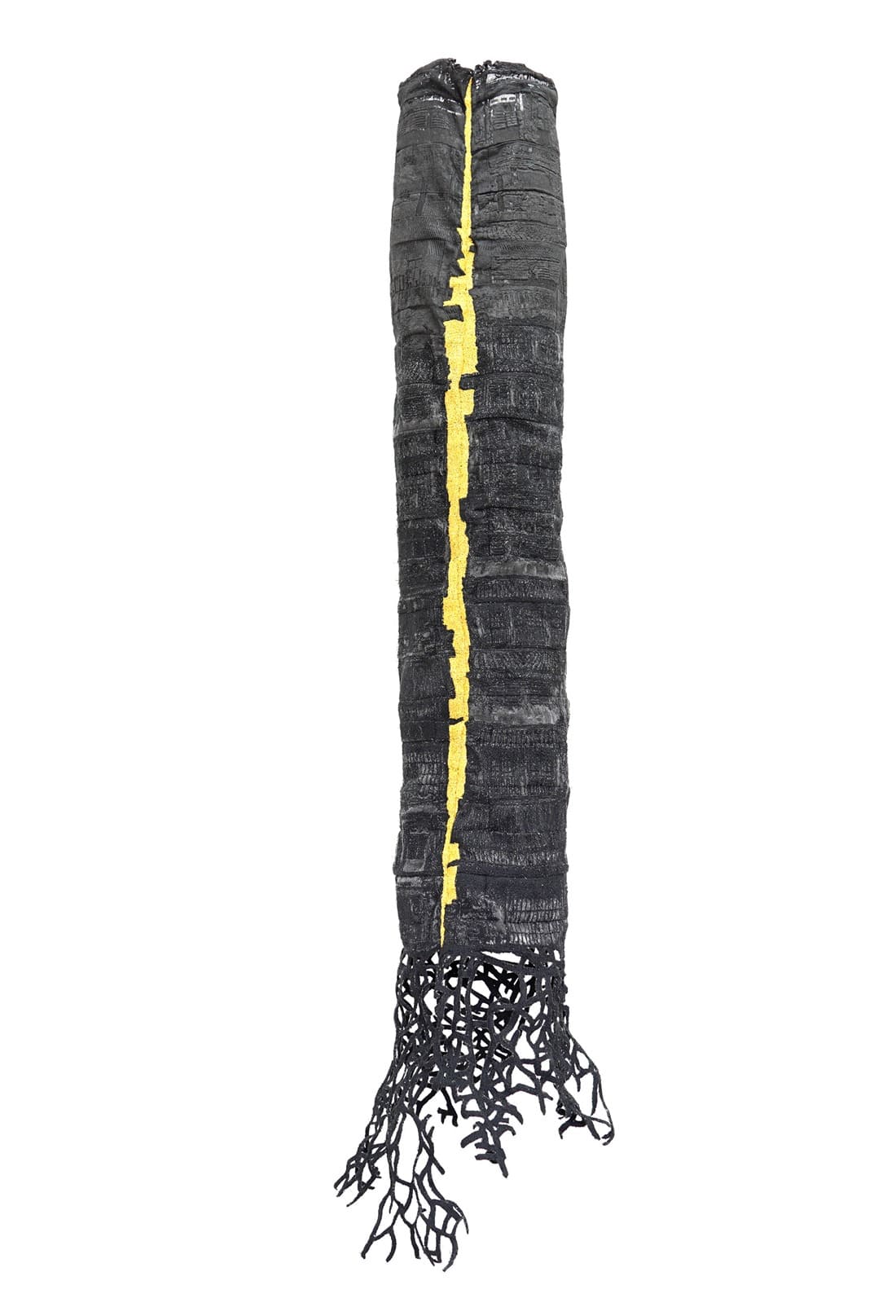
Yim Yen Sum (b.1987, Malaysia) works primarily with textiles to create evolving installations. Her practice explores interconnection between individuals, communities, and their environments. She approaches art as a shared, living process. Beginning with a single unit, her works expand through delicate needlework using manipulated gauze, screen printing, and embroidery. Stitching functions as a form of dialogue, weaving invisible links between people and reflecting an ecological understanding of bodies, spaces, and collective life.
Anchored in the typology of Kuala Lumpur’s shophouses, Breath Beneath the Gold explores how urban spaces absorb change while holding the traces of overlapping lives. By reinterpreting these traditionally horizontal structures into a vertically growing form, the work alludes to the erosion of communal spaces under capital-driven development. Reimagining people and architecture as a living system, Yim uses silkscreen and embroidery to depict modernity, labour, and urban transformation, exploring the pulse of collective life surviving within the city’s rapid expansion. Gold thread runs through the work, turning cracks into traces of life while holding the tension between connection and division, value and fragility. The stitching becomes a dialogue of opposites where a needle must pierce to protect, reflecting a way of existing between extremes within the fabric of the city and how we live amid its contradictions.
Yim’s work has been exhibited in the Sharjah Biennial (2025); 2025 Lining Revealed – A Journey Through Folk Wisdom and Contemporary Vision, Centre for Heritage, Arts and Textile (CHAT), Hong Kong (2025) and Codes in Parallel, Indian Ocean Craft Triennial, Perth (2024). She is represented by A+ Works of Art

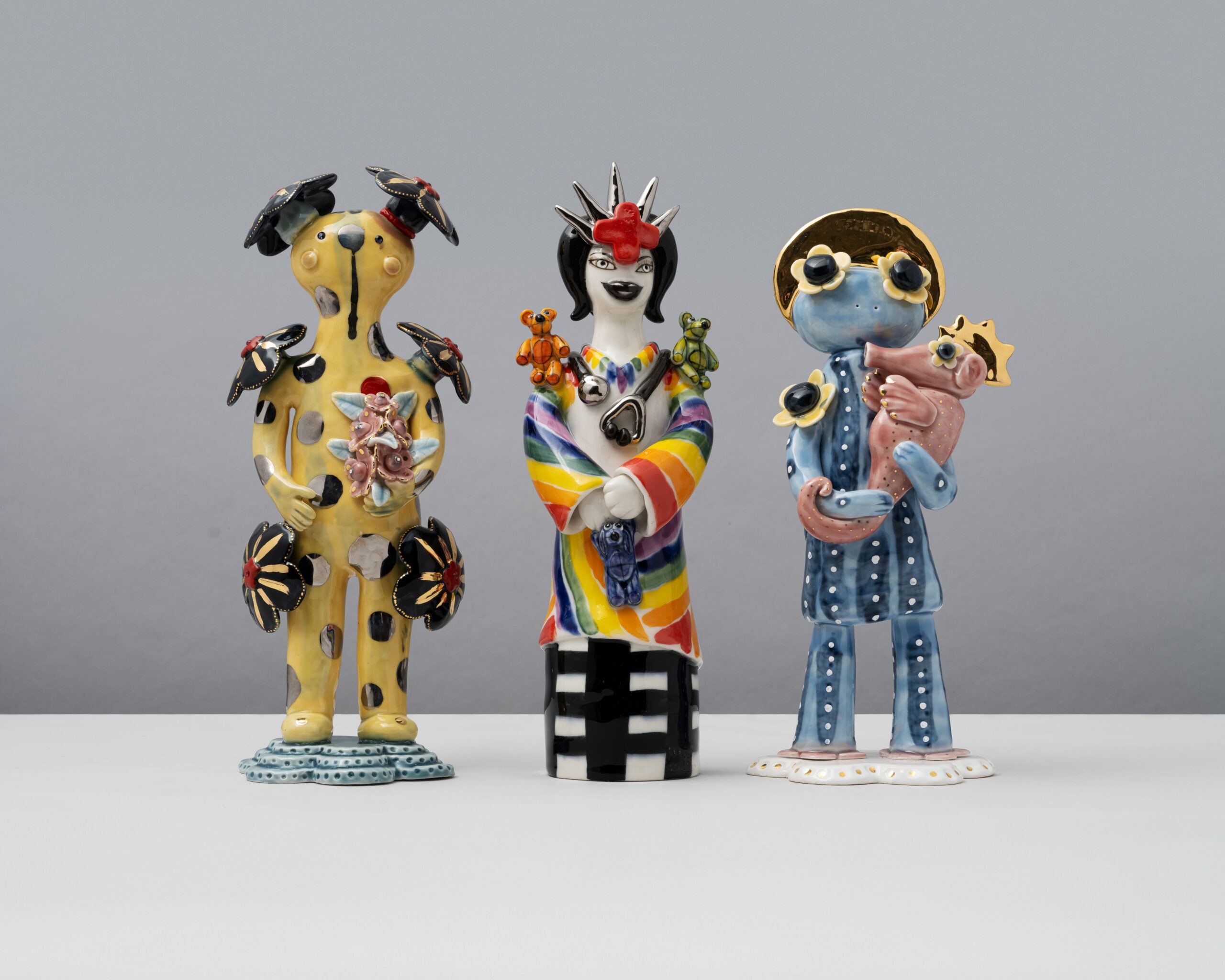
With over two decades of experience, Vipoo Srivilasa’s works (b.1969, Thailand) reflect his bicultural experiences, exploring themes of home, migration, and cultural identity. His ceramic sculptures create spaces where personal struggles are acknowledged and hope is celebrated. Intrigued by the rich history of East–West cultural exchange embedded within ceramics, he blends the aesthetics of European porcelain figurines with references to Asian deities, reflecting lived cross-cultural experience.
Wellness Deities pay respect to the quiet, often unseen acts of care around us. Each figure honours a different form of support. One is a deity of care, paying tribute to healthcare workers who offer compassion and protection in times of fear. Another is a deity of family, honouring mothers who hold their loved ones with strength and tenderness. The third is a deity of rest and renewal, easing stress and uncertainty, guiding us toward calm, balance, and recovery. Together, they celebrate the many ways we look after one another, reminding us that care, both visible and invisible, sustains us through difficult times.
Srivilasa has exhibited in re/JOY, Tasmania Museum and Art Gallery, Hobart (2025); Flower Bears, Shepparton Art Museum, Victoria (2024). His monograph, Vipoo Srivilasa: Positive Art Work, was published by Paper Boat Press Edition and The Australia Design in 2023. He was the winner of the MAKE Award (Australian Design Centre) and the recipient of the VACS Major Commissioning Projects granted by the Australian Council for the Arts in 2023. Srivilasa is represented by SAC Gallery, N. Smith Gallery and Edwina Corlette Gallery.


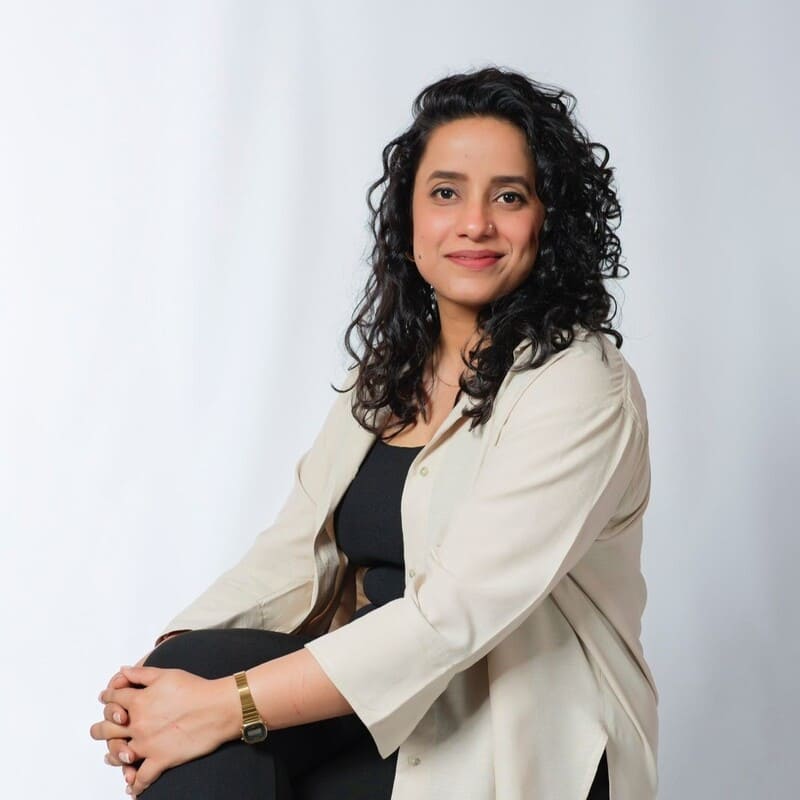
“It is an incredible honour to be awarded The 2024 Sovereign Asian Art Grand Prize. I am thrilled and deeply grateful for this recognition. This award is a significant milestone for my career, and I am profoundly appreciative and thankful for the acknowledgment and support. I extend my heartfelt thanks to Adeel Uz Zafar for nominating me and believing in my practice. It is a huge privilege to showcase my work on the prestigious platform provided by The Sovereign Art Foundation“
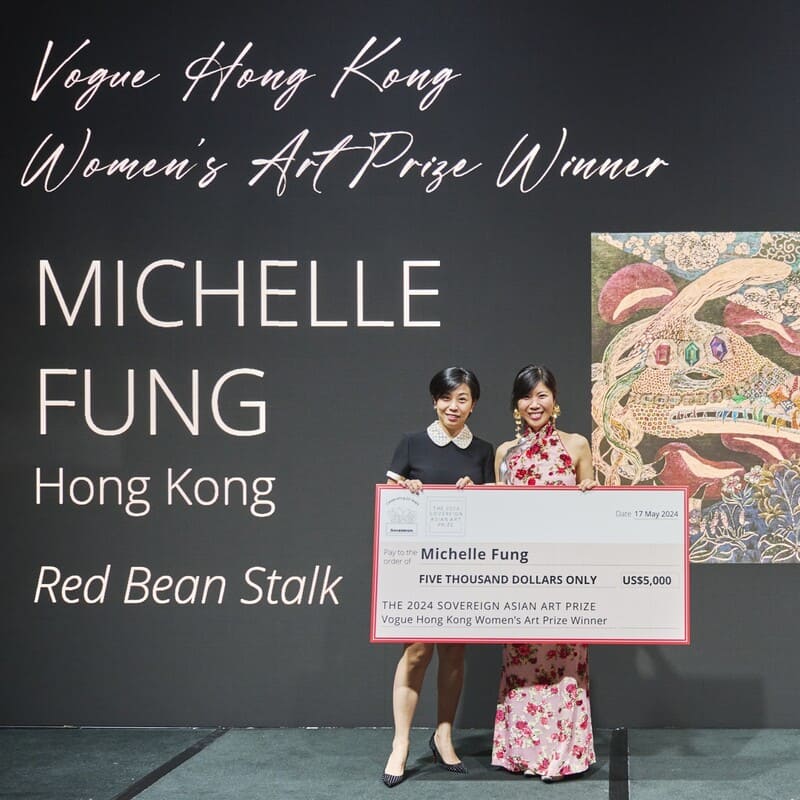
“I am absolutely thrilled to have been awarded the Vogue Hong Kong Women’s Art Prize Winner. I would like to extend the gratitude to Kurt Chan my nominator, the Sovereign Art Foundation team and esteemed judges for understanding me. Finally, of course to Vogue who supports this prize. It’s not easy to be an artist, and it’s even more difficult to do it in a woman’s body. Thank you for recognising that”
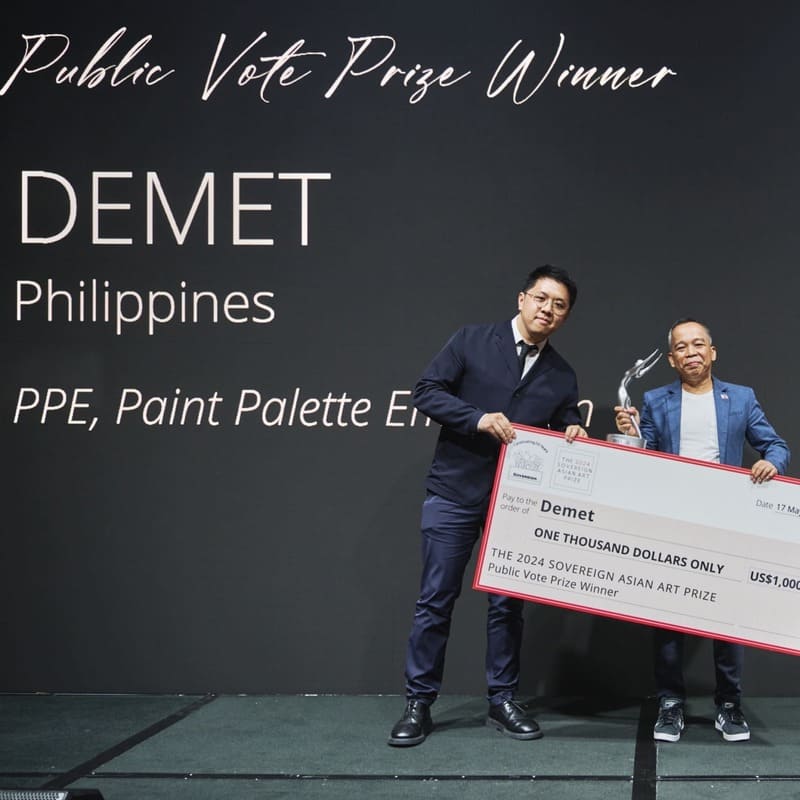
“I am incredibly grateful, heartfully thankful for selecting me as a finalist and to be the recipient of the Public Vote Prize. I am forever thankful for this not only for the recognition, but also the opportunity to share my work and take part in the Sovereign Foundation’s noble cause. To the SAF team, please continue to carry on the foundation’s objectives and goals. To the dedicated team, I really appreciate all your hard work”
David Elliott is a cultural and art historian, writer, curator and museum director primarily concerned with modern and contemporary art. Elliott was Director of the Museum of Modern Art in Oxford, England from 1976-96, Director of Moderna Museet in Stockholm, Sweden from 1996-2001, the founding Director of the Mori Art Museum in Tokyo, Japan from 2001-06, the first Director of Istanbul Modern, Turkey in 2007 and from 2016-2019, Vice-Director and Senior Curator of the Redtory Museum of Contemporary Art in Guangzhou. From 1998-2004, he was President of CIMAM (the International Committee of ICOM for Museums and Collections of Modern Art) and in 2008, the Rudolf Arnheim Guest Professor of Art History at Humboldt University, Berlin; from 2012 to 2017 he was a guest professor in curatorship at the Chinese University, Hong Kong. Since 2010. He has been the Artistic Director of biennales of contemporary art in Sydney, Kiev, Moscow and Belgrade and is currently working freelance as a writer and curator.


Debbie Han is a transdisciplinary artist whose work encompasses a wide range of genres, methods, and forms. Han is deeply interested in human consciousness and the forces that shape human lives. Her quest after a deeper understanding of human existence has inspired her to travel to many places and produce a spectrum of artworks investigating identity, perception, and culturalization. Her recent work explores the power of human emotions as the key to grasping the interconnectedness of human existence. Han received her BA in art from the University of California, Los Angeles (UCLA) and MFA from Pratt Institute in New York.
She was the winner of The Sovereign Asian Art Prize in 2009 and the recipient of The Pollock-Krasner Foundation Grant in 2007. She was also awarded with numerous artist residencies around the world. Han’s works have been shown internationally, including seventeen solo shows in the USA, Korea, China, Germany, and Spain. Han also participated in over a hundred group exhibitions, including exhibitions at the National Museum of Modern and Contemporary Art in Seoul, Santa Barbara Museum and the Museum of Photographic Arts in California, the Saatchi Gallery in London, and Kunstlerhaus Bethanien in Berlin. Han lives and works in Seoul and Los Angeles.

Marian Pastor Roces is an independent curator, critic, and policy analyst working from her base in Manila, Philippines. An anthology of 45 years of writing was published by the Museum of Contemporary Art and Design (Manila) and Art Asia Pacific (Hongkong) in 2018. Her work in criticism notably includes a critique of biennales (in Over Here, MIT Press, and The Biennale Reader, Bergen Kunsthalle); and loss of cultural memory (in Climate, Habitats, Environments, Singapores CCA and MIT). She leads TAOINC, a corporation curating the establishment of museums, parks, publications, and cultural projects. TAOINC built 21AM, the new online museum of the Cultural Center of the Philippines. Also a partner and director of Brain Trust, Inc, a sustainable development think tank, Roces participated in writing the peace and development plan for Mindanao. She is co-editor and partner in the endeavor, Mapping Philippine Material Culture Overseas, a website that uploads museum holdings, run from SOAS, University of London.

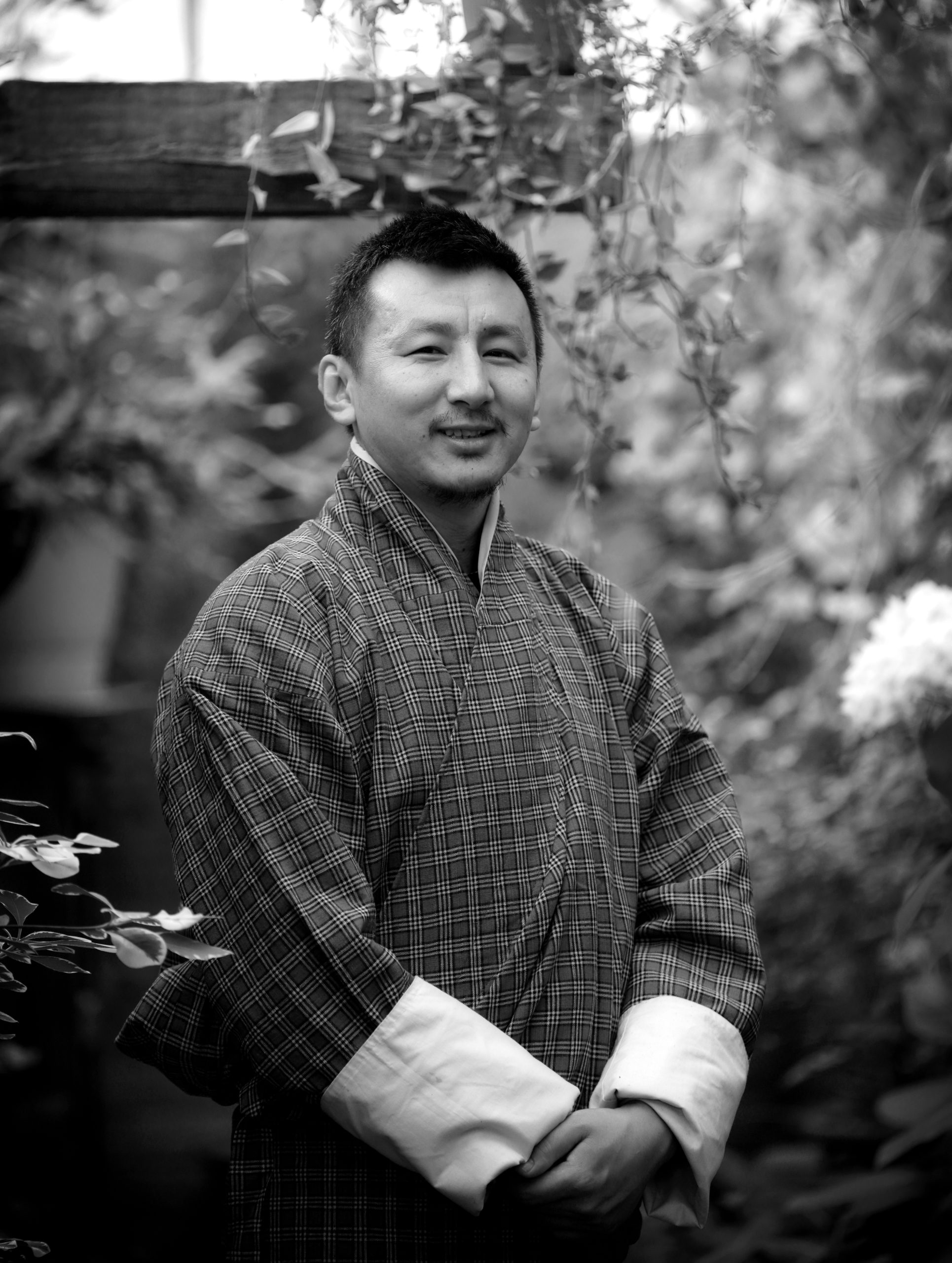
Pema (Tintin) Tshering is an artist from Thimphu, Bhutan whose work is presented through illustration, film, graphic novels, sculpture, installation, design, and painting. Tintin is one of the founding members of Voluntary Artist Studio Thimphu (VAST) set up in 1998 in Thimphu, Bhutan, where he continues to contribute as an educator, mentor and is on the Executive board. VAST was established as the first and only contemporary art organisation which philanthropically offers informal educational programmes for young people and adults. www.pematshering.com
Mok Wai Hong, Gary was born in Hong Kong,1977.
Receiving his BA(2007) and MA(2010), from the Central Academy of Fine Arts in Beijing. He has been nominated as a finalist for the Sovereign Asian Art Prize in 2005, 2006, 2009 and 2014.
Since 2009, he curated exhibitions, such as art exhibition “Endless” for Chow Sang Sang Beijing flagship store at Sanlitun, Beijing. “Today & Tomorrow”, thematic exhibition for Art Macao 2013, Art Nova 100 HK station at K11, 2014. “0-1 breakthrough of a collection”, CP Treasure, Beijing, 2019. “The outsider”, Hao Museum, Shanghai, 2022. “1/X Andy Lau X Art Exhibition” in the BOX HK, 2023. “Boom & Bloom” at Galaxy Art, Macau, 2024, “UPWARD” in Central HK, 2025
Li Zhenhua (b. 1975) has been active since 1996. His practice mainly concerns curation, artistic practice, and project management.
Prof. Kurt, Chan Yuk Keung was graduated from the Department of Fine Arts, The Chinese University of Hong Kong. He then obtained his M.F.A. from the Cranbrook Academy of Art (鶴溪藝術學院), Michigan, U.S.A. Professor Chan joined The Chinese University of Hong Kong in 1989, teaching studio courses and supervising M.F.A. students. He has retired from CUHK since 2016, and has taken the position of deputy director of Hong Kong Art School from 2019-2021.
Kurt is an artist as well as an educator, his research interests cover a wide range of topics such as Hong Kong Art, Art in public realm and mixed media, whereas the outputs mostly presented as exhibition, curatorship, and publication.
Leona Yu, graduated from The Chinese University of Hong Kong and obtained Bachelor of Arts and a Professional Diploma in Museum Studies from Sydney University. She had joined the Leisure and Cultural Services Department since 1996 and participated in organizing numerous international and Hong Kong art exhibitions of the Hong Kong Museum of Art and the Art Promotion Office. She is devoted to modern and contemporary art research, exhibition and education programme planning, as well as acquisition and collection management and is currently Curator (Modern and Hong Kong Art), Hong Kong Museum of Art.
May Fung’s key achievements include:
1994 Fellowship on video art in USA granted by the Asian Cultural Centre.
1999 Fellowship for Artistic Development granted by the Hong Kong Arts Development Council (mainly for development in video installation art).
3 Video works acquired by M+.
Starting curatorial work since 1990’s.
Expert Advisor to the Art Capacity Development Funding Scheme of the Culture, Sports & Tourism Bureau.
Co-opted Member to the Dance & Multi-Arts Sub-committee of the Leisure & Cultural Services Department.
Examiner for the Hong Kong Arts Development Council.
Chair, Art & Culture Outreach.
Engaged in art administration, education and criticism activities.
Kurchi Dasgupta is an Indian artist/art writer/curator based in Kolkata and Kathmandu. She has a masters in Comparative Literature, was once the CEO of The Ray Society, translates extensively into English.Her artworks have been showcased in international biennales and art airs and her writings in major art publications worldwide. She has spoken as a panelist on South Asian art at prestigious conferences and is a member of AICA (International Association of Art Critics).
Maryam was born and raised in a remote city called Zahedan in Iran. She came to Tehran to continue her education and got a bachelor’s degree in handicrafts and a master’s degree in art research, Since 2005, she has been working professionally and continuously in the field of sculpture, specializing in ceramics. Also, since 2009, she has worked in art universities in Iran and for a while in Mazar-e-Sharif Art University in Afghanistan. She has curated several exhibitions in Iran such as Nimrouz which was about Art of Afghanistan and was the most important one among all. Her main issue in art is the human identity and nature in the contemporary world beyond gender and nation. www.maryamkouhestani.com
Olga is a practicing independent curator. Her interests include socially engaged art, important socio-political issues and the development of the creative potential of the local commutions. Over the past 10 years, she has organized and conducted more than 60 exhibition projects in Kazakhstan, Ukraine, Switzerland, Italy, France, the UAE and the USA. Her projects include such festivals as ArtBat Fest, Urban Art Astana, Ashyk Aspan and others. An important project in the curator’s career is the educational initiative for young artists, the School of Artistic Gesture. She is currently running Art&creative Foundation.
A jewellery designer and art history major by training, Wei Ling has been duly recognised for her contribution and efforts towards the development of the Malaysian art scene, through numerous awards and nominations. In 2018, she was appointed by Malaysia’s Ministry of Tourism, Arts and Culture (MOTAC) to curate and spearhead the country’s first pavilion at ‘The 58th La Biennale di Venezia (Venice Biennale)’.
Aung Myat Htay is a Yangon based Artist, writer, Independent curator and former lecturer at National University of Art and Culture. He is an ACC grantee artist for 2014 research grant in New York and have been residency in Japan, India, Germany, Indonesia and Vietnam since 2010 to the present. He expresses social messages in contemporary sense and his works presented in several regions of Asia, Europe and US. He founded SoCA contemporary art project and published art books, art documentation series and research papers. He curated local and international art program, exhibitions and workshops actively since 2013. www.aungmyathtay.com
Hit Man Gurung is an artist and curator based in Kathmandu by way of Lamjung. His diverse practice delves into human mobility, historical frictions, and post-revolutionary complexities. Rooted in Nepal’s recent past, Gurung’s artistic practice intricately reveals interwoven kinships and the exploitative tapestry of capitalism across geographies. His narratives powerfully depict migrant plight within a dehumanizing labor system, exacerbated by an indifferent nation-state. Intertwining Indigenous methodologies, Gurung Ingeniously reshapes contemporary artistic practice. Notably, he co-curated Kathmandu Triennale 2077 and curated the Nepal Pavilion, Venice Biennale, and ‘Garden of Ten Season’. hitmangurung.blogspot.com
Sangeeta Thapa founded Siddhartha Art Gallery in 1987 with eminent artist Shashikala Tiwari. She has curated over 600 shows of Nepali and international artists. She regularly gives consultations to collectors of Nepali art and initiates community art projects. She served on the Board of Patan Museum for six years and is a Fellow of the De Vos Institute of Arts Management. In 2009, she launched Nepal’s premier art event The Kathmandu International Arts Festival (KIAF) as a tri-annual event. In 2011, she established the Siddhartha Arts Foundation as a non-profit and organized the second edition of the Kathmandu International Arts Festival in 2012, through the Foundation.
In 2016, Ms. Thapa co-curated the first exhibition of contemporary Nepali art at the Moesgaard Museum in Arhus, Denmark.
In 2015, the Great Earthquakes struck Nepal causing a huge loss of lives and damage to homes and heritage sites. Taking this into account the third iteration of the Festival was postponed to 2017. In 2016, the Foundation decided to morph the Festival into a Triennale format and was recognized by the Biennale Foundation in Italy. The 2017 edition was curated by Philippe Van Cauteren from the S.M.A.K. Museum in Ghent, Belgium. The 2020 edition was also postponed due to the coronavirus pandemic and took place in March 2022. The edition was led by the artistic director Cosmin Constinas from Para Site Hong Kong and Nepali curators Sheelasha Rajbhandari and Hitman Gurung.
In 2021 , as a precursor to to the Triennale a selection of the works were showcased at Para Site Hong Kong. Post the Triennale a selection of the works were showcased at SAAVY contemporary in Berlin. In the same year the Siddhartha Arts Foundation served as the co commissioner of the Nepal Pavilion at the Venice Biennale which featured the works of Ang Tsherin Sherpa. In December 2022 the Siddhartha Art Foundation showcased works by Nepali artists at the Kochi Biennale.
Ms. Thapa is the publisher of four volumes of poetry: Khulla Dhoka, Nirantar Khulla Dhoka, A Thousand Earths Thousand Skies, and Even the Moonlight can Burn. She has written a book on the drawings of Nepali artist Manuj Babu Mishra entitled ‘In the Eye of the Storm’ and has written essays on contemporary Nepali art in the Gallerie Magazine (India) and for the Nepal Art Now exhibition catalog printed by the Welt Museum, Vienna. She has also contributed her essays to Telling a Tale, a publication of women’s’ narratives, Nukta Art Magazine (Pakistan), and the VOW Magazine in Nepal. Ms. Thapa has been invited in the capacity of a speaker to Art Basel Hong Kong, New North-South Dialogue organized by the British Council and Manchester University in Sri Lanka, the Asian Curatorial Forum Dhaka, and to a panel on South Asian art organized by the Habiart Foundation, New Delhi.
In 2023, she received the President’s medal ‘Kala Sumbardhak Award’ for her contribution to uplifting and supporting the arts scene in the country and in the same year received the ‘Kala Prabhandak Award’ from the Nepal Academy of Fine Arts in recognition for promoting the arts of the country over 35 years.
Tim Etchells
Tim Etchells has spent the last 30 years creating and managing Events and Fairs all over the world. From The Good Food Shows to London Fashion Week to Art HK, Tim has worked in numerous different industry sectors across different countries. In 2008 Tim developed the idea to stage Art HK which became the largest art fair in Asia, and is now under the ownership of MCH and renamed Art Basel Hong Kong. In 2013 Tim launched Sydney Contemporary initially on a biannual basis. Having established itself as the largest international art fair in Australasia, Sydney Contemporary moved to an annual cycle in 2017. Tim’s art fair portfolio includes ART SG (Singapore), Taipei Dangdai (Taiwan) and Art Central (Hong Kong). In 2016 Tim received two separate Lifetime Achievement Awards from the UK Exhibition industry.
India Ford
India is Fair Manager at Sydney Contemporary, having previously joined the fair as VIP Relations Liaison. She holds an MA in Art History from the University of Edinburgh and has a background in contemporary and Indigenous Australian art, including previous experience with Utopia Art Sydney. Her broader professional experience spans the events, luxury hospitality, not-for-profit and financial services sectors, bringing a diverse perspective to her engagement with artists, galleries and the wider contemporary art landscape.
Amra has been contributing reviews and essays to local and international art publications since 1991, and currently writes for Daily Dawn. Her extensive writing is based on research and commentary in order to locate/contextualize contemporary art in Pakistan. Her curatorial work reflects her research and interaction with artists through three decades, exploring curatorial strategies that respond to the context of culture, space, form amid revised conversations on appropriation. She is a co Founder of NuktaArt, a first bi-annual art publication from Pakistan from 2004-2014. She has edited the publication, ‘Home Coming, Rasheed Araeen’, part of Araeen’s first retrospective in Pakistan in 2014.
Instagram: amraali1
Rica Estrada Uson has served as Officer-in-Charge of the Cultural Center of the Philippines Visual Arts and Museum Division since 2015. She holds a Master’s degree in Arts and Cultural Leadership from Goldsmiths, University of London, through the University of the Arts Singapore. She is actively involved in various art organizations such as the Association of Greater Manila Area Museums, the Museum Foundation of the Philippines, and the Asia Pacific Network for Cultural Education and Research, among others.
Brian Curtin is an Irish-born art writer, editor, and educator based in Bangkok. He also works as a curator of contemporary art. His commentary, essays, interviews and reviews have been published in Art Journal, Artforum, Art Asia Pacific, Circa, Craft Research, Flash Art, Frieze, Journal of Curatorial Studies and Parachute, among others. Brian’s monograph Essential Desires: Contemporary Art in Thailand was published by Reaktion Books in 2021.
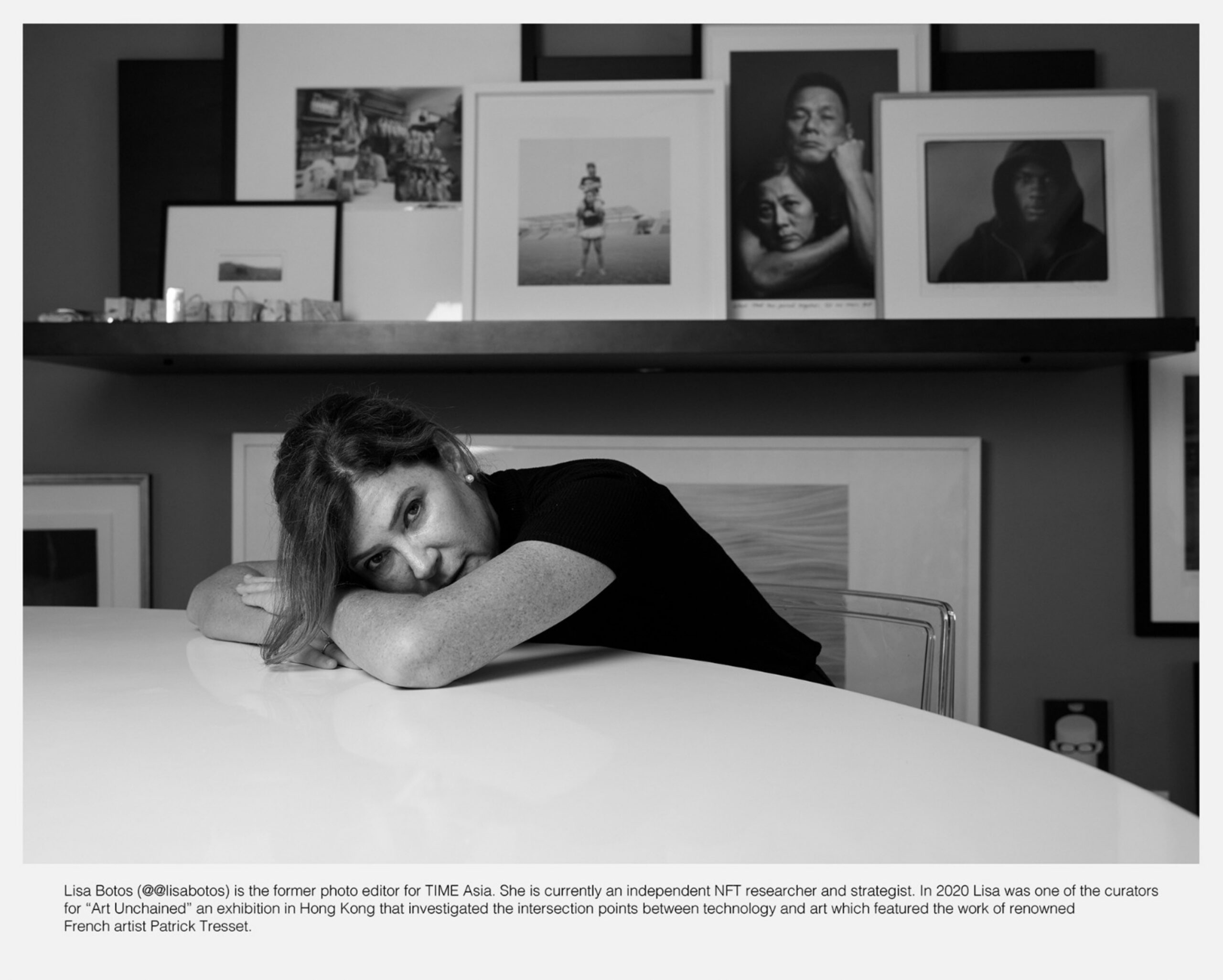
Lisa Botos has built a global career delivering art and culture for diverse entities, from foundations to artists to nations, including Swire, WYNG Foundation, and the Kingdom of Bhutan. In Hong Kong, she co-founded OOI BOTOS gallery and Art Unchained. In 2013, she served as guest curator for the Vladivostok Biennale of Visual Arts. As a senior editor at TIME, Lisa led an award-winning photo department. A founding partner of the advisory Private Partners & Co., Lisa counsels families on cultural legacy. She holds an MA with honors in international communication, focusing on visual culture, from American University, and is a fellow of Hong Kong University’s ACLP and BeFantastic ArtTech. Read more here.
Born and raised in 1980,Tehran, Iran, Sheida Ghomashchi works as an independent curator in Milan, Italy. She has been part of various projects including: Co-curator of “Dixit Algorizmi, The Garden of Knowledge”, the fisrt natioonal pavilion of Uzbekistan in Venice Biennale of Art, 2022.
Co- Curator of “ Dixit Algorizmi”, International exhibition, CCA, Tashkent, Uzbekistan, 2021. Fellow at Floating University, Forensic Architecture Group, Berlin, Germany. Curator of “Archive Alive!”, Exhibition of Ramak Fazel, Kandovan, Pejman Foundation, Tehran, Iran. Fellow of “Ideas City – Detroit”, New Museum of New York, USA. Researcher in Urban Research program, BAUHAUS, Dessau, Germany.
Shormi A. is an art practitioner from Hong Kong. She was the Head of Arts at Duddell’s Hong Kong and has executed several public art projects including Carnival – fundraiser for Amnesty International HK (Hong Kong), Art in the Bar for CoBo Social (Hong Kong). She curated Code Blue at the Taipei Contemporary Art Centre and co-curated 在/不在 | Negation of You (Taipei) at Nanhai Art Gallery. She studied at the University of Hong Kong and completed her MA in Curatorial Studies at the National Taipei University of Education (Taiwan).
Tanya is the co-founder of the website ArtWorldDatabase.com, a website dedicated to promoting and supporting Southeast Asian contemporary art. Before moving to London in 2020, she lived and worked in Singapore for 11 years where worked as an independent curator and published art writer. She holds a Masters degree from Goldsmiths University of London in Asian Art Histories and is dedicated to working with artists living in the diaspora and presenting curatorial projects as part of the Peruke Projects team. www.artworlddatabase.com
Daryl Goh is a startup-advisor, angel investor and art critic/collector who holds 2 Masters Degrees and authored Design Innovation for Everyone (2023). Daryl is also the designer behind Asia’s first-ever phy-gital retail experience – Zhuang: Home of Singapore Designers that kickstarted an industry trend towards digital retail spaces. The technopreneurship & fashion scholar previously started Singapore’s first free art residency, NPE Art Residency and has judged for multiple prominent art awards. www.darylgoh.com
For 40 years, Gun Soo Choi has been an image critic, photographer, and university professor. he has published 12 photographic books and held 10 individual exhibitions.
Born in Seoul (1969), she studied painting at Seoul National University, photography design at Hongik University, and the School of Visual Arts in New York. Winner of the Daum Prize (2006), she was awarded first prize at the Sovereign Asian Art Prize (2011), the Ilwoo Photography Award (2018), and the DongGang International Photography Award (2023). Her publications include The Pink and Blue Project (2007), Animal Companions (2015), The Pink & Blue Project (Hatje Cantz, 2018), and Framed in Colors (2024). Yoon has held solo exhibitions at Kumho Museum of Art, Gallery Inn, and Jenkins Johnson Gallery, and her works are in prominent museum collections worldwide.
Godwin Constantine is a professor and Chairman of the Theertha International Artists Collective.
Takamori Nobuo is a Taiwanese independent curator with Japanese descent, he is currently based at Taipei and Duesseldorf. Takamori works as chief-curator of 2021 Asian Arts Biennial, Phantasmapolis, and chief-curator of 2025 Green Island Biennial. For more than a decade, Takamori’s curatorial work and research project aims to evoke the hidden linkage between Taiwan and the Global South, with practical exchange project for encourage the interaction of contemporary art from both sides.
Tom Van Blarcom, who is CEO of TQPR Asia Pacific, a leading regional public relations consultancy, has been actively involved with art, and the arts, for over two decades, as a collector, a communicator, and an advocate. Aligning with artists, galleries and institutions, he has consistently and strongly supported the ecosystem that is the art community in Bangkok, and Thailand. Working as a judge for the inaugural RCB Portrait Prize in Bangkok, providing the back up for the Pulse Art Awards, offering guidance to young artists and new galleries, personally and through his firm (pro bono), Tom has regularly, and happily, put his money, and hard work, where his mouth is.
Born in the U.S., where he still votes, and a graduate of New York’s Wagner College, Tom has lived in Thailand since 1984, initially working in refugee resettlement. This followed stints in Saudi Arabia, and serving in the Peace Corps in the Central African Republic and Senegal. An active member of the Bangkok community, Tom has been on the Boards of the Thailand Business Coalition on AIDS (TBCA), ThaiCraft, and Soi Dog Rescue, served as the Communications Director of The Siam Society, hosted the television program “Thailand International”, and has written for an array of publications. He lives with his husband and four dogs in central Bangkok.