Donate button
Donate arrow
Edgar_Martins
PAÍS DAS MARAVILHAS_ANA MALTA_300dpi

2025 Portuguese Art Prize

Shortlist

Alice Marcelino
Black Skin White Algorithm  image
Black Skin White Algorithm
Ana Malta
País das Baunilhas image
País das Baunilhas
Ana Velez
From the TERCEIRO ROUND series  image
From the TERCEIRO ROUND series
Carlota Mantero
Vilomah  image
Vilomah
Daniela Krtsch
Regression  image
Regression
Diogo Evangelista
Beholder's Share  image
Beholder’s Share
Edgar Martins
Anton's Hand is Made of Guilt. No Muscle or Bone. He has a Gung-ho Finger and a Grief-stricken Thumb.  image
Anton’s Hand is Made of Guilt. No Muscle or Bone. He has a Gung-ho Finger and a Grief-stricken Thumb.
Fábio Colaço
Grace  image
Grace
Fidel Tavares (Fidel Evora)
Des-saudade  image
Des-saudade
Hugo Brazão
rabo virado para a lua, 2025  image
rabo virado para a lua, 2025
Inês Raposo
Carrinho de Limpeza  image
Carrinho de Limpeza
Izumi Ueda Yuu
Skirt image
Skirt
Joana Mollet
Ermelinda/Migas: Do passado só restam migalhas  image
Ermelinda/Migas: Do passado só restam migalhas
João Motta Guedes
Bringing the flowers to you   image
Bringing the flowers to you
João Pina
Storm in the Malecon image
Storm in the Malecon
Sobral Centeno
Untitled image
Untitled
Marcelo Moscheta
Gigantica Amazonica #15  image
Gigantica Amazonica #15
Márcio Vilela
New Moon at Twilight image
New Moon at Twilight
Maria Ana Vasco Costa
GlazeDrawing B#25 image
GlazeDrawing B#25
Maria Appleton
Body Without Dance  image
Body Without Dance
Maria Luísa Capela
PORTUGUESE BLOOD OF BLUE VELVET image
PORTUGUESE BLOOD OF BLUE VELVET
Mário Lopes
QUINQUE COLUMNAE  image
QUINQUE COLUMNAE
Mário Macilau
Harvest in Fragments  image
Harvest in Fragments
Paulo Arraiano
Point of No Return (Postfossil – Soft and Tender Extraction series)  image
Point of No Return (Postfossil – Soft and Tender Extraction series)
Pedro Henriques
Color Cave 22  image
Color Cave 22
Wasted Rita
Desperate Times image
Desperate Times
Rui Macedo
Untitled  image
Untitled
Saskia Moro
O que podem as palavras_tu homem dono | What can words do?_You, the man and master  image
O que podem as palavras_tu homem dono | What can words do?_You, the man and master
Teresa Esgaio
Fly image
Fly
Vera Midões
De mão em mão  image
De mão em mão
left arrow
right arrow
01 / 30

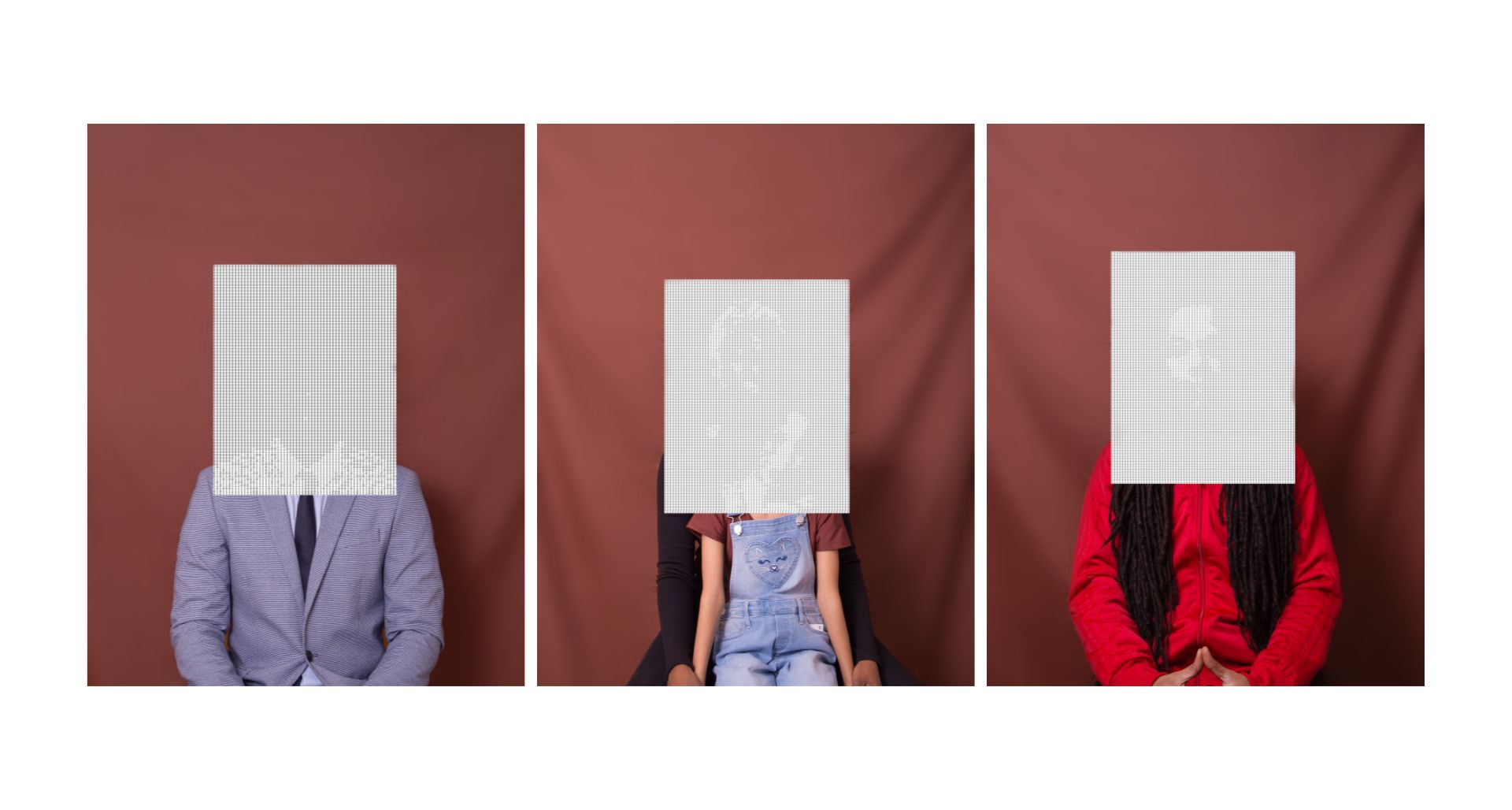
Alice Marcelino

Black Skin White Algorithm  image

Alice Marcelino

Black Skin White Algorithm
Dimension: 57 × 141cm
Medium: C-Type photographic print on paper, mounted on aluminium
Nominated by: Agnieszka Lukasiewicz, Janire Bilbao

Alice Marcelino uses photography to explore how migration, tradition, and identity intersect and evolve across cultures in today’s global society. Drawing from Frantz Fanon’s Black Skin, White Masks, this work explores how colonial ideologies persist within algorithmic systems where Blackness is frequently coded as threatening or deviant. These inherited prejudices are masked as objectivity, amplifying harm through seemingly neutral processes. By converting mugshots into ASCII code, the universal language of computers, Marcelino highlights how individuals are stripped of humanity and reduced to data, offering a critique and a reflection of
how race and identity are shaped in the digital age.

Notable exhibitions include Albuns de Familia: Fotografias da diáspora Africana em Portugal, Padrão dos Descobrimentos Lisbon, (2024); Polirritmia, MOVART gallery in collaboration with World African Artist
United and MEXTO, Lisbon, (2024); 1-54 Fair, London, (2023); AKAA Art & Design Fair, MOVART gallery, Paris, (2022) and Kitoko – Stories from the Black Diaspora, Galeria Arte de Almada, Portugal, (2021).

02 / 30

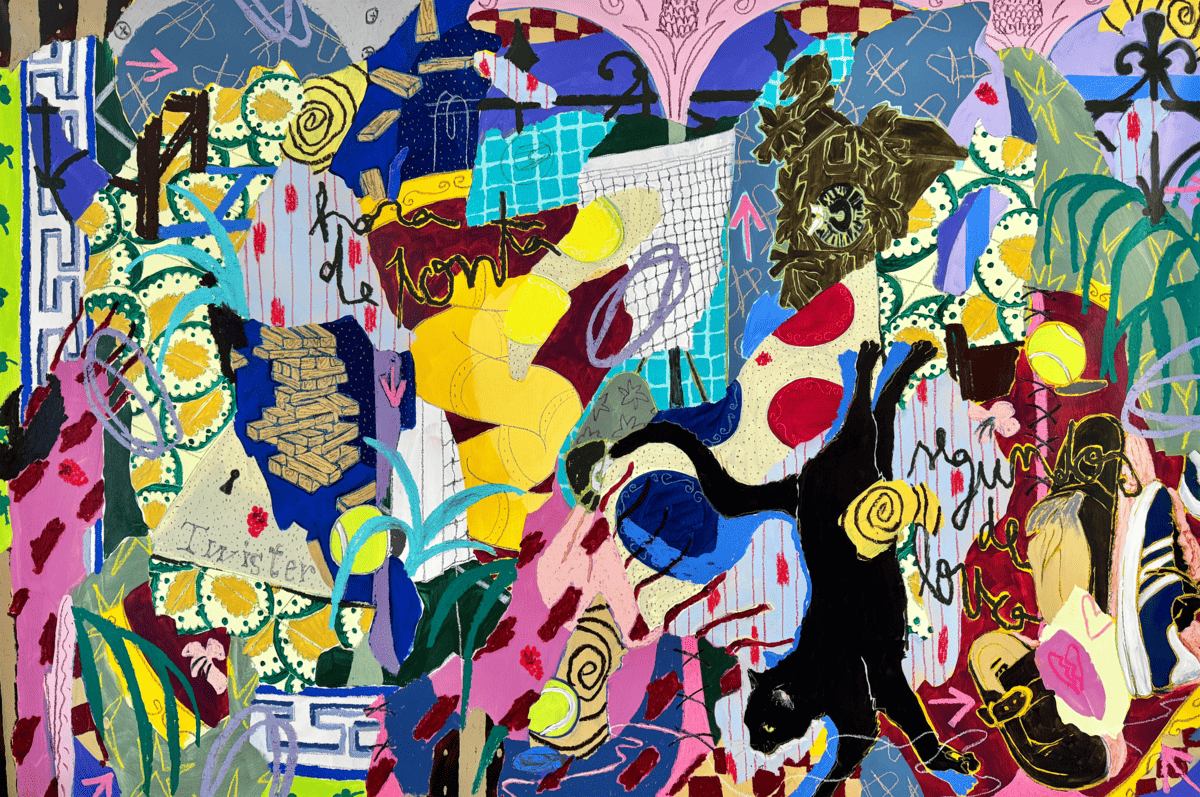
Ana Malta

País das Baunilhas image

Ana Malta

País das Baunilhas
Dimension: 150 x 100 x 3cm
Medium: Acrylic, dry pastel and oil bar painting oncanvas
Nominated by: Eliette Rosich

Ana Malta translates internal dialogues into visual spaces of interpretation. País das Baunilhas reveals the confusion of an overstimulated mind, dragging the viewer into a spiral of sensory excess. “Rush hour… seconds
of madness” exposes the paradox: brief moments of chaos within a culture that demands passivity and neutrality, something associated with the pale taste of vanilla. An unstable Jenga tower disturbs a Twister mat, intertwining emotions in a cuckoo clock marking the erosion of time to the rhythm of tennis balls. A black cat rests ambiguously, between resistance and satisfaction.

Recent exhibitions include Menu, Yiri Arts Gallery, Taiwan, (2025); Art Paris with This Is Not a White Cube, Paris, (2025); Art Madrid Art Fair with Galeria São Mamede, Madrid, (2024); A Ausência do Descanso, Galeria São Mamede, Lisbon, (2023). She was awarded MEXTO Property Investment Acquisition Prize at ARCOlisboa Art Fair, Lisbon, (2025).

03 / 30

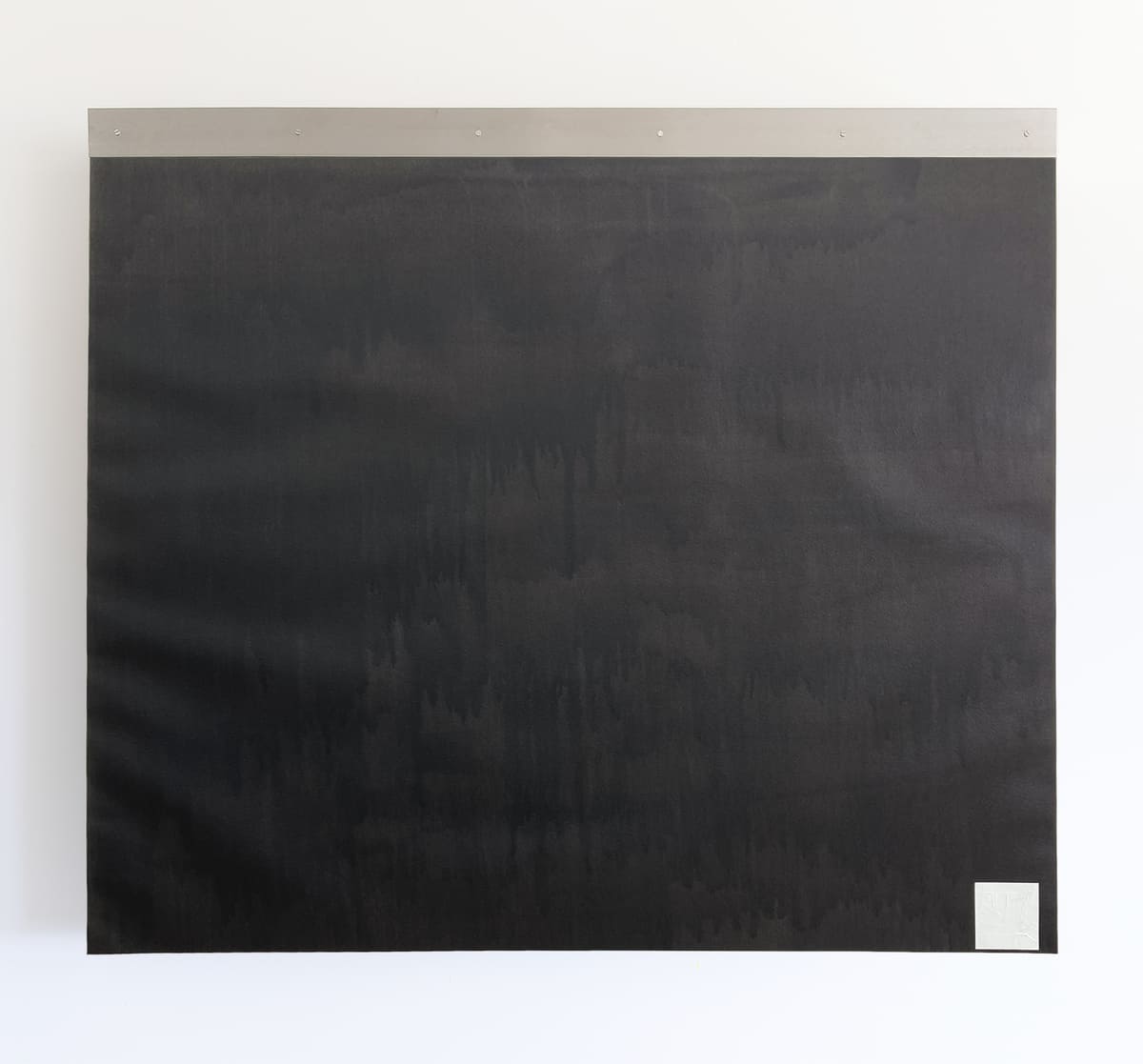
Ana Velez

From the TERCEIRO ROUND series  image

Ana Velez

From the TERCEIRO ROUND series
Dimension: 122 x 100 x 5cm
Medium: Acrylic on 100% cotton 300 gsm Arches paper and stainless steel
Nominated by: Sociedade Nacional de Belas-Artes (SNBA)

Ana Velez primarily works with drawing, painting and instant photography, exploring identity through place, memory and the body. In the TERCEIRO ROUND series, Velez incorporates forms associated with historical Abstraction such as the square, the grid, and seriality. Drawing an analogy between the boxing ring and the pictorial space, she invites viewers to consider the latter as kind of a game. Similar to a board game, a modernist painting, in its research for purity and autonomy, establishes the white square as its limitation. It is a bounded environment, both in space and time, governed by its own logic and valid only within its defined perimeters.

Ana Velez has exhibited in…e o perú fugiu!, Centro Cultural Carpintarias de São Lázaro, Lisbon, (2025); Erasure: The Cosmic Layers of Time, Galeria BeloGalsterer, Lisbon, (2024); Torre de Madeira, Gabinete de Dibujos, Valencia, (2018). She was awarded the Millennium BCP Foundation Acquisition Prize – Emerging Talent, Lisbon, (2024) and the Fundo de Fomento Cultural Grant by the Ministry of Culture, Lisbon, (2020).

04 / 30

Carlota Mantero

Vilomah  image

Carlota Mantero

Vilomah
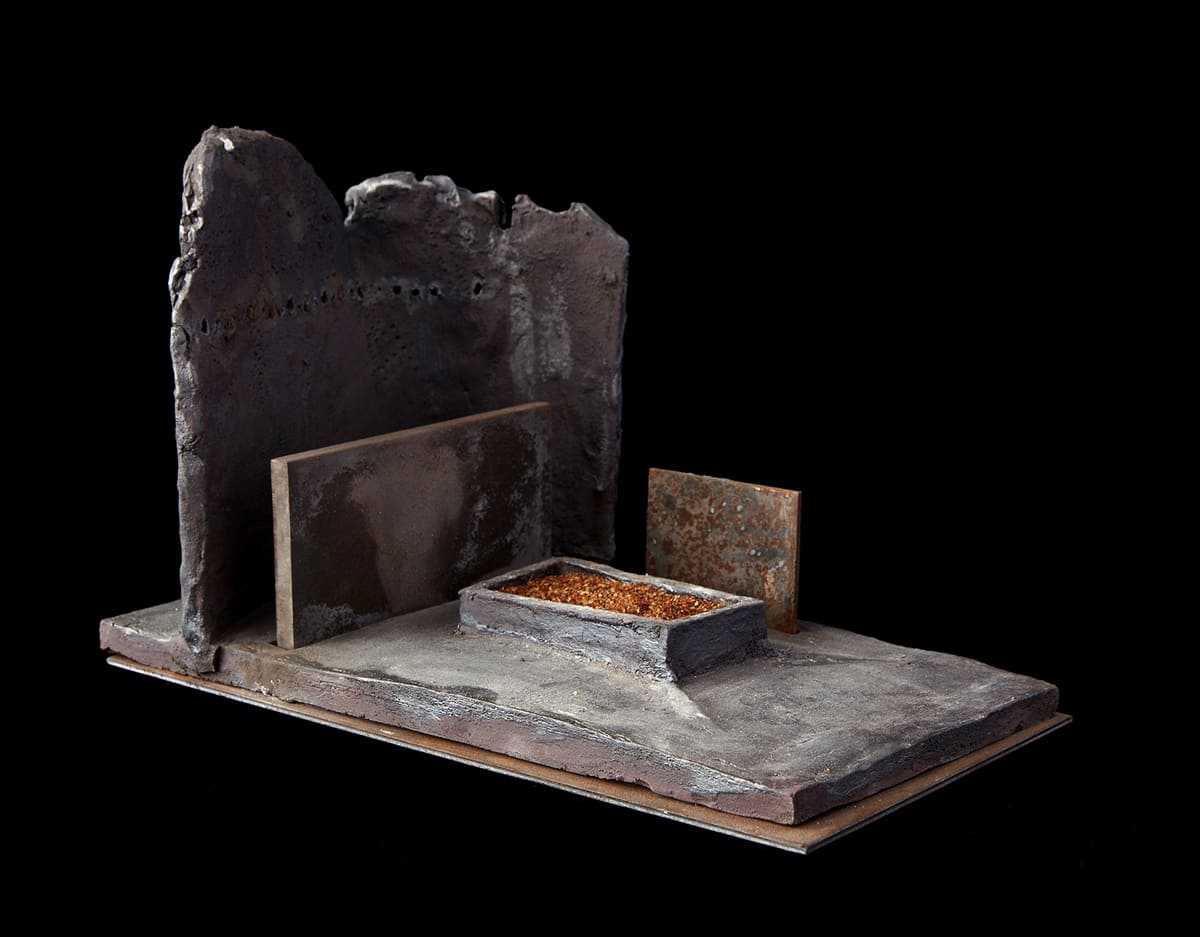
Dimension: 23 x 38 x 20cm
Medium: Barro negro, ferro, engobes, vidrados e mirra
Nominated by: Jaime Silva

Carlota Mantero constructs evocative composites by incorporating elements from photography, ceramics, iron, zinc, acrylics, and resins. Heavy in symbolism, the materials are not only structural but emotional;
each element carries its own metaphorical weight, contributing to a layered narrative. In this piece, Mantero invokes the Sanskirt word Vilomah, which identifies parents who have lost their children. Where Indo-European languages fall silent, Vilomah gives name to a pain and grief that is otherwise linguistically unacknowledged. She not only identifies the limitations of languages but also confronts the emotional void of such loss. Her work becomes a vessel for mourning, remembrance, and the quiet resilience of those who carry indescribable loss.

Notable exhibitions include Teogonia II, Museu Nacional de História Natural e da Ciência, Lisbon, (2025); Alma da Minha Terra, Bienal de Trásos-Montes, Freixo de Espada à Cinta, (2024); Do Oriente vem a Luz – O
Deserto, Sociedade Nacional de Belas Artes (SNBA), Lisbon, (2018).

05 / 30

Daniela Krtsch

Regression  image

Daniela Krtsch

Regression
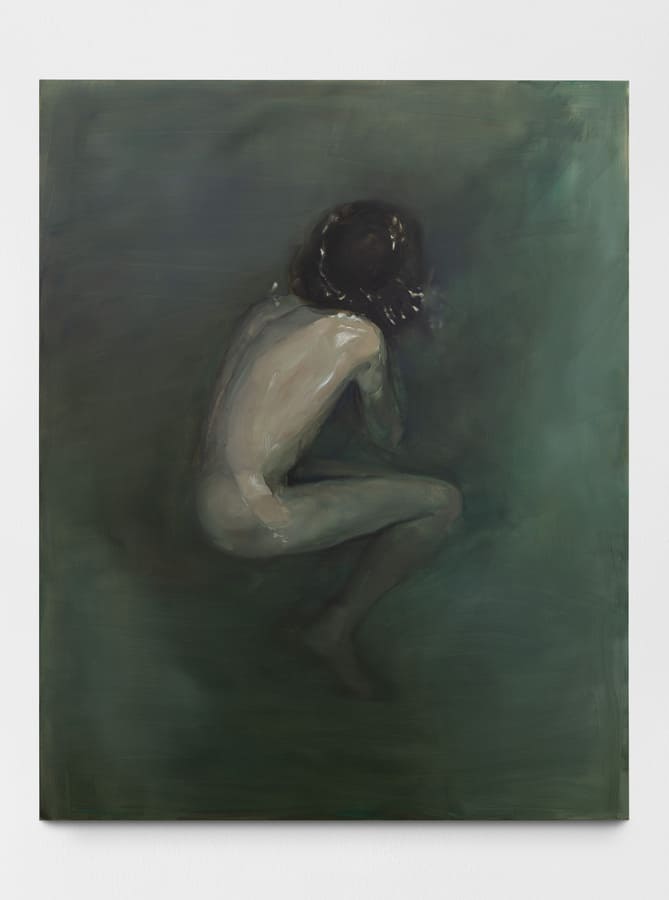
Dimension: 120 x 150 x 4cm
Medium: Oil on Canvas
Nominated by: Emília Ferreira

Daniela Krtsch uses photography, sculpture, and paintings to explore themes of identity, intimacy and memory intricately woven with personal experiences and imagination. Her work seeks to create a narrative that
drifts between the real and the imagined. In Regression, Krtsch draws on psychoanalysis by depicting the psyche in a state of suspension—caught in between memory, isolation, and the quiet unravelling of the self.
Psychoanalyst Carl Jung considered this as a necessary descent in the individuation process, a journey where one sheds the persona, confronts their shadow, and moves towards becoming an integrated self. Here, as
the subject is immersed in the collective unconscious, it suggests not only a confrontation with the inner world, but also a return to the Self.

Recent exhibitions include Some day in may, Salgadeiras Arte Contemporanea, Lisbon, (2025); ARCOlisboa Art Fair with Salgadeiras Arte Contemporanea, (2024); Amor, I Love You, Galeria do Pavilhão 31, Lisbon, (2024); Non Finito, Centro de Cultura Contemporânea de Castelo Branco, (2023); Looking for Eden, Gallery Belo-Galsterer, Lisbon, (2023).

06 / 30

Diogo Evangelista

Beholder's Share  image

Diogo Evangelista

Beholder’s Share
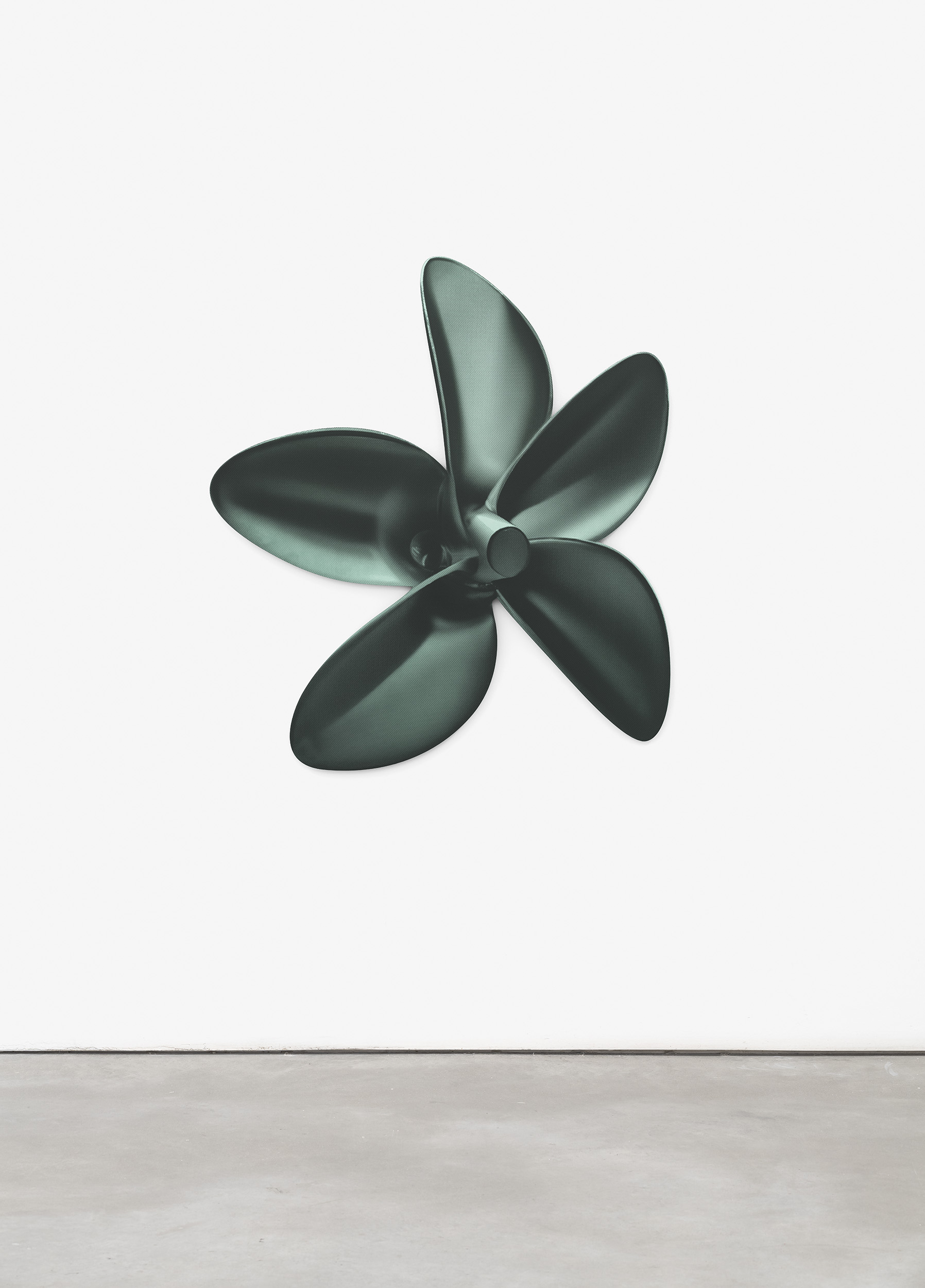
Dimension: 100 x 98cm
Medium: Chromium on acrylic glass, UV-cured paint
Nominated by: Sara Vincent, Howard Bilton

With a multidisciplinary practice, Diogo Evangelista’s work engages themes of desire and transformation, exploring the animist potential of human imagination to appropriate concepts, images and environments. Intersecting science, technology, and nature, Beholder’s Share features six cutouts of imaginary flowers collaboratively designed with the assistance of artificial intelligence. The flower-like structures convey a sense of motion and speed, inviting viewers to contemplate their dynamic nature. Being mirrored, the reflection of the sculpture creates an illusory space that can appear static or dynamic depending on the surrounding
movement, offering a captivating visual experience.

Diogo Evangelista has exhibited at This is a Shot. Works from Serralves collection, Serralves Museum, Porto, (2025); WHO WHERE / QUEM ONDE, Contemporary Art Collection Space – Lisboa Cultura, Lisbon, (2025); The Eighth Climate (What Does Art Do?), 11th Gwangju Biennale, Gwangju, (2016); Spinning Wheel, CAC (Contemporary Art Center), Vilnius, (2018). His work has been collected as part of The State’s Contemporary Art Collection (CACE) of Portugal in 2025 and 2023.

07 / 30

Edgar Martins

Anton's Hand is Made of Guilt. No Muscle or Bone. He has a Gung-ho Finger and a Grief-stricken Thumb.  image

Edgar Martins

Anton’s Hand is Made of Guilt. No Muscle or Bone. He has a Gung-ho Finger and a Grief-stricken Thumb.
Dimension: 60 x 141cm
Medium: C-print, mounted on aluminium and framed
Nominated by: Emília Ferreira

Edgar Martins’s artistic practice is rooted in long-term collaborations with highprofile and restricted organisations including CERN, The European Space Agency, EDP, BMW, the UK Metropolitan Police, amongst others. His work explores complex themes including war, incarceration, migration, urbanism, and technology. The project at hand investigates the death and disappearance of his close friend, photojournalist Anton Hammerl, during the 2011 Libyan war. At its heart, it is guided by a simple premise: how does one tell a story when there is no witness, no testimony, no evidence, no referential subject? This project is more than a mere tribute, it portrays a complex story, warped by absences, that talks of the difficulty of documenting, witnessing, and imagining war.

Edgar Martins has received numerous awards including the Sony World Photography Award Photographer of the Year (2023) and International Photography Awards Film Photographer of the Year (2023). His latest
publications include Anton’s Hand is Made of Guilt… (2024) and What Photography & Inc. have in Common with an Empty Vase (2022).

08 / 30

Fábio Colaço

Grace  image

Fábio Colaço

Grace
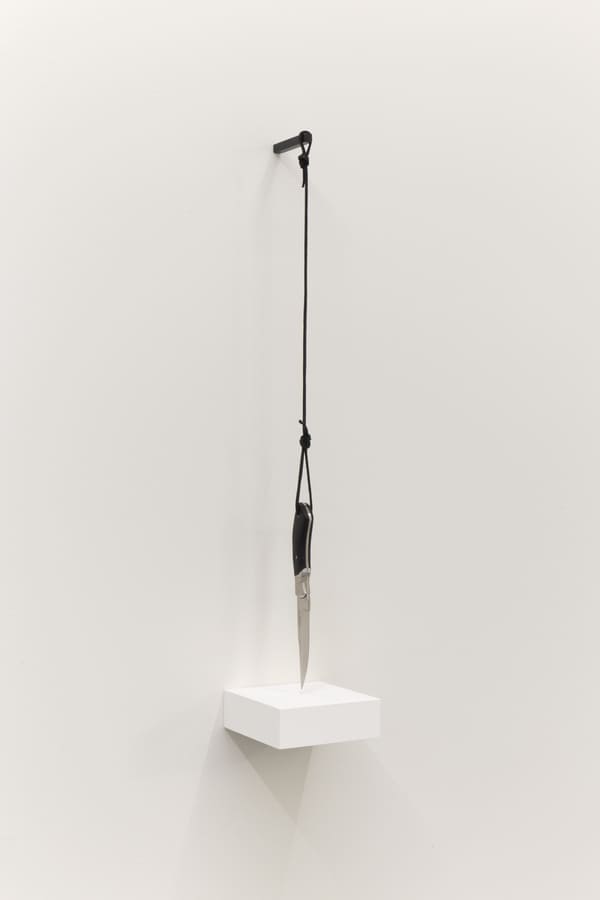
Dimension: 70 x 15 x 15cm
Medium: Wall plinth, knife, metal stand, leather cable, natural diamond
Nominated by: Merve Pakyürek, Kean Paker

Although he explores multiple media, Fábio Colaço’s work focuses primarily on sculpture and on investigating the relationship between power and language, as well as how discourses, images, and symbolic structures have become normative today. Irony, humor, and subversion are structuring elements of his practice, functioning as strategies to question established paradigms.

Grace presents a moment of tension between beauty and threat. The work is an allegory of the present, in a world where power and production simulate stability but collapse internally. The diamond represents the illusion of solidity underlying capitalist ideology. The suspended knife signals latent danger through anticipation, reflecting a regime of surveillance and control. Lauren Berlant’s idea of cruel optimism underpins the work, and our attachment to promises of stability keeps us trapped in a hostile system. The grace evoked by the title is fragile and political.

Fábio Colaço participates regularly in solo and group exhibitions, and his work is held in public and private collections in Portugal and abroad.

09 / 30

Fidel Tavares (Fidel Evora)

Des-saudade  image

Fidel Tavares (Fidel Evora)

Des-saudade
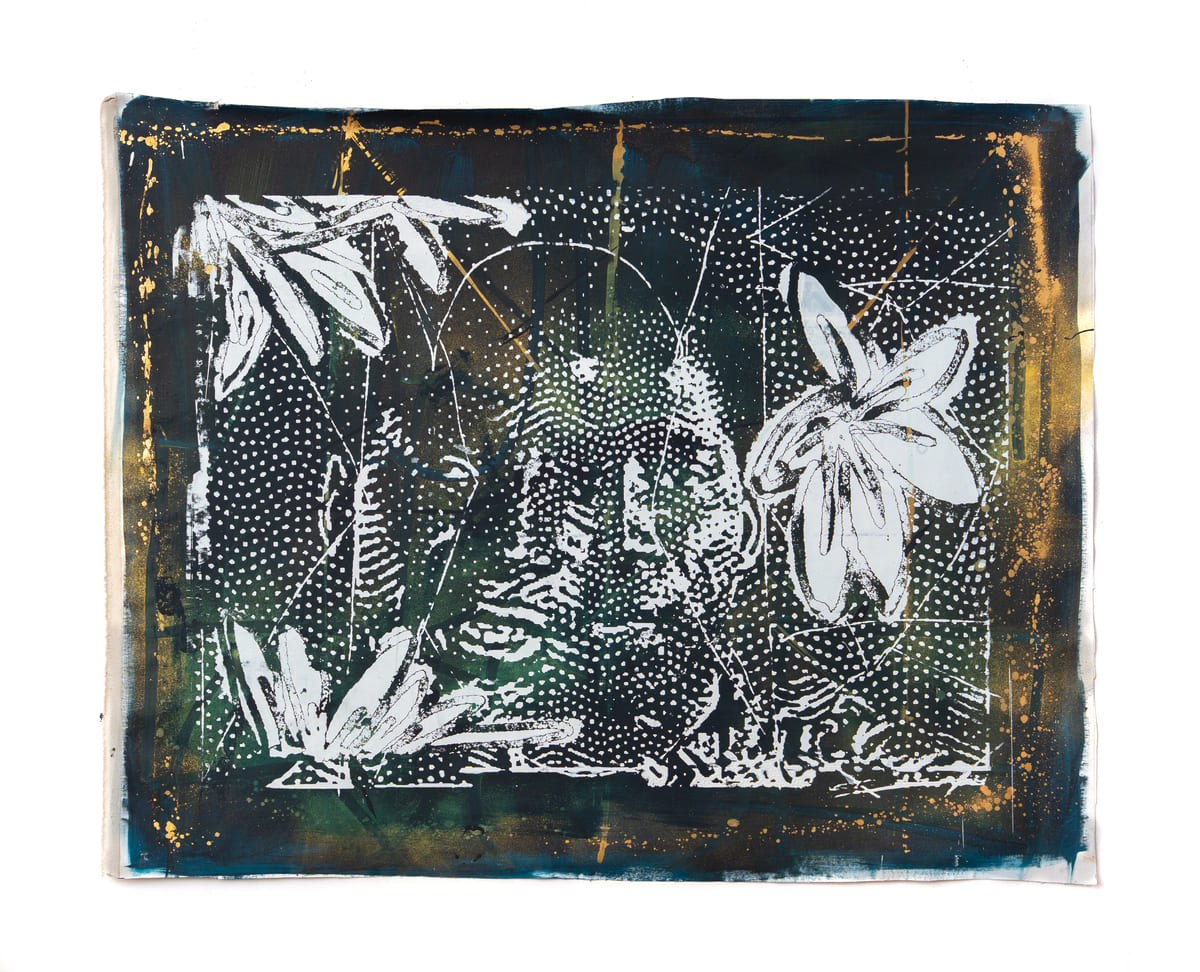
Dimension: 90 x 123cm
Medium: Screen-print, Golden Dust over canvas
Nominated by: Agnieszka Lukasiewicz, Janire Bilbao

Fidel Évora’s work is driven by the belief that the Information Age absorbs everything: our reality, landscapes, and identities. Through a process of converting digital images into pixel maps, Évora manipulates these
memory organization systems into new compositions. With the use of analog printing techniques such as screen-printing or lithography, he brings these images to life, transforming them from digital bits to carbon-based representation. Here, Évora alludes to a unique a Portuguese word, “saudade”, a deep longing for someone or past moments. He suggests that nostalgia is no longer a refuge; the past, the other, must be digitised, archived and constantly accessible. Space and time collapse into a continuous present, where nothing is truly gone and everything must be visible.

Notable exhibitions include Alter Ego, Old Court Building, Macau, (2018); Interferências, Museu de Arte Arquitectura e Tecnologia (MAAT), Lisbon, (2022); 8 Artists 48 Years of Freedom – Mural, MAAT, Lisbon, (2022); IDEM Paris, Paris, (2022) and 1-54 London, (2024).

10 / 30

Hugo Brazão

rabo virado para a lua, 2025  image

Hugo Brazão

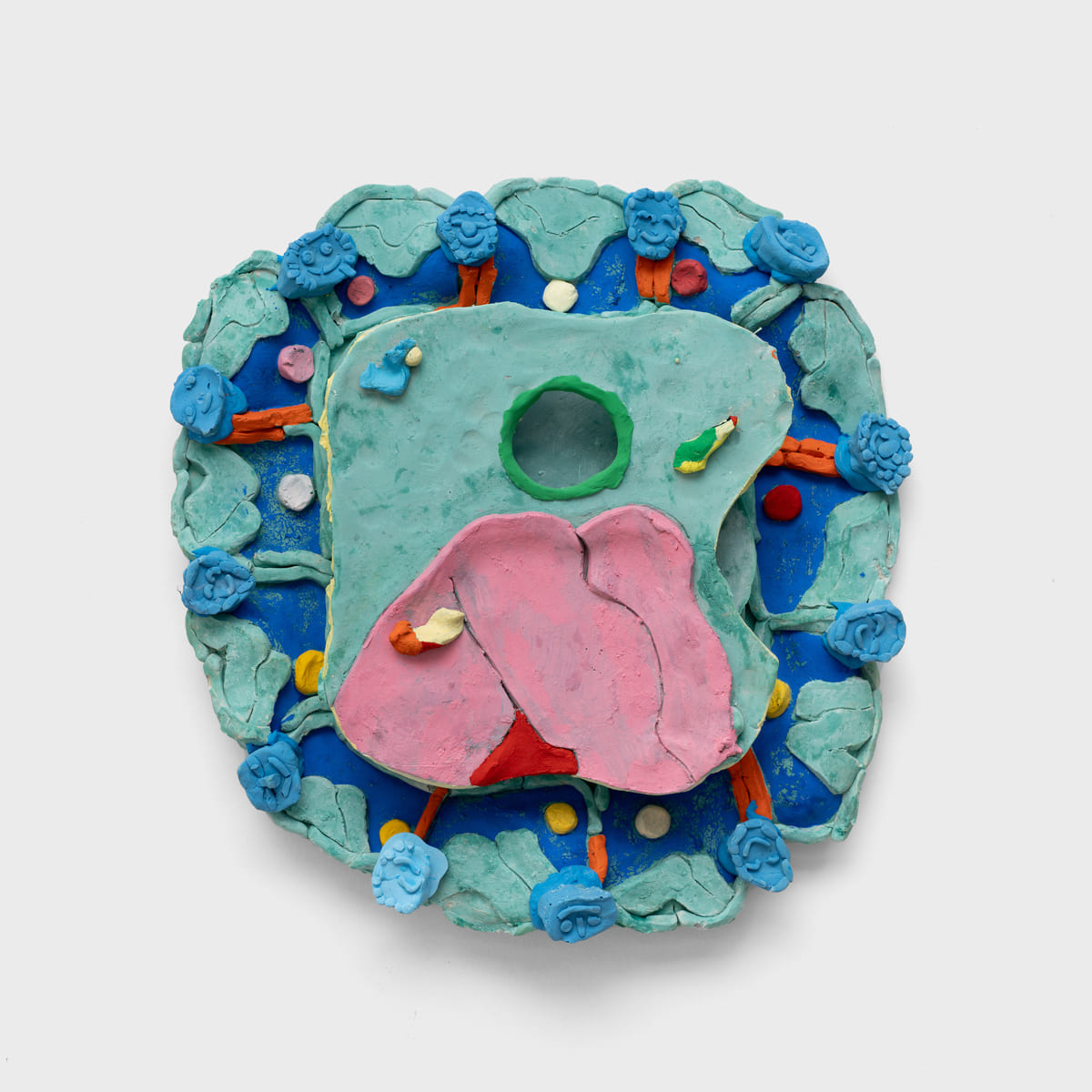
rabo virado para a lua, 2025
Dimension: 42 x 45 x 13cm
Medium: Acrylic resin, gypsum based compound and pigment-based paint
Nominated by: Pedro Magalhães

Hugo Brazão’s multidisciplinary practice—spanning sculpture, textiles, and drawing—investigates escapism as a social and psychological response. His work draws from sociology, science, and pop culture to examine how individuals and communities navigate instability. Drawing on the Portuguese expression used to describe someone who is consistently lucky, rabo virado para a lua depicts a figure with their backside facing the moon, which appears and disappears via a rotating mechanism. This symbolic fluctuation questions the notion of luck as an external force. The work proposes that the future is actively constructed rather than passively received. Combining visual humour with interactive elements, the work invites viewers to reconsider the relationship between desire, illusion, and agency.

Hugo Brazão has exhibited at Happily Ever After, Balcony Gallery, Lisbon, (2025); Snake in a cookie jar, Voda Gallery, Seoul, (2023); Cat did it!, Commonage, London, (2021) and Pintura: Campo de observação Parte II, Cristina Guerra Contemporary Art, Lisbon, (2021). He was awarded the VIA Arts Prize in 2018

11 / 30

Inês Raposo

Carrinho de Limpeza  image

Inês Raposo

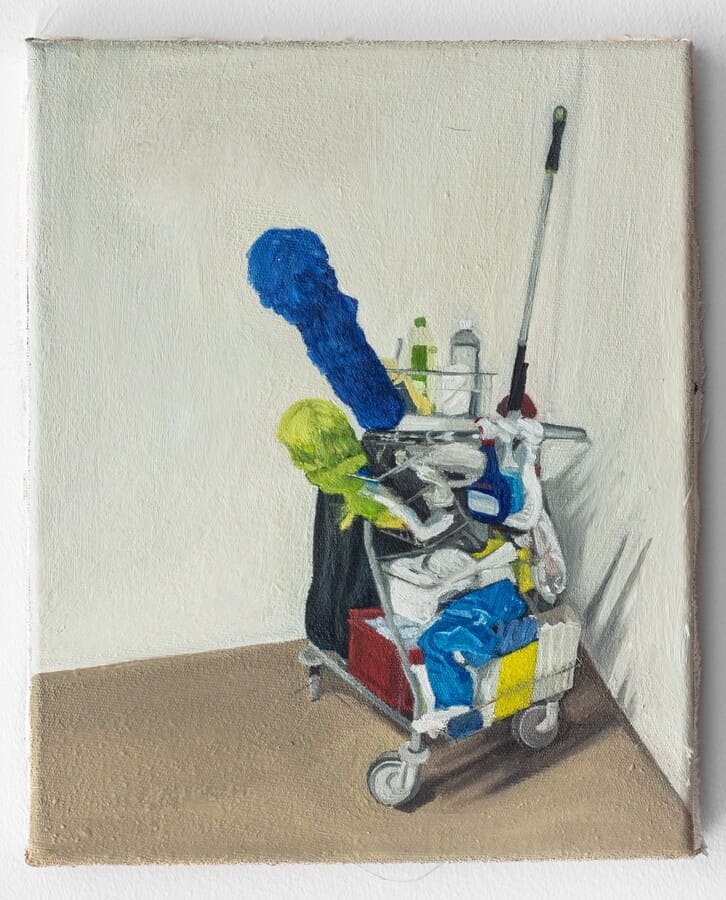
Carrinho de Limpeza
Dimension: 28 x 22 x 5cm
Medium: Oil on canvas
Nominated by: Kean Paker, Merve Pakyürek

Inês Raposo’s artistic practice engages with biographical themes, while also addressing contemporary political, gender, and social issues. Her paintings often reinterpret motifs from art history, creating fantastical subversions with a humorous and fluid anachronism. In this work, Raposo presents a still life inspired by a cleaning cart she encountered during her Erasmus exchange in Oslo. The composition — marked by vibrant colours and the object’s sculptural presence — draws attention to a form of labour that is often invisible. The painting invites a revaluation of the everyday, prompting reflection on the intersections between gender,
labour, and visibility within public space.

Recent exhibitions include Standard Deviation, Rialto6, Lisbon, (2025); Imagination – Tools to think about the future, Mono, Lisbon, (2025); Holbein Syndrome, Galeria Francisco Fino, Lisbon, (2025); Be My Guest, Galeria Nave, Lisbon, (2024) and Não se convida 13 para jantar, Dialogue Gallery, Lisbon, (2024)

12 / 30

Izumi Ueda Yuu

Skirt image

Izumi Ueda Yuu

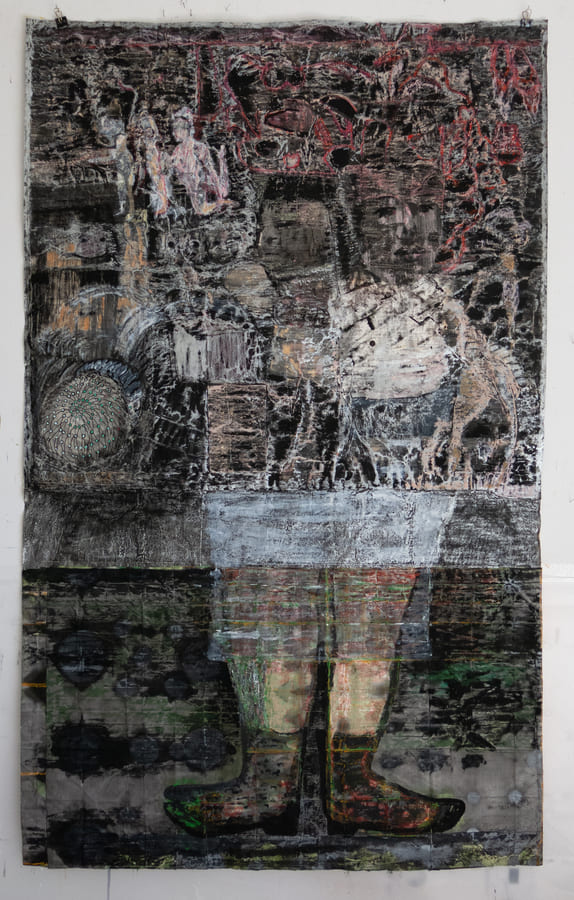
Skirt
Dimension: 90.5 x 147cm
Medium: Mixed media painting on paper, monotype, frottage, collage, gouache and oil stick
Nominated by: Sociedade Nacional de Belas-Artes (SNBA)

Izumi Ueda Yuu’s practice is grounded in animism—the belief that everyday objects have spirit and deserve respect. Working solely on paper, she creates images and objects inspired by familiar forms. Her process blends painting, printing, collage, shibori dyeing, found objects and cast paper sculpture. Skirt began with a found image of a bandaged torso and layered posters collected from the streets of Lisbon, fragments rich with time’s imprint. Through frottage and collage, she transforms these materials into something archaeological and alive, revealing a standing figure in boots surrounded by shapes from this world and another. Her work becomes a space of reflection, where spirit, memory, and time converge unfolding through forms that feel both familiar and mysteriously distant.

Exhibitions include Chapter 7: Ocean is There, Sociedade Nacional de Belas Artes (SNBA), Lisbon, (2024); Cerveira International Art Biennial, Cerveira, (2022); The Luxembourg Art Prize – The Finalists Exhibition,
Pinacothèque museum, Luxembourg, (2019) and No Borders, Museu do Oriente, Lisbon, (2016)

13 / 30

Joana Mollet

Ermelinda/Migas: Do passado só restam migalhas  image

Joana Mollet

Ermelinda/Migas: Do passado só restam migalhas
Dimension: 120 x 90 x 4cm
Medium: Acrylic and mixed media on canvas
Nominated by: Karen Larkins

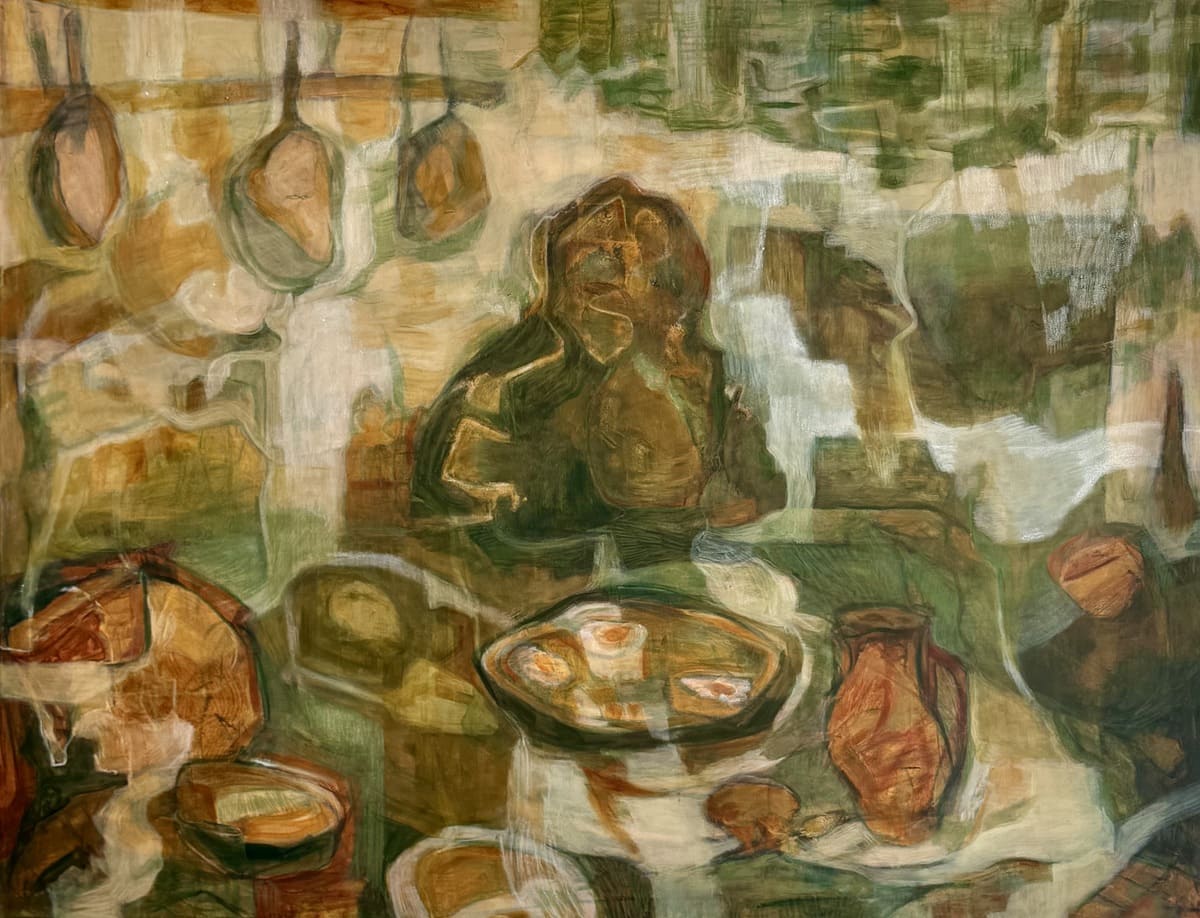
Joana Mollet’s practice gives visual form to authentic stories, translating lived experience and collective memory into abstract paintings. Drawing from a personal archive of historical material and oral testimonies, her work explores the social, domestic and working lives of women in Portugal’s Alentejo region throughout the 20th century, revealing a world now largely disappeared.

Ermelinda, whom Mollet knew in her eighties, was stooped from a lifetime of work, cooking daily over open coals on the floor. This painting evokes the traces left behind by women like her, and its title refers to
the fragmented nature of the past. Working with these remnants, Mollet reassembles what endures—creating new work that sheds light on overlooked, simple and personal narratives that made up the fabric of women’s lives, connecting the essence of Alentejo to a wider audience.

Joana Mollet’s work has been exhibited at Peter’s Garden, Casa Holstein, Sintra, (2024); Coastline, Community & Conservation, Bait Al Baranda Musuem, Muscat, (2024); Memories of the Wadi, Centre Fanco-Omanais, Muscat, (2024). She was nominated for The Sovereign Portuguese Art Prize in 2023 and 2024.

14 / 30

João Motta Guedes

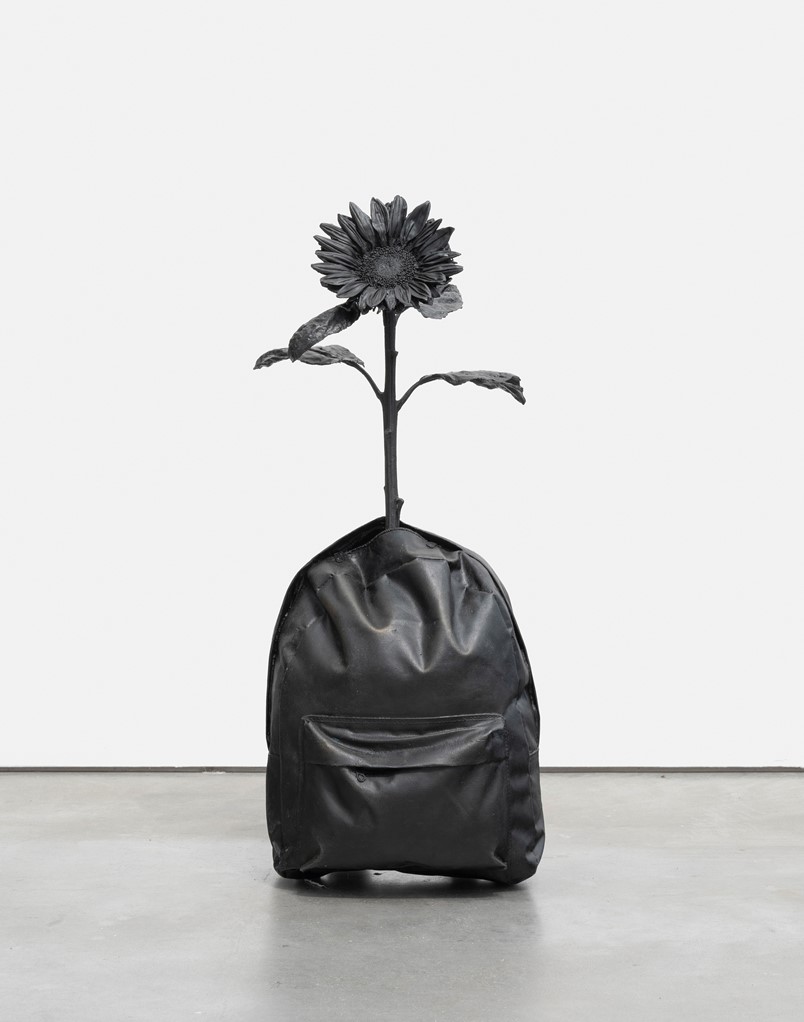
Bringing the flowers to you   image

João Motta Guedes

Bringing the flowers to you
Dimension: 80 x 45 x 35cm
Medium: Bronze
Nominated by: Francisco Fino

João Motta Guedes’s artistic practice is rooted in poetry as a force to question, dream, and shape the way to follow. His work engages in philosophical and political dialogues investigating how emotions such as freedom, vulnerability, love, and violence manifest as symptoms of the human condition. The presented sculpture exists in the paradox of weight and lightness. Its title evokes the gesture of carrying flowers for someone, yet the work mirrors the emotional baggage a person carries within them. The contrast between the lightness of the flowers and the weight of the backpack speaks to the tension between love and burden and the way we live.

João Motta Guedes was shortlisted for The Millenium BCP Foundation’s Young Art Award in 2023. He recently exhibited in Vulnerable Objectivities in a Garden of Delights and Horrors, The Loft, Servais Family Collection, Brussels, (2025); No feeling is final, Galeria da Boavista, Lisbon, (2024); How to live?, Galeria NAVE, Lisbon (2023), and You came to start the revolution, Galeria Zé dos Bois, Lisbon, (2023).

15 / 30

João Pina

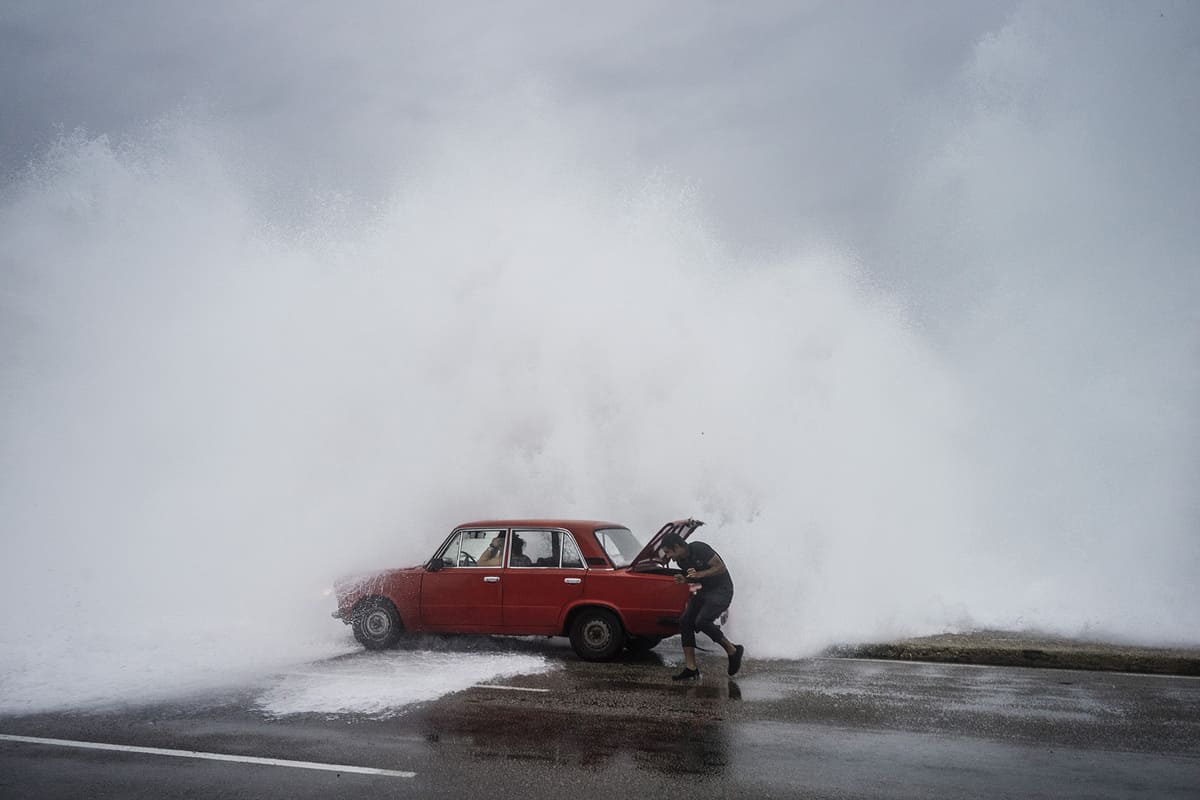
Storm in the Malecon image

João Pina

Storm in the Malecon
Dimension: 120 x 80 x 3cm
Medium: Photograph on Giclée print
Nominated by: Emília Ferreira

Through photography, João Pina examines the intersections of history, memory, and political realities, creating a visual narrative that bridges the past and the present. His upbringing in Portugal, during the transition
from dictatorship to democracy, shaped Pina’s acute understanding of political memory—how it is constructed, erased, and endlessly reinterpreted. This foundation drove his practice to use photography as both a reflective instrument and a tool of resistance, unearthing silenced histories, challenging dominant narratives, and grappling with the complexities of collective memory. Photographed in Cuba, Malecón
is part of a long-term project to document and visually represent the last communist regime in the Western Hemisphere, showing its challenges, wonders and contradictions.

João Pina is the recipient of the Portuguese Society of Authors Award for Photography in 2012 and the Estação Imagem Grand Prize in 2017. He exhibited Operation Condor at Reencontres d’Arles, Arles, (2017). His monograph, Tarrafal, was published by Tinta-da-China/GOST in 2024

16 / 30

Sobral Centeno

Untitled image

Sobral Centeno

Untitled
Dimension: 120 x 140 x 2.5cm
Medium: Acrylic on canvas
Nominated by: Howard Bilton

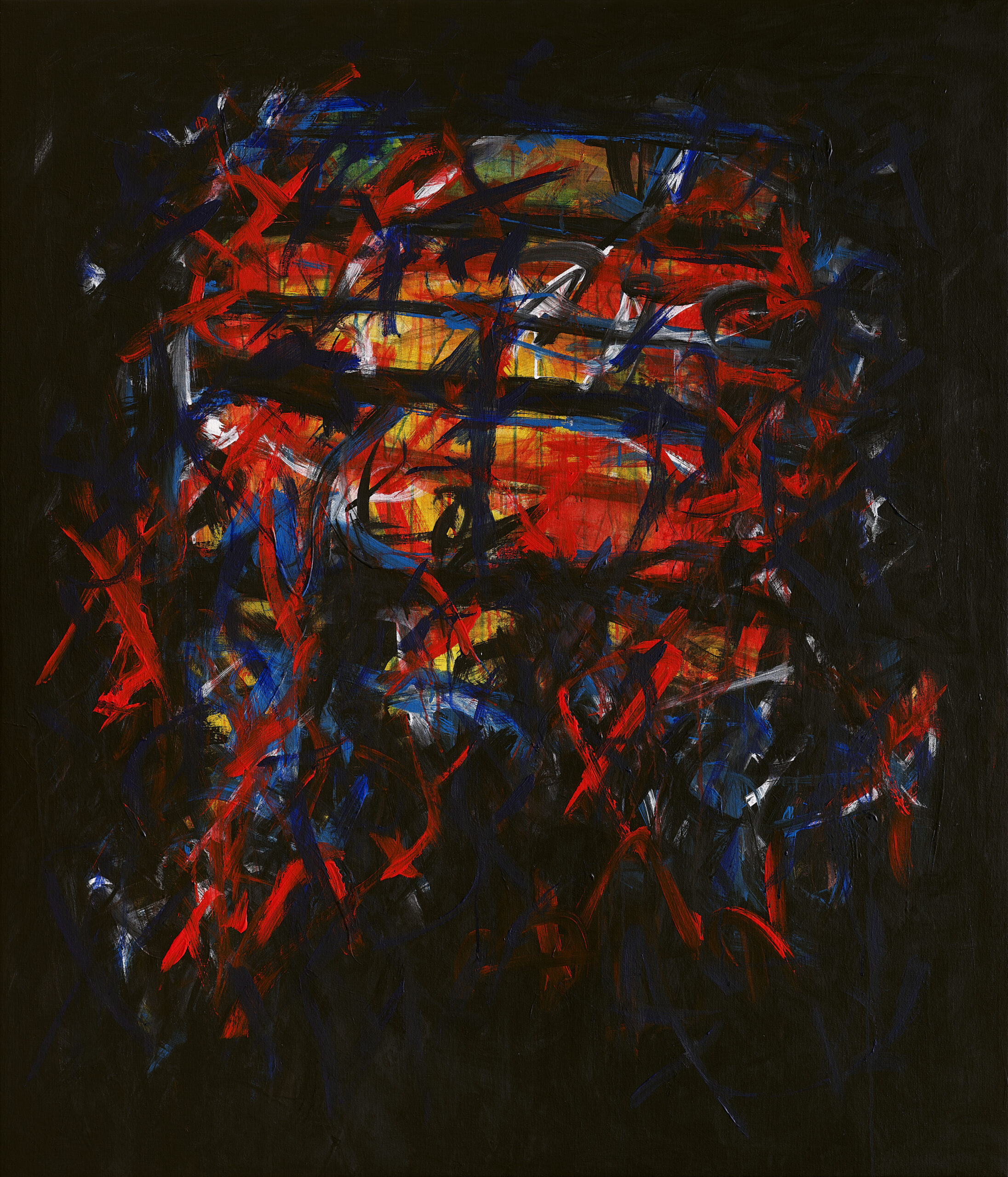
Sobral Centeno explores the transmission of memory: within his rapid brushstrokes’ hierarchical chaos, moments of his consciousness are hidden. The confrontation with these explosive gestures in Untitled, at first impact, is almost overwhelming. Among the disorganization, chaos, and chance, hierarchy is quietly present. The expressivity of color and the spontaneous gesture are ruled by layers—a reflection of the artist’s search for an understanding of reality. Within the abstract, the figurative can also be found; rituals, symbolic objects, and ideologies from different civilizations are concealed between the layers of acrylic. Using his art to process and share his experiences, Centeno unfolds his vision of the world, constantly transformed by political and cultural shifts.

His work has been exhibited in Sobral Centeno – desenho 1965 – 2024, Galeria Municipal de Matosinhos (2025); ARCOlisboa, Lisbon (2025), and Drawing Room Lisboa, Lisbon (2024). Sobral Centeno was awarded the Medal of Merit of the city of Porto and Matosinhos in 2024 and 2025, respectively. His monograph, desenho (1965-2024), was published by DOCUMENTA, in 2025.

17 / 30

Marcelo Moscheta

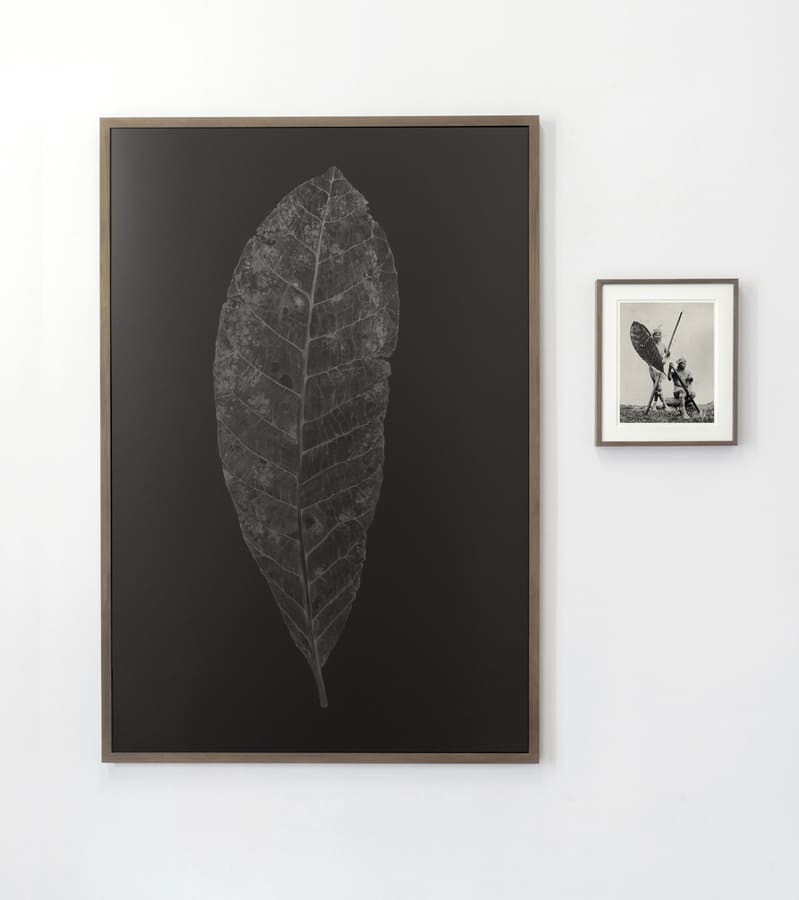
Gigantica Amazonica #15  image

Marcelo Moscheta

Gigantica Amazonica #15
Dimension: 125 x 125 x 4cm
Medium: Graphite drawing on expanded PVC, natural pigment printing on Baryta Photo Rag 300g paper
Nominated by: Emília Ferreira

Marcelo Moscheta is a practice-based artist whose work explores the interplay between humans and nature, transforming materials and imagery gathered from remote landscapes into drawings, photographs, sculptures, and site-specific installations. His series, Gigantica Amazonica, began with an immersive journey through the Amazon rainforest. In this work, Moscheta digitally overlays enormous foliage onto archival photographs by 19th-century photographer Albert Frisch, creating a fictional interplay between past and present. Each manipulated image is paired with a life-sized drawing of the leaf depicted, blurring the lines between documentation and imagination. Frisch himself remains an enigmatic figure in Brazilian photographic history, with speculation around his existence persisting until the late 20th century.

Marcelo Moscheta was awarded The Pollock-Krasner Foundation Grant in 2017. His work was featured in Vitamin D2, New Perspectives on Drawings by Phaidon (2013). Recent Exhibitions include Errante at Galeria Vermelho, São Paulo (2024); Do labirinto ósseo do Homem ao Eixo do Rochedo at National Museum of Natural History and Science (MUHNAC), Lisbon, (2024).

18 / 30

Márcio Vilela

New Moon at Twilight image

Márcio Vilela

New Moon at Twilight
Dimension: 150x122cm
Medium: Fotografia
Nominated by: Emília Ferreira

Márcio Vilela’s practice lies at the intersection of art and science, grounded in research and process-based inquiry. Performance, experimentation, critical engagement and collaboration with scientists shape both the conceptual and material dimensions of his work. This photograph captures “Earthshine”, a fleeting glow caused by sunlight reflecting Earth onto the Moon. Visible during twilight, when the sky glows with vibrant shades of orange, pink, and blue, it marks the moment when the first celestial bodies appear. The New Moon, nearly invisible due to its alignment with the Sun, reveals a faint outline. Inviting contemplation of transience and our place within the vastness, Vilela’s image captures this delicate interplay between light, atmosphere, and cosmic rhythm, where the intensity of the sky contrasts with the quiet emergence of astronomical objects.

Recent exhibitions include BIENALSUR, Mar del Plata, (2025); Museu de Arte Contemporânea Armando Martins (MACAM), Lisbon, (2025); ARCOlisboa Art Fair, Lisbon, (2024); Sète Lisboa – Festival Internacional de Arte Contemporânea, Almada, (2024) and Previsão de Deriva, Galeria Foco, Lisbon, (2023).

19 / 30

Maria Ana Vasco Costa

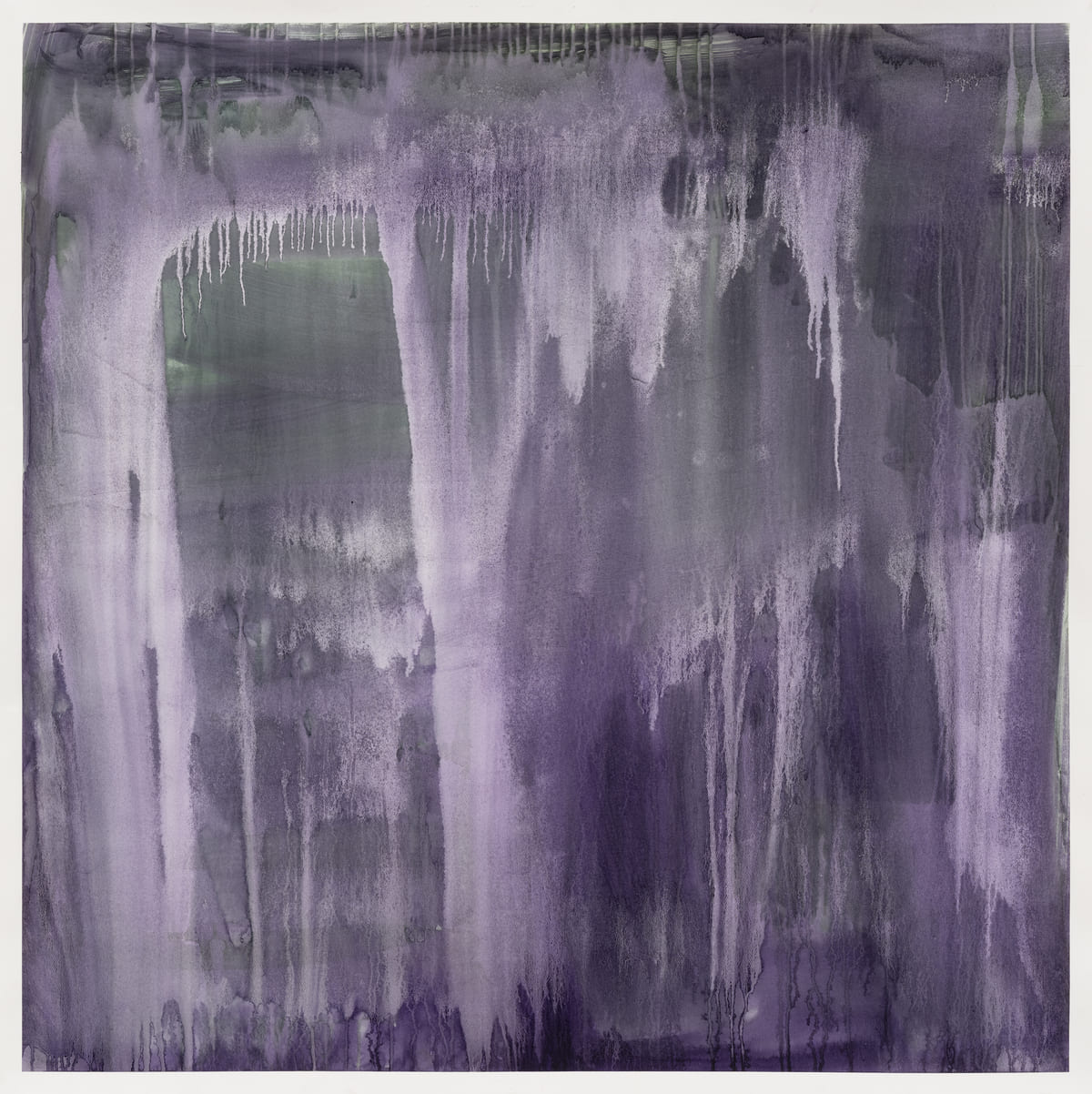
GlazeDrawing B#25 image

Maria Ana Vasco Costa

GlazeDrawing B#25
Dimension: 150 x 150 x 4cm
Medium: Watercolour on paper
Nominated by: Valerie Marendaz

Maria Ana Vasco Costa’s practice explores connections between ceramic material and the fragment, shaped by a personal archive of memories and perceptions of nature. Sculptures in glazed ceramics evoke geological formations of other landscapes, exploring colour, depth, temperature, variation, and sound. In her Glaze Drawings series, Costa reimagines the solidity of stone through watercolour, applied in the manner of ceramic glaze: fluid, layered and unpredictable. The process is ritualistic, akin to a photographic development process, gradually revealing a visual depth and texture. Each square format drawing references to the traditional ceramic tile; within the defined shape, there is potential for expansion, a formal and chromatic freedom that questions and amplifies the limits of the original format.

Notable exhibitions include ARCOlisboa, Lisbon, (2021); Ice Ice Baby, Appleton, Lisbon, (2021); Água d´Alto, Galeria Municipal de Arte, Almada, (2019); Pintura: Campo de Observação, Galeria Cristina Guerra, Lisbon (2021) and Pitching itself a tent where we all may enter, Quetzal Art Centre, Vidigueira, (2021).

20 / 30

Maria Appleton

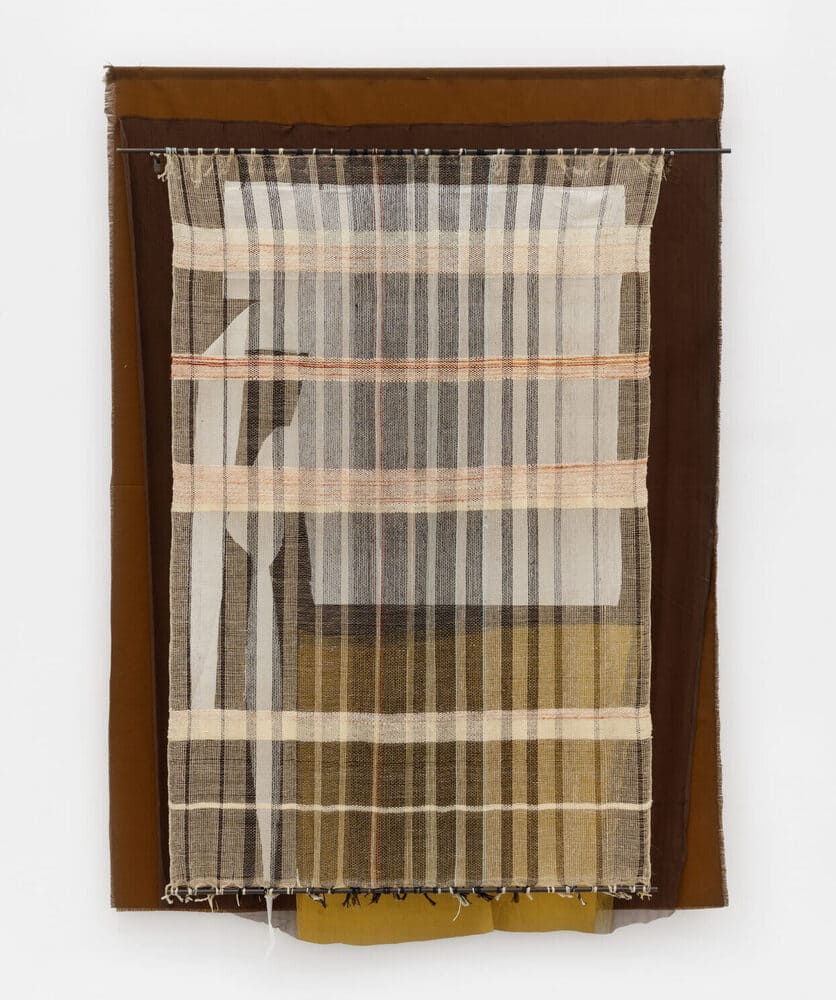
Body Without Dance  image

Maria Appleton

Body Without Dance
Dimension: 120 x 150 x 5cm
Medium: Patchwork in polyester and cotton fabric weaved using linen, wool and cotton threads, metal rods support
Nominated by: Valerie Marendaz

Maria Appleton’s practice materializes from ongoing research into colour and form through dyeing, weaving and printmaking. Her layered compositions of cotton, silk, and industrial fabrics unravel as chromatic in-prints, probing architectural conceptions of space and shifting optical perspectives. Her work, infused with political tensions engages with climate, economic and technological concerns while balancing presence and absence to trigger memories, dreams or physical sensations. Part of her Unperceptibles series, this work uses misspelling as a conceptual tool to explore ambiguity. The fabric’s coded complexity echoes contemporary systems of information, urban and digital. These porous, low-resolution filters, challenge perception. Body Without Dance invites movement, making the viewer an active presence in what is simultaneously invisible and ubiquitous.

Her work has exhibited in Working Site, Artissima,Turin, (2024); A soft green glow in the evening red, BEIGE, Brussels, (2024); Is there yet Space for Light, Hatch, Paris, (2023) and ARCOmadrid with Galeria Foco, Madrid, (2023). Her work was published in Textile Art,Upcoming by Thames and Hudson (2025).

21 / 30

Maria Luísa Capela

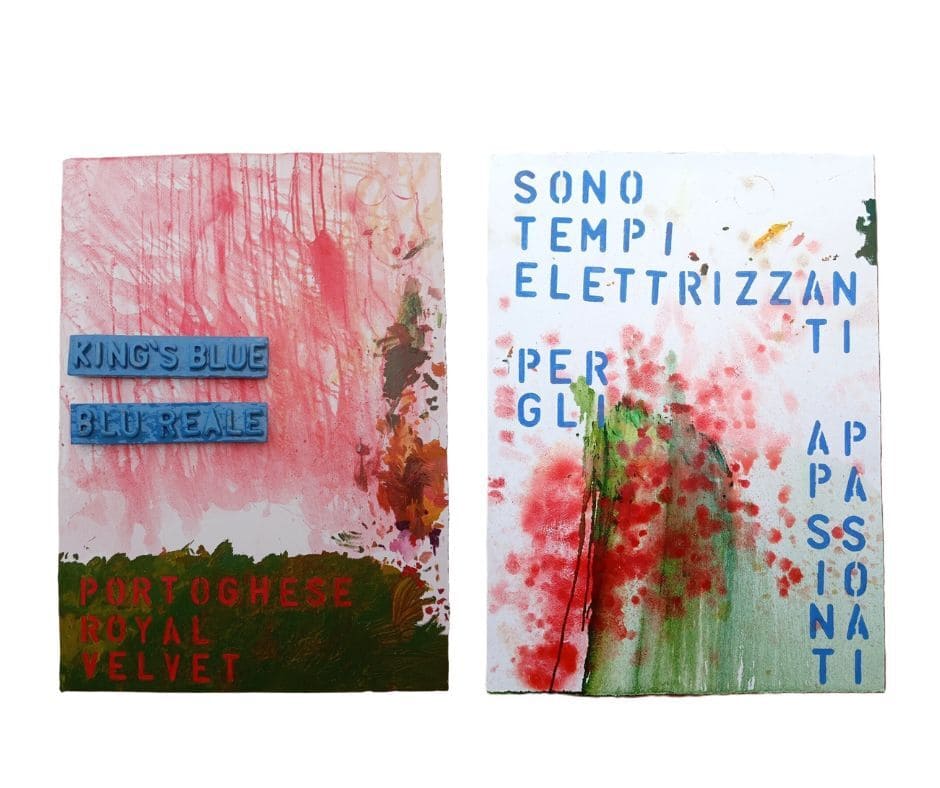
PORTUGUESE BLOOD OF BLUE VELVET image

Maria Luísa Capela

PORTUGUESE BLOOD OF BLUE VELVET
Dimension: 100 x 70 x 4cm; 76 x 56cm
Medium: Oil on paper and ceramic; oil on paper
Nominated by: Howard Bilton

The irony in Maria Luísa Capela’s work emerges with calm clarity. A multidisciplinary artist, she captures form and colour through drawing, painting, ceramics, and installation, adapting her materials to the needs
of her environment, as depicted in PORTUGUESE BLOOD OF BLUE VELVET. Writing takes centre stage as a formal element in her practice, taking an unusual detour through investigation. Irony is embedded in the
chosen elements, acquiring mediations that weave parallel narratives. These are things of the world that describe Capela’s memory, situated in an energetic place of restlessness and whirlwinds. This dynamic space
reaches toward the morphology of the landscape and reveals a liberating surprise through the technology of materials and techniques.

Maria Luísa Capela has exhibited in JARDINS, Galleria Spazio Nuovo, Rome, (2025); Rosais e Corais, Tomentas Carmim, Casa das Artes Bissaya Barreto, Coimbra, (2024); Haciendo Flores de Papel, Cellers (Lérida), Spain, 2023; Verdecer ao Sol, Galleria Spazio Nuovo, Rome, (2022) and Contemporary Istanbul, Turkey, (2021).

22 / 30

Mário Lopes

QUINQUE COLUMNAE  image

Mário Lopes

QUINQUE COLUMNAE
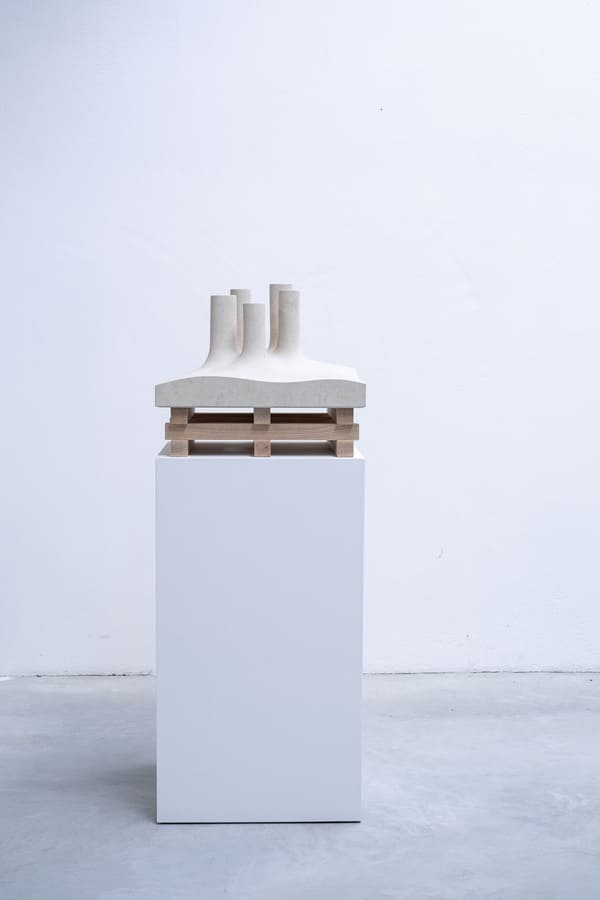
Dimension: 50 x 42 x 50cm
Medium: Limestone, wood
Nominated by: Vânia Marques Carvalho

Mário Lopes brings ideas to life in three dimensions, transforming personal experiences into tangible forms, using stone, wood, and cork while honouring their natural qualities and symbolism. His rural upbringing shaped a deep sensitivity to nature’s growth and transformation, which continues to inform his practice. QUINQUE COLUMNAE is a symbolic construction—a space shaped by memory and time. Lopes blends natural materials with enduring human structures like dolmens, and cathedrals that reflect purpose and spirituality. The manipulation of stone and wood reflects permanence and vitality, embodying the duality of human experience: grounded in the earth, yet reaching toward something greater. The work celebrates the balance between nature and culture, and the materials that carry humans across generations.

Mário Lopes has exhibited in Intemporalidade da Matéria, Museu Int. de Escultura Contemporânea (MIEC), Santo Tirso, (2024); The Te Kupenga Int. Sculpture Symposium, New Plymouth, (2023); The Int. Sculpture
Symposium Forma Viva, Portorož, (2021); The Jeddah Int. Sculpture Symposium, Saudi Arabia, (2019). In 2023, he completed the NU’VEM Artist Residency in the Azores.

23 / 30

Mário Macilau

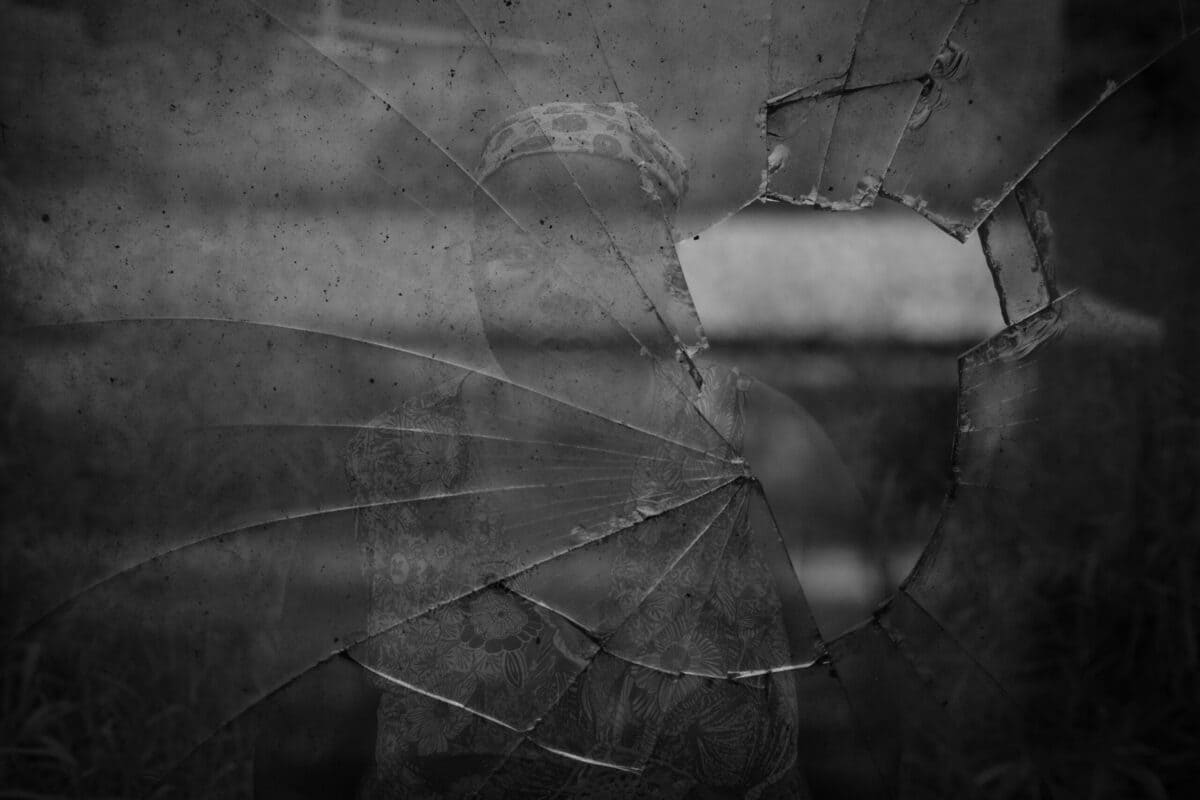
Harvest in Fragments  image

Mário Macilau

Harvest in Fragments
Dimension: 150 x 100cm
Medium: Photograph
Nominated by: Agnieszka Lukasiewicz, Janire Bilbao

Mário Macilau’s photographic practice explores identity, political dynamics, and environmental change, focusing on marginalized communities striving to reclaim their voices. Portraiture is central to his practice, creating intimate connections that reflect broader social narratives. Harvest in Fragments presents a woman behind fractured glass. The seasons no longer follow their rhythm, and the crops she once trusted now grow uncertain. Still, she plants with hope. In every shard, the splinters of an unraveling ecosystem serve as a warning. Yet, she remains rooted not only for herself, but for all of us. In her presence is resilience and a powerful call to mend what is broken, to listen to the land, and to remember who feeds us.

Recent exhibitions include Free the Land!, Museum of Contemporary African Diasporan Arts, New York, (2025); Immediacy, Franco-Mozambican Cultural Center, Maputo, (2024); On Faith, Ed Cross Fine Art, London,(2023). Mário Macilau received the James Barnor Photography Prize and the Roger Pic Prize in 2023.

24 / 30

Paulo Arraiano

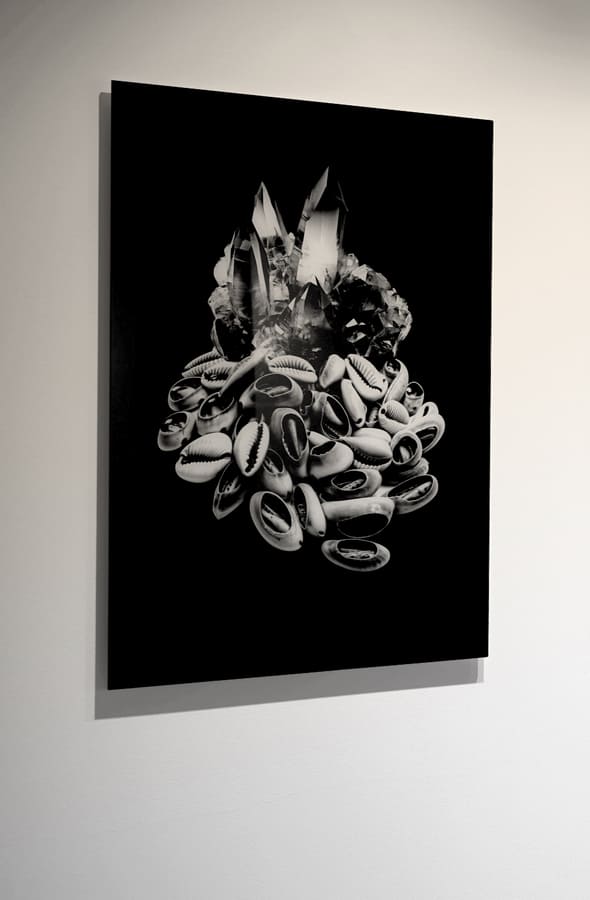
Point of No Return (Postfossil – Soft and Tender Extraction series)  image

Paulo Arraiano

Point of No Return (Postfossil – Soft and Tender Extraction series)
Dimension: 70 × 100cm
Medium: Digital print on acrylic
Nominated by: Howard Bilton

Paulo Arraiano’s research explores the concept of visual seismography, analyzing shifts in natural, social, and cultural paradigms. His multimedia practice intersects with matter and antimatter to address the climate crisis, the Anthropocene, and both natural and human diasporas. This project reflects land, sea, labour, memory, transportation and future imaginaries, questioning rituals of home, displacement, and ecological justice. Here, the ocean becomes a space of reflection on the loss of freedom of movement, and a nostalgic space for figures like the traveller, or the bourlingueur—antifigures of the colonial settler and ‘migrant’. It asks what traces remain from the first waves of conquest in 1441, and how the legacies of exploitation and mass trade continue to shape our present.

Paulo Arraiano recently exhibited in Storm Hunters, Centre d’Art Contemporain Passerelle, Brest, (2022) and Garden Of Gods, Vellum/LA, Los Angeles, (2022); A certain instance of “verrition”, Leal Rios Foundation,
Lisbon, (2023) and Espanto, Centro Arte Oliva, Norlinda e José Lima Collection, Porto, (2023).

25 / 30

Pedro Henriques

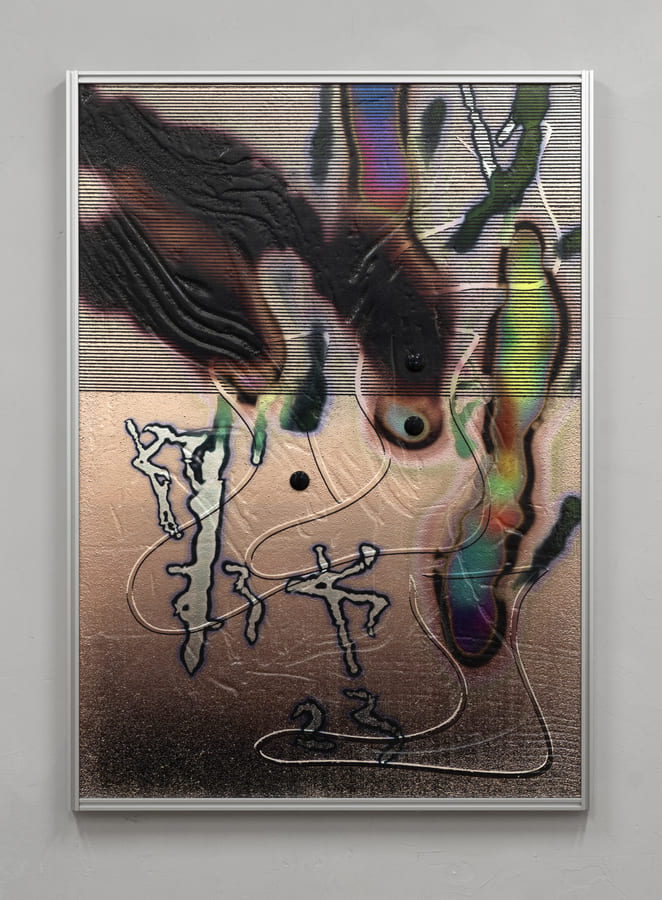
Color Cave 22  image

Pedro Henriques

Color Cave 22
Dimension: 85 x 120 x 4cm
Medium: Ink and acrylic paste on wood, arcade buttons, aluminium profile
Nominated by: Pedro Magalhães

Pedro Henriques’s mixed-media practice is defined by metamorphosis, embodying a dynamic process in which entities transform into one another, absorb unfamiliar forces, and reshape themselves. Color Cave
22 captures this transformative spirit. It presents hybrid images layered on a single plane that is both elusive and material. Starting with drawing, Henriques simulates false bas-reliefs, which are then coloured. This chromatic layer exists on a luminous, transparent surface, like light projected onto shadow reliefs. A third layer disrupts the image: binary ‘on-off’ arcade buttons, arranged playfully, forcing a re-reading of its strengths and tensions. They assert the physicality of the surface, inviting tactile engagement and seducing the viewer with their haptic appeal, making it not just something to see, but to encounter.

Pedro Henriques has exhibited at Gás carnaval, Galeria Balcony, Lisbon, (2025); Sumo Turvo, Lehmann+Silva Gallery, Porto, (2020); Safari, GaleriaZé dos Bois, Lisbon, (2019) and Under the Clouds, Museu de Serralves, Porto, (2015). He won the Novo Banco Revelação in 2014.

26 / 30

Wasted Rita

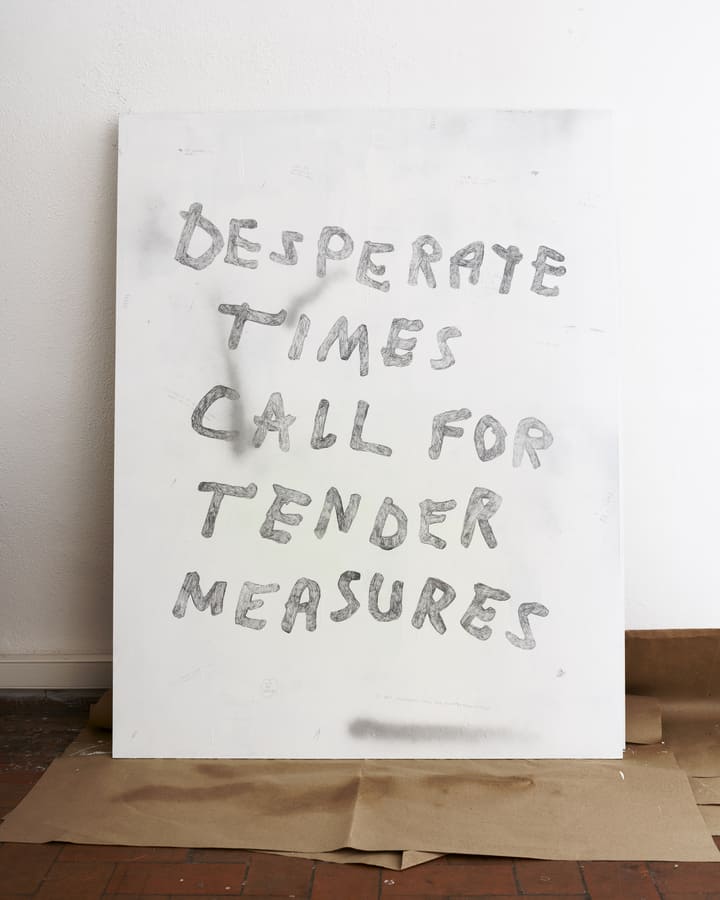
Desperate Times image

Wasted Rita

Desperate Times
Dimension: 150 x 116 x 5cm
Medium: Pencil, spray and acrylic paint on PVC structure
Nominated by: Howard Bilton

Born from the clash between a Catholic school upbringing and the punk scene, Wasted Rita’s critical, confessional practice reflects her love-hate connection with life. Blending sarcasm, brutal honesty, realism, and playful naivety, her work challenges viewers and the established formalism in contemporary art. Her text-based pieces echo urban walls layered with casual inscriptions and interventions, blurring boundaries between institutional and informal space. In Desperate Times, she recontextualises proverbs, questioning their relevance in today’s socio-political landscape. Through a fabricated street surface, tradition is subverted rather than dismissed. The piece also questions the evolving definition of “street artist”, reflecting on how wisdom, myth, and public expression evolve, and continue to shape collective thought.

Wasted Rita has exhibited in Dismaland, Weston-Super-Mare, (2016); As Happy As Sad Can Be, Galeria Underdogs, Lisbon, (2017); Eco-Visionários, MAAT, Lisbon, (2018); Bienal de Cerveira, Fundação Bienal de Cerveira, Vila Nova de Cerveira, (2023). She completed the Bed Stuy Art Residency, New York City, (2023).

27 / 30

Rui Macedo

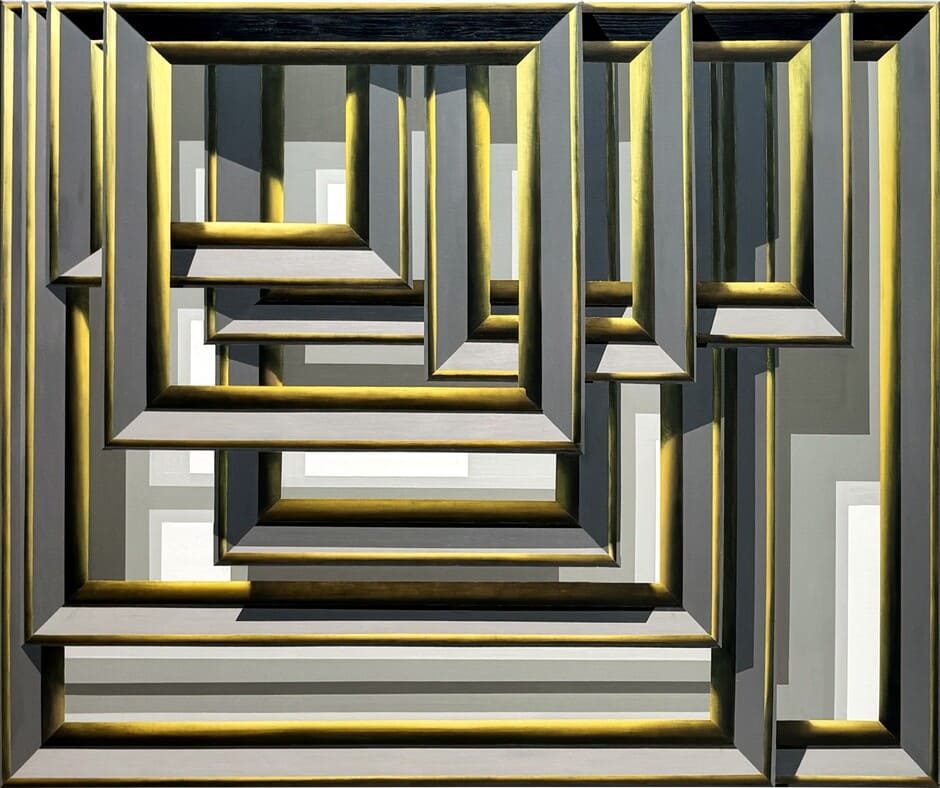
Untitled  image

Rui Macedo

Untitled
Dimension: 127x150cm
Medium: Oil, acrylic and varnish on canvas
Nominated by: Inês Valle

Rui Macedo works exclusively with painting and site-specific painting installations, challenging viewers’ expectations. By manipulating conventional painting formats and disrupting the way they are presented, the artist seeks to reconfigure the relationship between spectator and artwork. Through the artifice of painting as a deliberate perceptual trick, viewers are confronted with the arbitrariness of their own criteria regarding what a painting ‘should’ be. This tension is evident in the artwork Untitled (Memorabilia Series), wherein the painting appears disguised, defying its conventional appearance and presenting the viewer with frames seemingly devoid of painted imagery. In the apparent absence of a subject, the painting acts as a visual and conceptual trap, incorporating expectation as an integral part of the pictorial apparatus.

Notable exhibitions include (Land)Scaping Normative Thinking, Millennium BCP Foundation, Lisbon, (2017); Sfumato, Tabacalera, Madrid, (2019); (In) dispensable or the Painting that Troubles the Museum Collection, Museu Nacional de Arte Contemporânea do Chiado (MNAC), Lisbon, (2019); Gaps, Rifts and Other Artifices, Travessa da Ermida Project, Lisbon, (2021); and …e o perú fugiu!, Carpintarias de São Lázaro, Lisbon (2025).

28 / 30

Saskia Moro

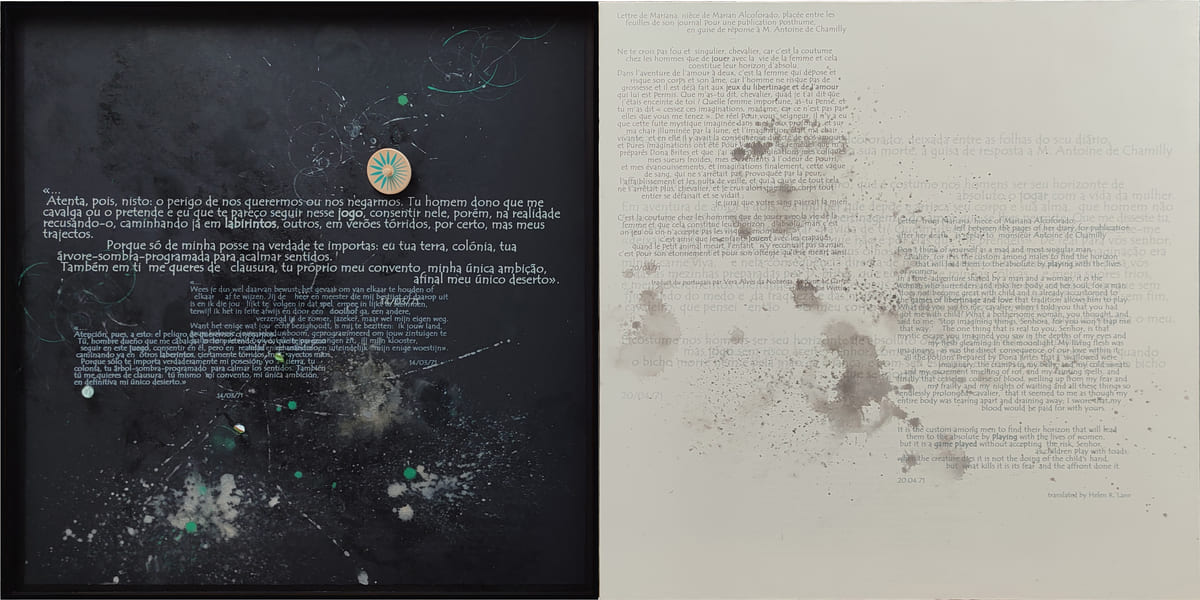
O que podem as palavras_tu homem dono | What can words do?_You, the man and master  image

Saskia Moro

O que podem as palavras_tu homem dono | What can words do?_You, the man and master
Dimension: 80 x 160 x 4cm
Medium: Mixed media with collage on canvas, wooden box with objects (toys) protected by glass ARTGLASS UV 70%
Nominated by: Sociedade Nacional de Belas-Artes (SNBA)

For Saskia Moro, literature and music are key sources of inspiration, channelling their rhythms and narratives into mixed media pictures. Her printing technique plays a vital role in expressing ideas about space and time, exploring polarities such as full/empty, noise/silence, joy/sadness, feminine/masculine, light/darkness, movement/rigidity, control/chance, and life/death. This work draws on Dutch philosopher Johan Huizinga’s Homo Ludens, which sees play as the fundamental aspect of human life. Using graphics to add texture and meaning, she selects passages from the banned 1972 book, The New Portuguese Letters by the Three Marias. These texts investigate the rules of love. Are gender dynamics any different today than a half a century ago?

Notable exhibitions include UPDATE, Arti et Amicitiae, Amsterdam, (2024); A Oliveira e a Palavra, Museu Nacional de História Natural e Ciência, Lisbon, (2024); Á Água Viva, Galeria de Arte do Convento do Espírito
Santo, Loulé, (2023); Hand Luggage, Arti et Amicitiae, Amsterdam, (2023) and Ausência, Galeria Valbom, Lisbon, (2016).

29 / 30

Teresa Esgaio

Fly image

Teresa Esgaio

Fly
Dimension: 76 x 112 x 3cm
Medium: Graphite, charcoal and soft pastel on paper
Nominated by: Howard Bilton

Drawing occupies a central role in Teresa Esgaio’s work, serving as the medium through which she thinks and feels. More than the materialization of ideas, it is a process of exploration and a response to internal questions that emerge on paper. Using graphite, charcoal, and pastel, she develops a figurative language addressing themes such as memory, identity, the human condition, and the passage of time. Fly depicts an isolated insect that functions as a point of attention in space and time. More than a figure, it is an occurrence that invites contemplation, an interval where the gaze lingers and the suspension of time becomes an experience,
questioning the limits of visibility and meaning.

Teresa Esgaio has exhibited in Point Zero, Estação Elevatória a Vapor dos Barbadinhos, Museu da Água, Lisbon, (2023); 180 days, Estação Elevatória a Vapor dos Barbadinhos, Museu da Água, Lisbon, (2022); O mar não é redondo, Cordoaria Nacional, Lisbon, (2021) and Contemporâneos Extemporâneos, Galeria Fernando Santos, Porto, (2021). She was shortlisted for The Sovereign Portuguese Art Prize in 2022.

30 / 30

Vera Midões

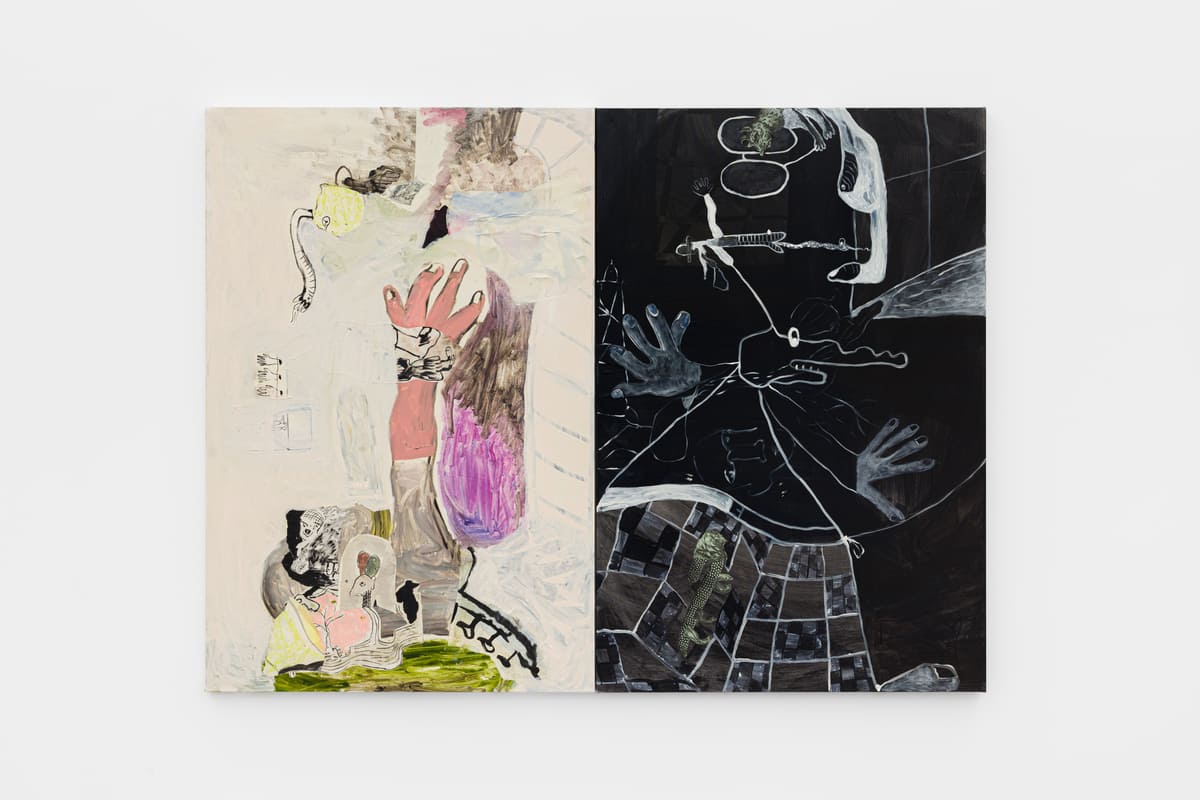
De mão em mão  image

Vera Midões

De mão em mão
Dimension: 161 x 122 x 3.5cm
Medium: Colagens e Óleo sobre tela Collage and Oil on canvas Díptico / Diptych
Nominated by: Valerie Marendaz

In a ludic, surreal, and contradictory universe, Midões captures fleeting instants of life—sounds, images, and sensations crossing everyday life. Her language oscillates between the real and the imaginary, the visible and the hidden. As a space of transformation, with a primitivist approach, she shapes chaos with tensions, proposing paradoxes, expressive and symbolic figures. The process is experimental—layers, collages, and gestures—reveal fragmented narratives guided by the unconscious. Under a surrealist influence, as a gesture of automatism, a form of delirium and deconstruction in the effigy of relationships between the human, the animal, and the fantastic, she creates a poetry painting that transcends representation. Each work captures the transience of existence—a game without fixed rules, where art and life fuse into endless transformation.

Recent exhibitions include The Things That Go Away Never Come Back, Dialogue Gallery, Lisbon, (2025); Flanco Izquierdo, Gerhardt Braun Gallery, Madrid, (2024) and Estampa, Art Fair, Madrid, (2024). Her work was acquired by the Vasco Collection in 2024 and Fundación María Cristina Masaveu Peterson in 2022.

left arrow left arrow hover
De mão em mão  image
right arrow right arrow hover

Thanks for voting!