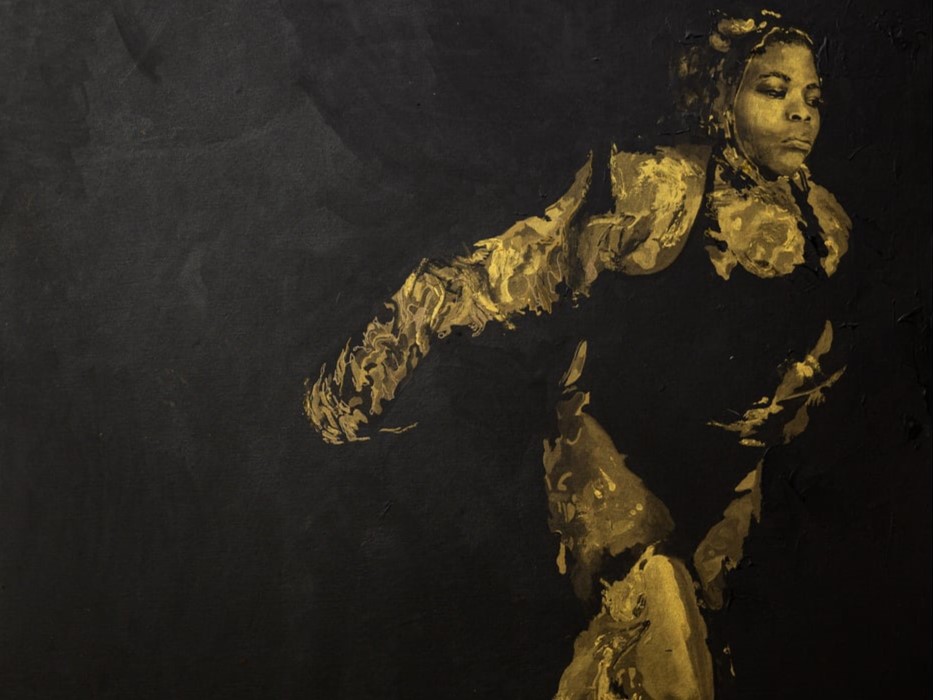
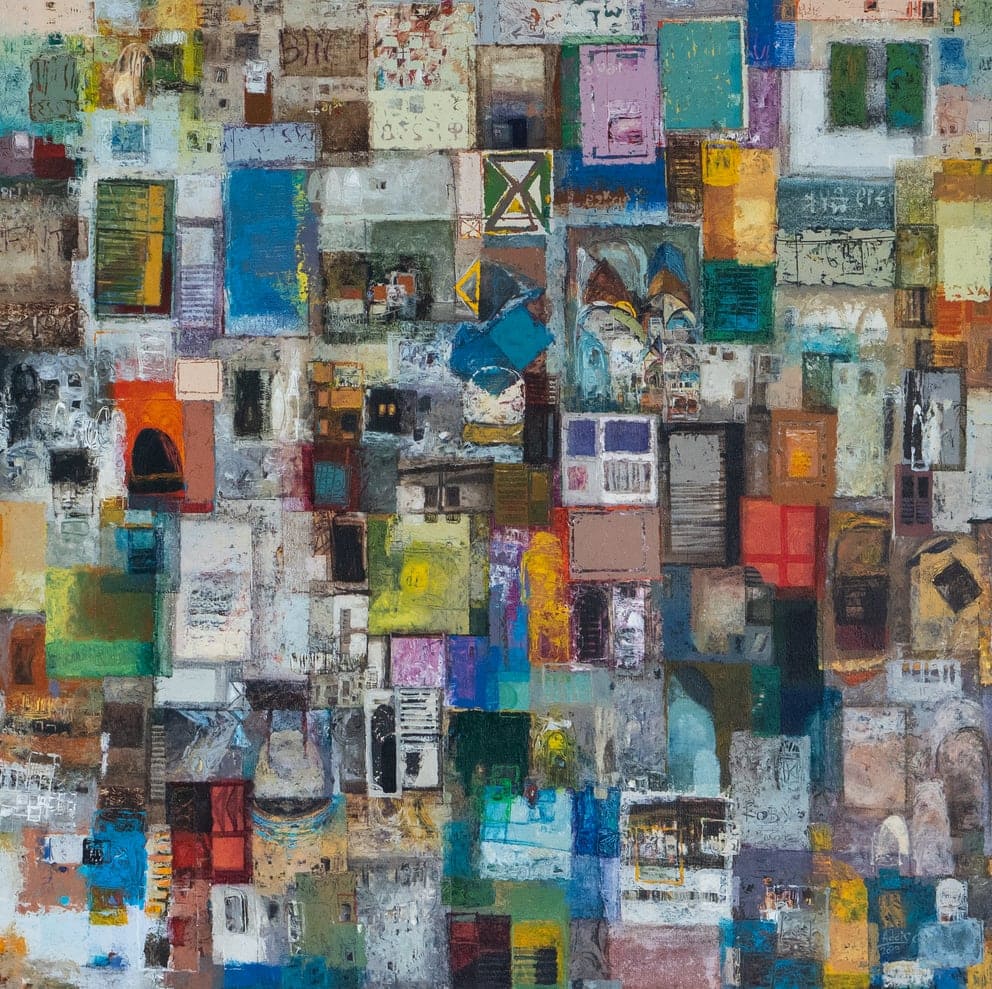
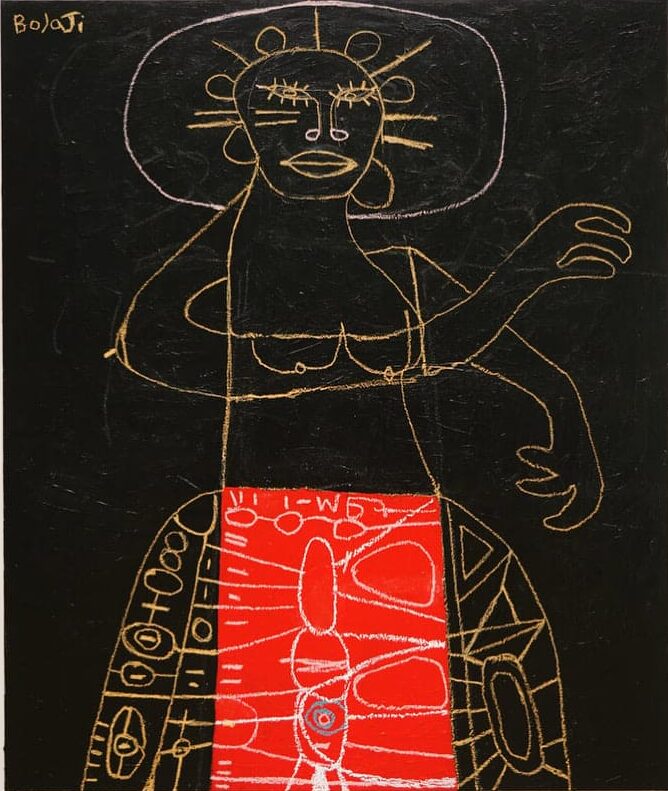
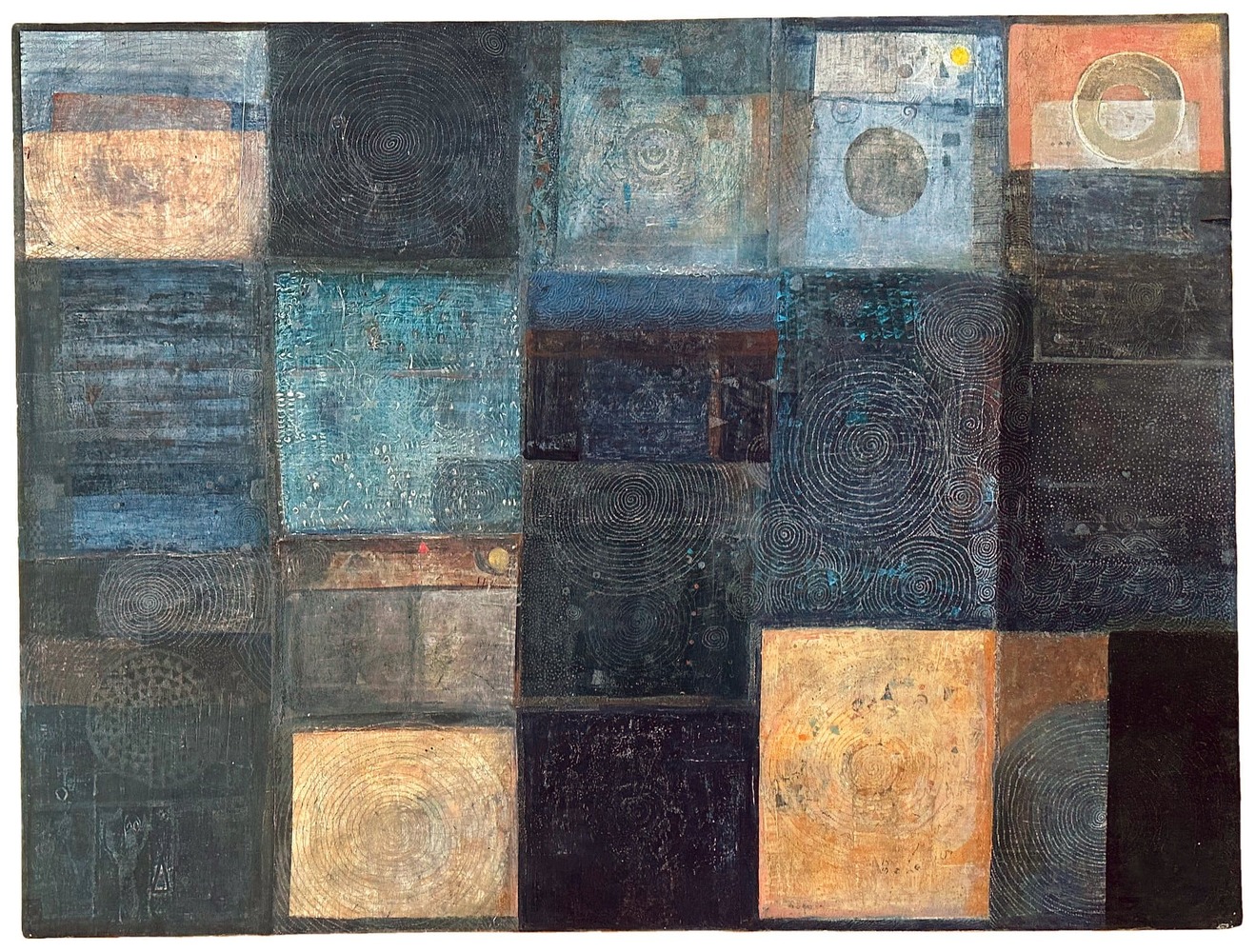
Addis Gezehagn (b. 1978, Addis Ababa) is an Ethiopian artist known for his vibrant assemblages that reimagine the cityscapes of his hometown. Using magazine cut-outs layered with acrylic paint, his Floating Cities series blends fantasy and reality, depicting dreamlike urban towers that explore the social impact of modernization. Gezehagn’s works serve as visual archives of a rapidly changing city, highlighting themes of community, identity, and urban transformation.

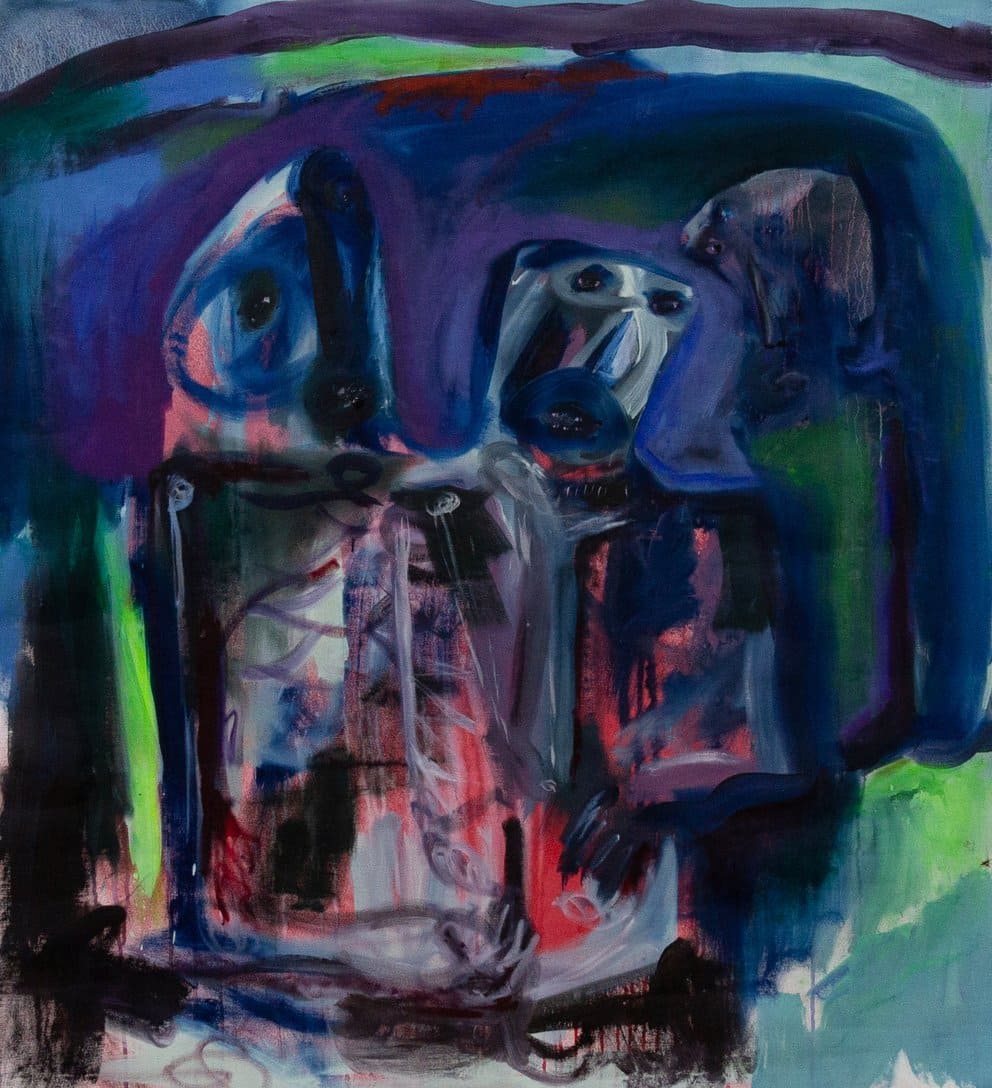
Adébayo Bolaji (b. 1983, London) is a multidisciplinary artist whose vibrant, metaphorical works explore themes of change and individuality within society. Drawing on influences from anthropology, religion, history, and pop culture, Bolaji invites viewers to engage actively with his art; Bolaji’s multifaceted background of theatre & film (The Royal Central School of Speech and Drama), and a Law graduate, informs his creative practice.

Afi Nayo (b. 1969, Lomé, Togo) is a multidisciplinary artist whose work bridges spirituality, cultural syncretism, and humanity’s connection to nature. Splitting her time between Paris and Lomé, Nayo creates intricate wooden paintings and clay sculptures engraved with symbolic hieroglyph-like imagery. Her textured, mosaic-inspired works explore the interplay between abstraction and reality, drawing viewers into an imaginative journey of interpretation; her recent projects blend personal symbolism with broader universal themes. Nayo’s art reveals minute treasures and offers a poetic reflection on the visible and unseen.

Alioune Diouf (b. 1964, Dakar, Senegal) is a multidisciplinary artist whose vibrant works merge painting, sculpture, and textiles with natural pigments he crafts from materials like clay, kola nuts, and plants. Rooted in the rich artistic heritage of Senegal, Diouf’s practice explores themes of interconnectedness, spirituality, and sacred symbolism. His dynamic compositions feature intertwined figures, animals, and cosmic motifs, evoking the energy of traditional African masks and totemic imagery.

Amine El Gotaibi (b. 1983, Fès, Morocco) is a prominent Moroccan contemporary artist whose multidisciplinary practice spans drawing, video, painting, installation, and mechanical engineering. His large-scale, immersive projects often examine themes of territory, geopolitics, and the universal dynamics of submission; El Gotaibi continues to create thought-provoking works that play with the tension between two contradicting philosophies or forms, such as nature and society. He poetically challenges our perception and inspires hope.

Chukwudubem Ukaigwe (b. 1995, Lagos; lives/works Toronto) is an artist, curator, and writer whose interdisciplinary practice is an inquiry into semiotic dissonance. Tapping into a diverse spectrum of influences—from experimental music and literature, to history and futurisms—Ukaigwe approaches his art practice as a double gesture. On one hand, his work is a way of annotating, augmenting, defacing, transposing, and rewriting in the margins of a palimpsestic history. On the other hand, his paintings, installations, and video works are an attempt to assemble and compose a speculative sensorium that permits hearing in a different tempo; one that collapses the subject–object divide and maps out new and revised sociographies. By bringing to center facets of everyday life, Ukaigwe enacts a compositional practice that is fabulated out of the choice to meander in extant modes of being: fugitive, improvised, ongoing and otherwise. Ukaigwe’s social practice is established on the foundations of splintered or shared authorship, community input, and relativity. He holds a BFA (Hons.) from the University of Manitoba, Winnipeg, and was the 2020 recipient of the Scott Leroux Fund for Media Arts Exploration. Ukaigwe is a founding member of the Winnipeg-based curatorial group Patterns Collective.
Collin Sekajugo (b. 1980, Masaka, Uganda) is a multidisciplinary artist whose work deeply engages with identity, community, and sustainability themes. With ancestral roots in Rwanda and Tanzania, Sekajugo uses his own multi-ethnic background as a metaphor in his painting collages to challenge prejudices and explore the complexities of cultural identity. His art often features masked figures, symbolizing the tension between individuality and societal discrimination based on ethnicity and class.

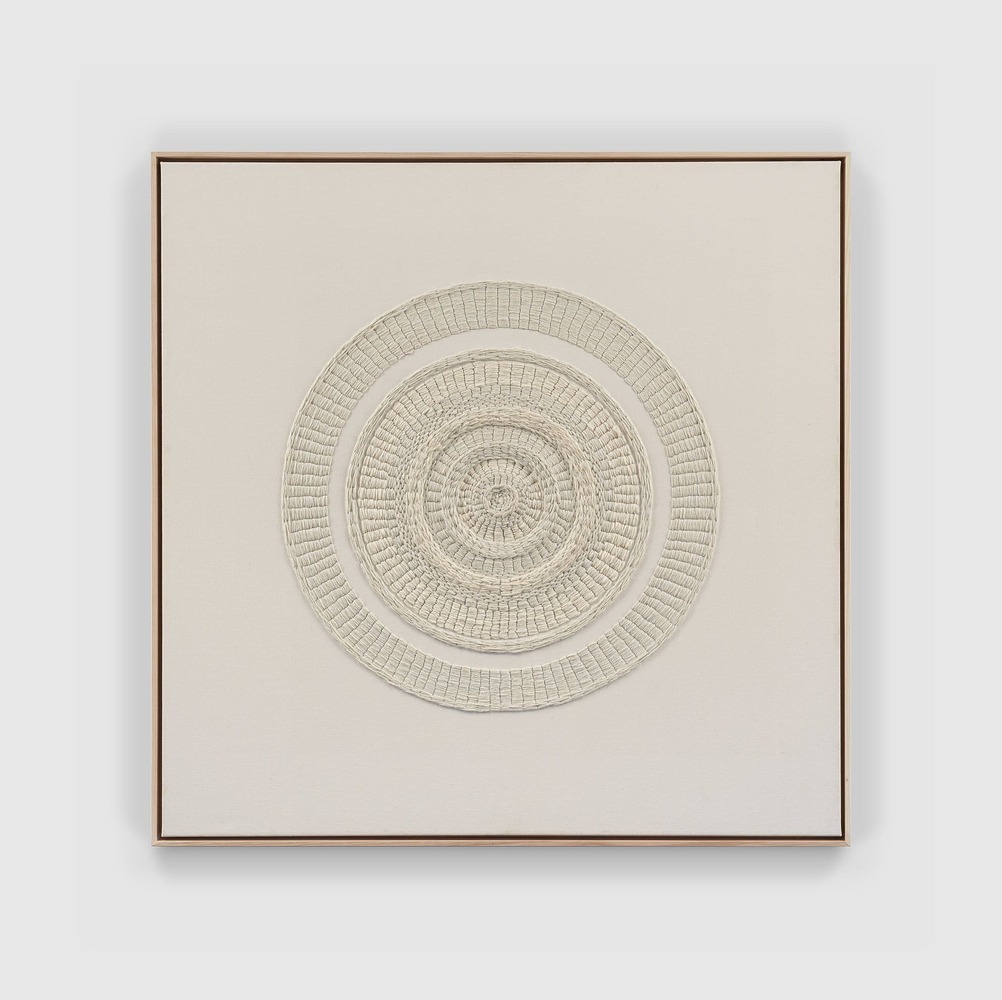
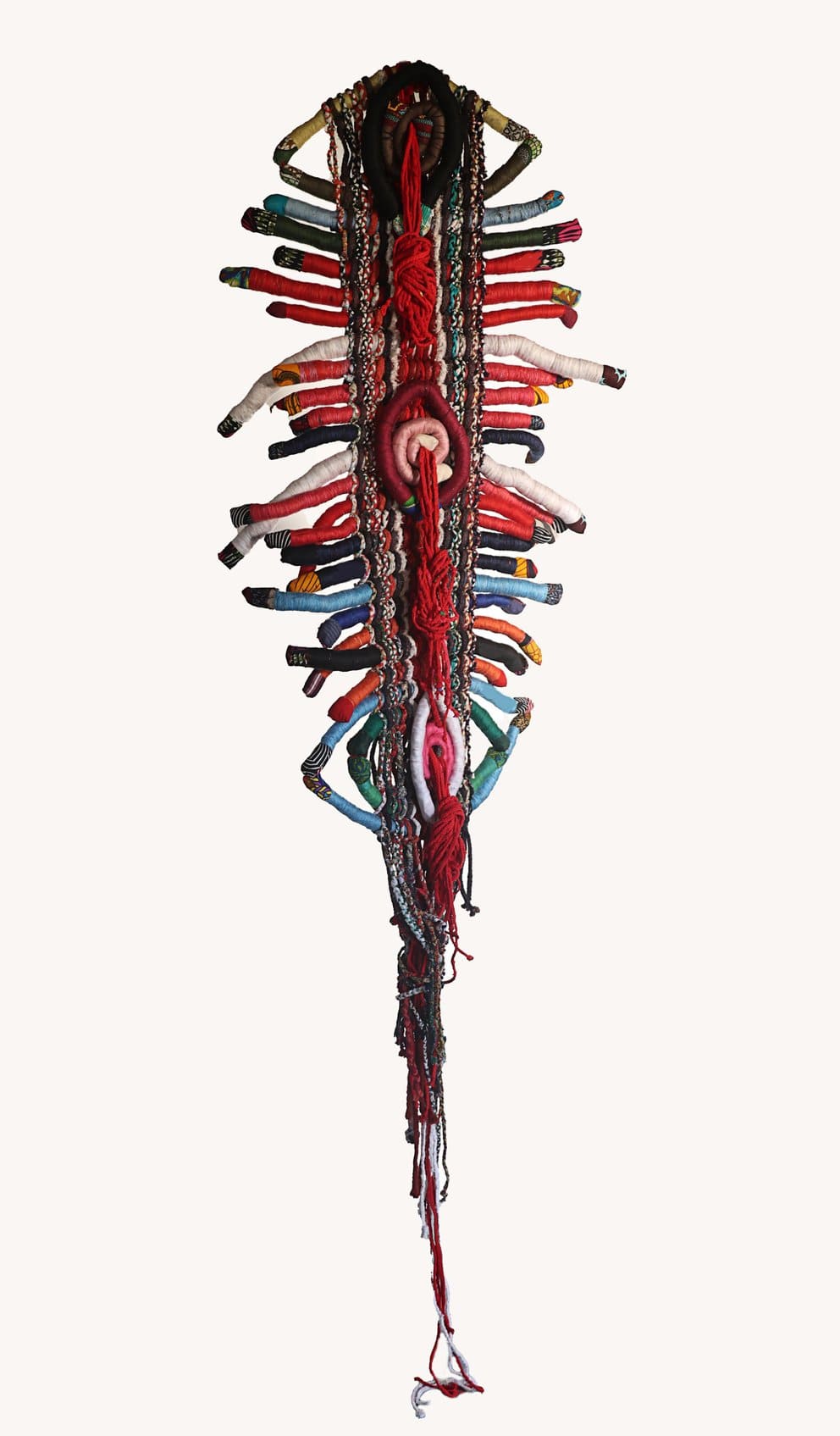
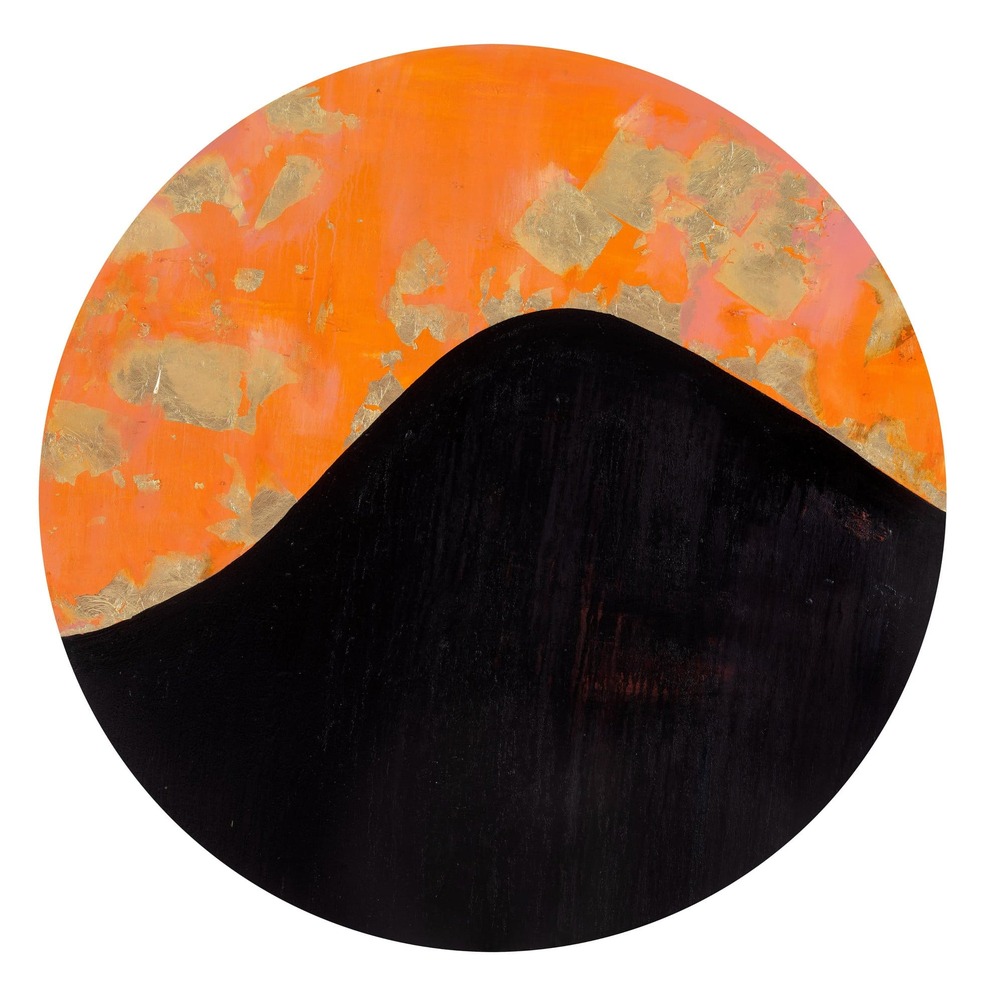
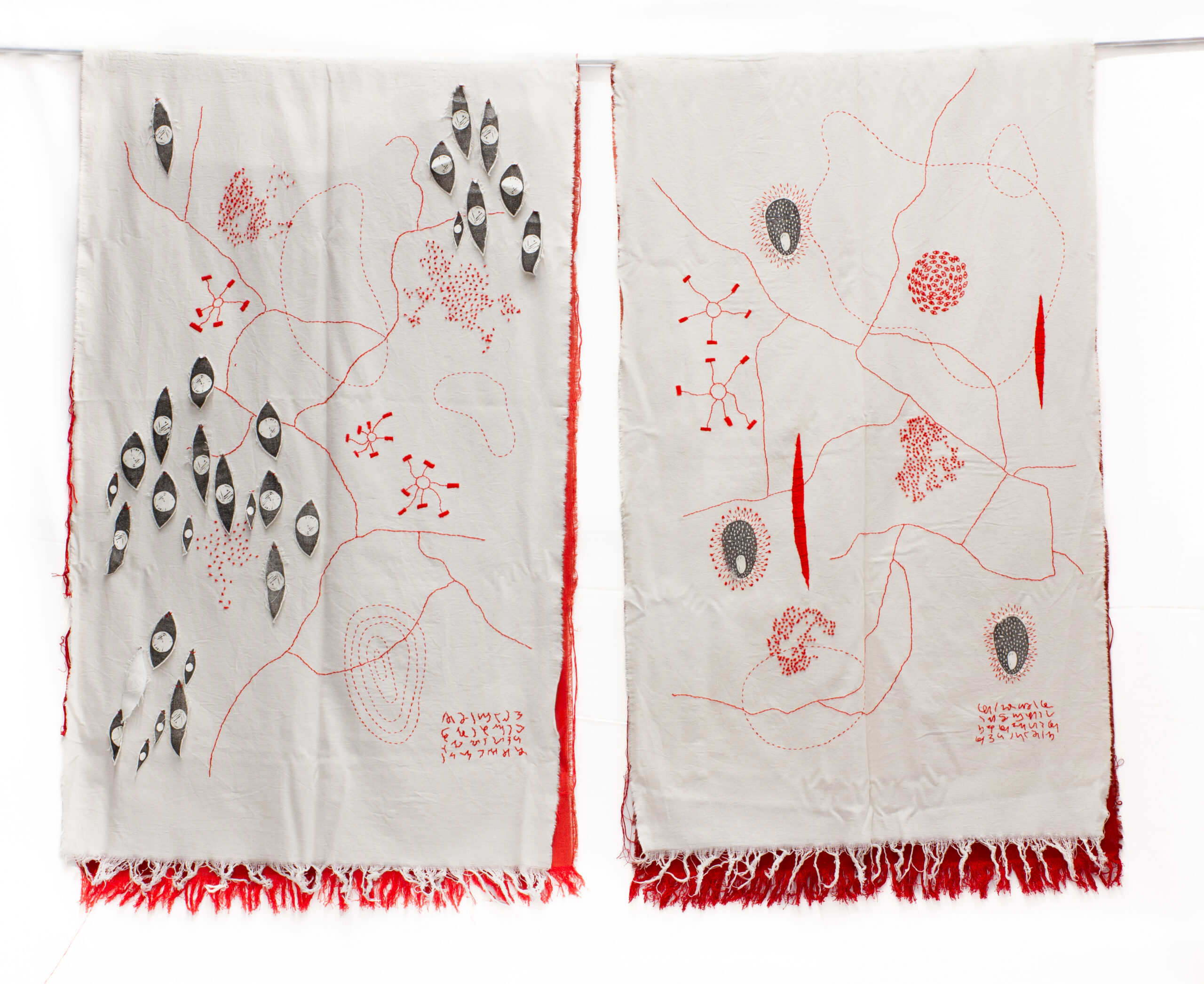
Johannesburg-based artist Duduzile (DuduBloom) More places colour at the centre of her practice, using it as an emotional and conceptual focal point. Through the interplay of shapes, lines, and vibrant hues, her work conveys vulnerability, energy, and the nuances of her experience as a Black woman. She constructs her pieces using wool and thread, layering tactile materials to reflect the interconnectedness of memories, communities, and influences. A recurring motif in her work, the circle, symbolizes cycles of growth and healing, while the fragility and strength of her chosen mediums parallel the complexities of mental health. Her playful, process-driven approach transforms creation into a cathartic exploration of joy and self-discovery. The resulting abstract works transcend the physical body, delving into the mental, emotional, and spiritual dimensions of existence.

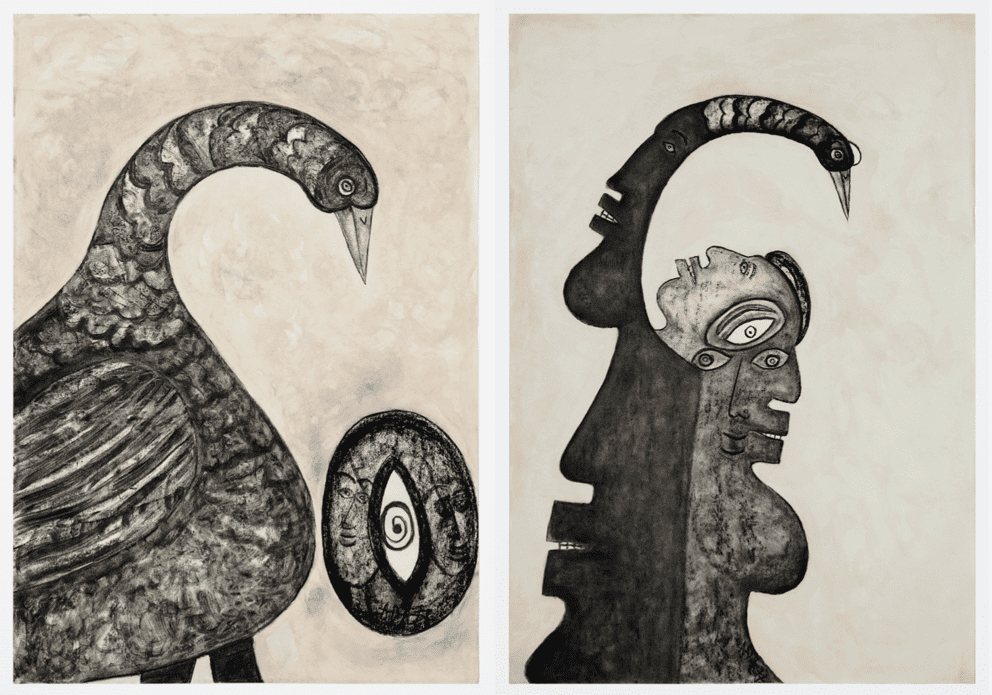
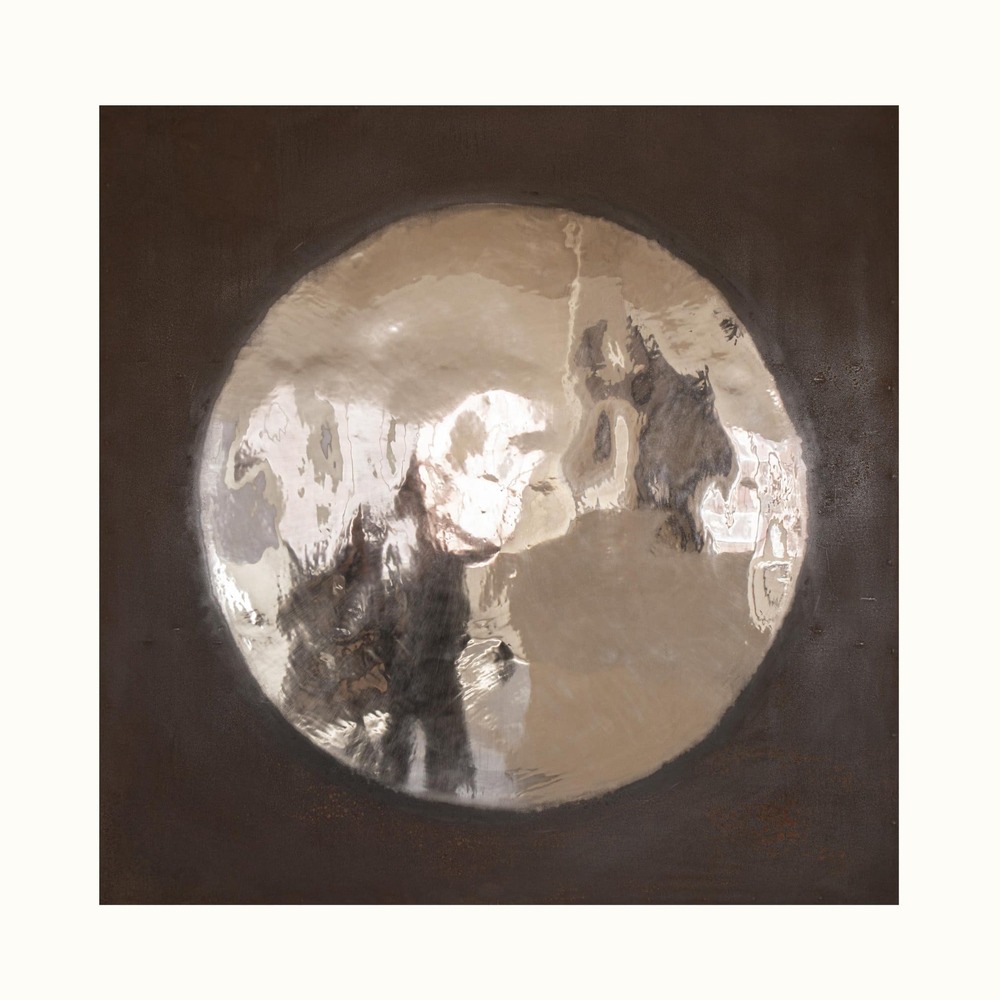
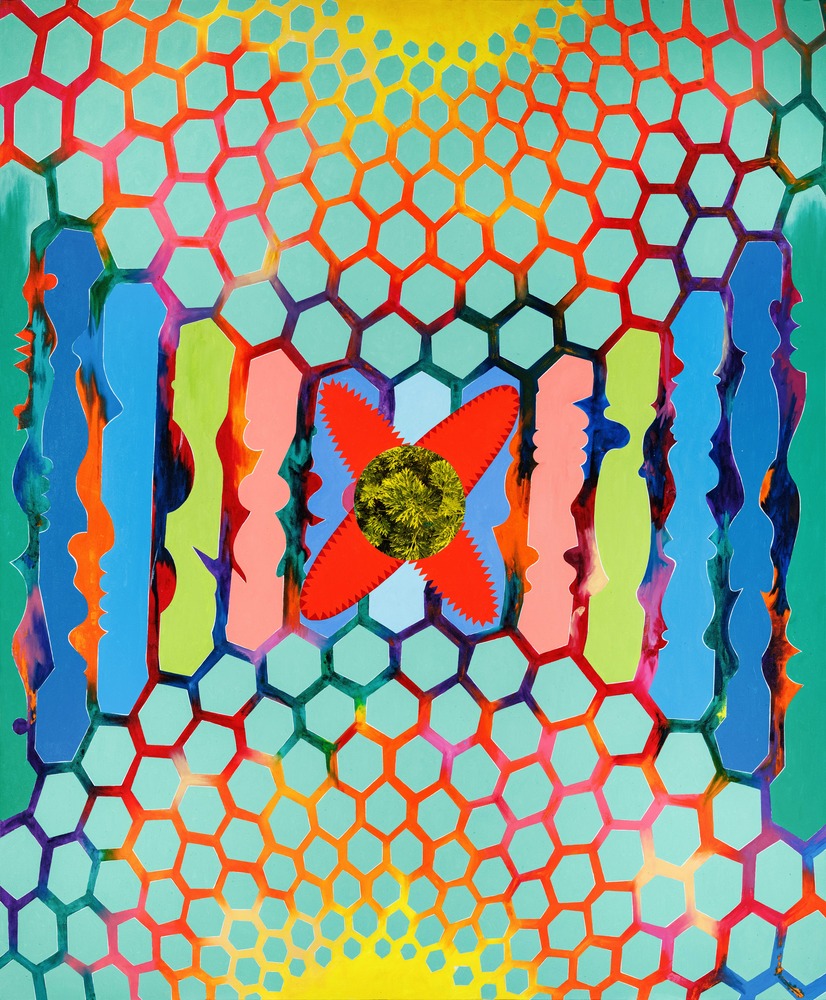
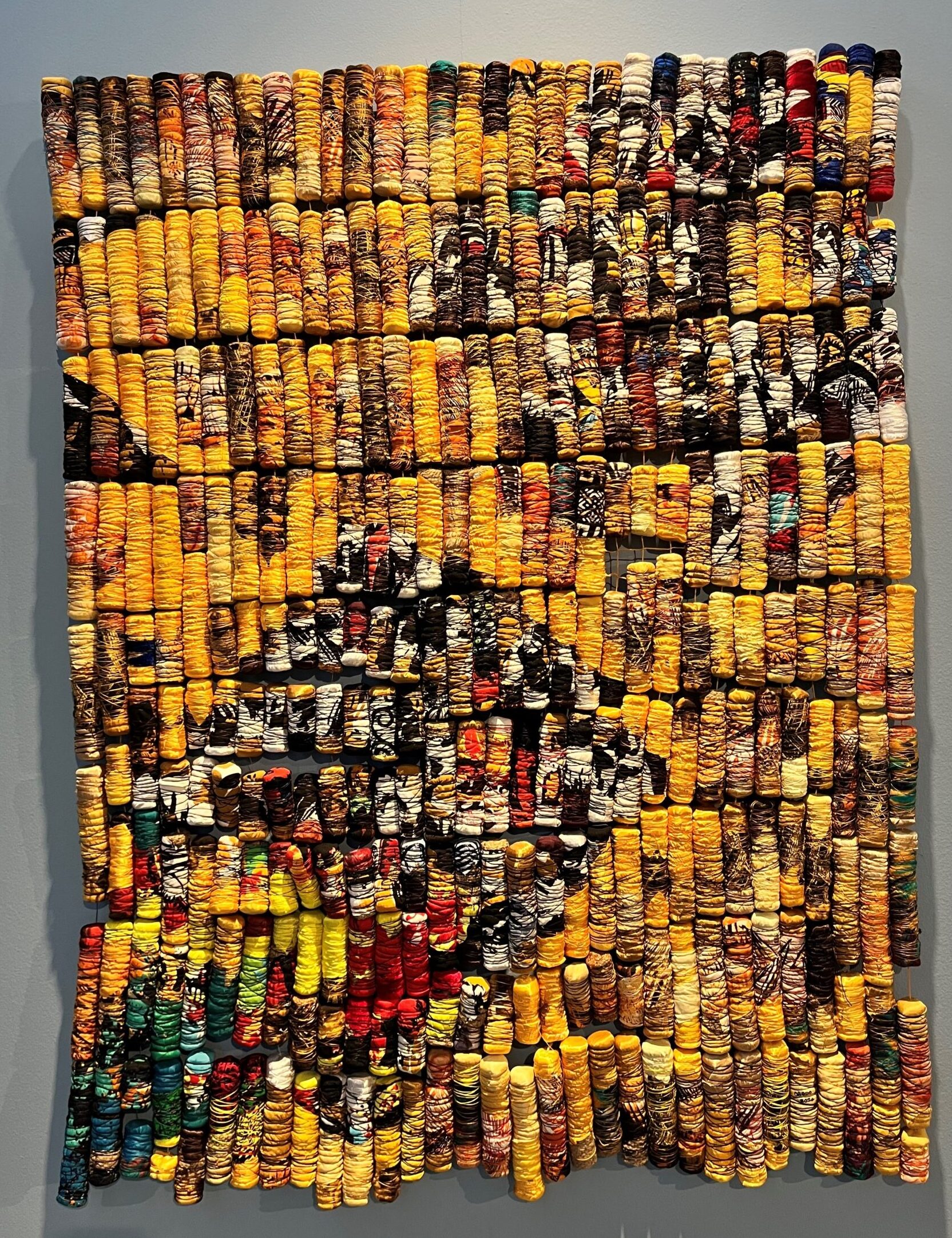
Obodo (b. 1963, Nigeria) is a visual artist working in painting, sculpture, and mixed media. Based in Nsukka, Nigeria, his practice explores the intersection of socio-political, economic, and cultural structures through the use of fibre and charcoal. Obodo’s works often employ discarded materials such as charcoal and jute fibre, which he wraps, ties, and bundles to create both relief paintings and free-standing sculptures. His charcoal works address issues of natural resources and development in Nigeria, while his fibre pieces, crafted from nylon threads, create colourful metaphors that symbolize social connections and relations.

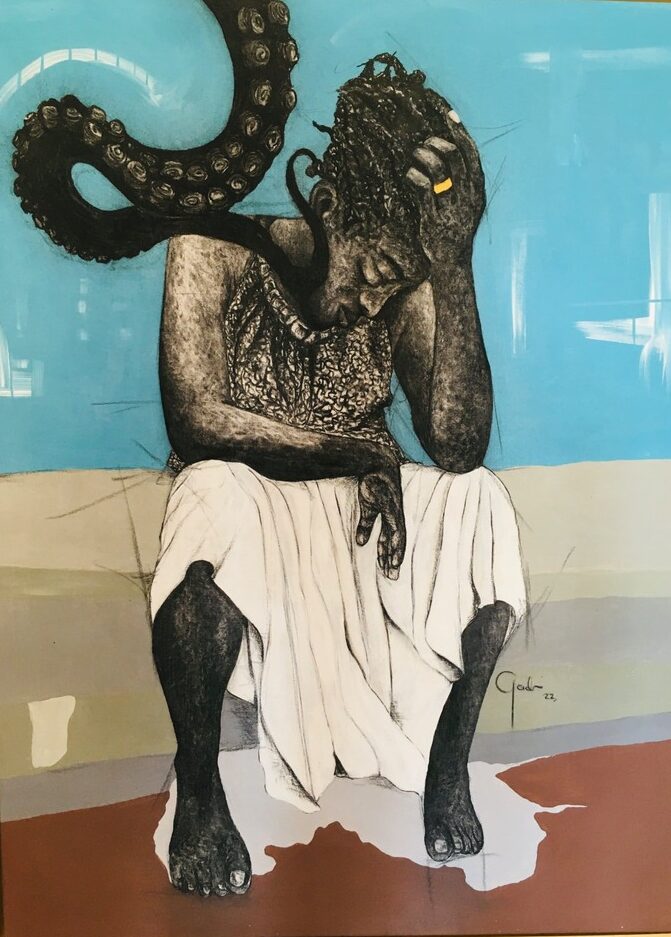
Gadi Ramadhani is a Tanzanian visual artist, arts educator, and independent curator specializing in printmaking. He is the founder and Artistic Director of KokoTEN | Studio, a multi-purpose space dedicated to developing art in Tanzania and engaging with the broader Global South. Through his work, Gadi explores contemporary social issues, particularly consumer culture, while using arts education and mentorship to foster a diverse artistic community locally and globally.

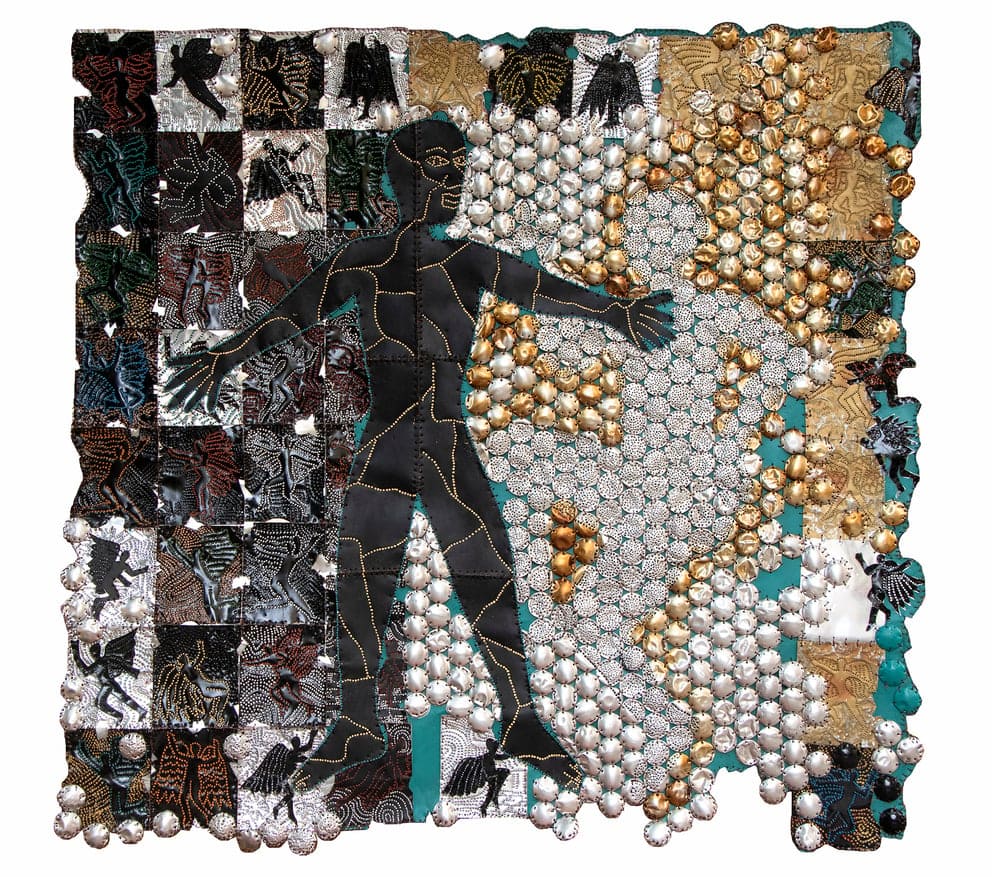
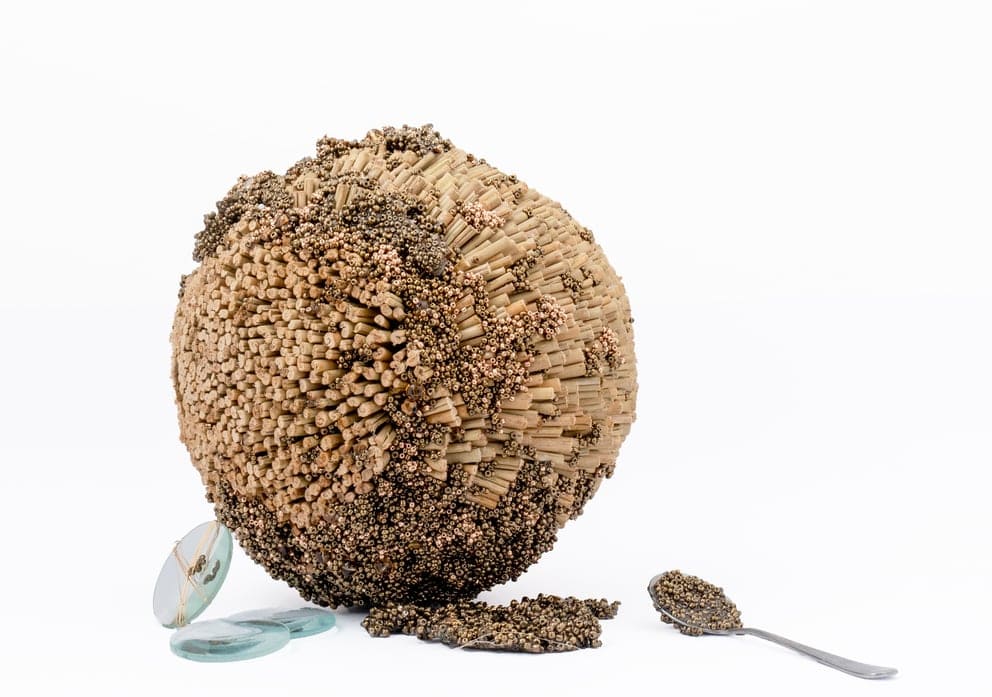
Gerald Chukwuma (b. 1973) is a Nigerian artist known for his detailed wood-slate sculptures that blend burning, chiselling, and painting. His work draws on Uli and Nsibidi symbols, connecting to the Nsukka art tradition while addressing environmental and political issues. Chukwuma explores migration as a transformative process, using everyday materials to comment on Nigeria’s socio-political landscape. His art, often featuring playful characters and urban imagery, reflects the impact of globalization and conflict, with some works incorporating sim cards as symbols of modern society.

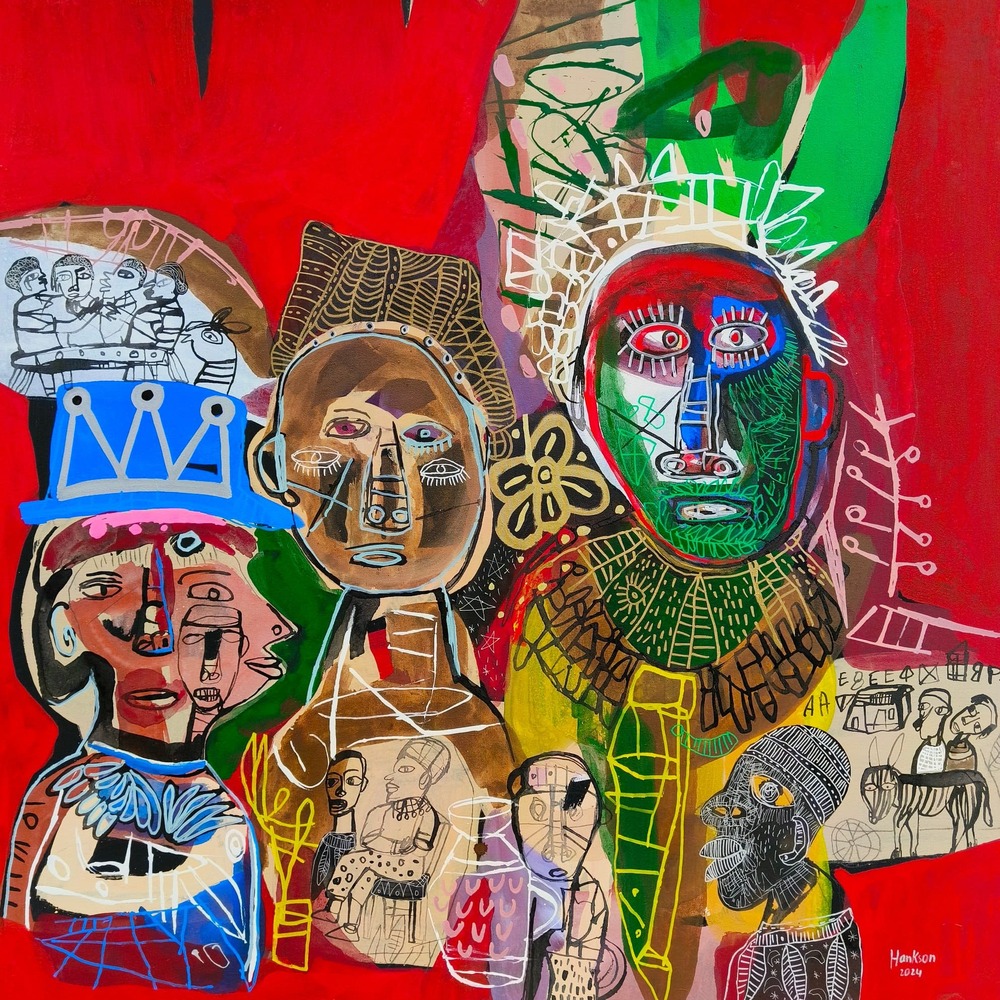
Born in 1968 in Bafang, Cameroon, Hako Hankson is a self-taught artist based in Douala. With a background in car mechanics, Hankson chose a path in painting, deeply influenced by the art and culture of his homeland. Growing up surrounded by ancestral objects such as masks and totems, Hankson’s work is a tribute to the history and myths of ancient African civilizations, reinterpreting ancestral rites with contemporary resonance. Pan-African and a free thinker, he readily cites the great independence fighters – Thomas Sankara, Ahmed Sekou Touré, Kwame Nkrumah – and draws inspiration from the thought of Cheikh Anta Diop, adhering to an Afrocentric vision that gives pride of place to sub-Saharan cultures and encourages solidarity on the continent. That’s why, beyond his artistic practice, he has fostered a collaborative environment for fellow artists, establishing the In and Off Art Center in 2013 to support those facing challenges in the visual arts.

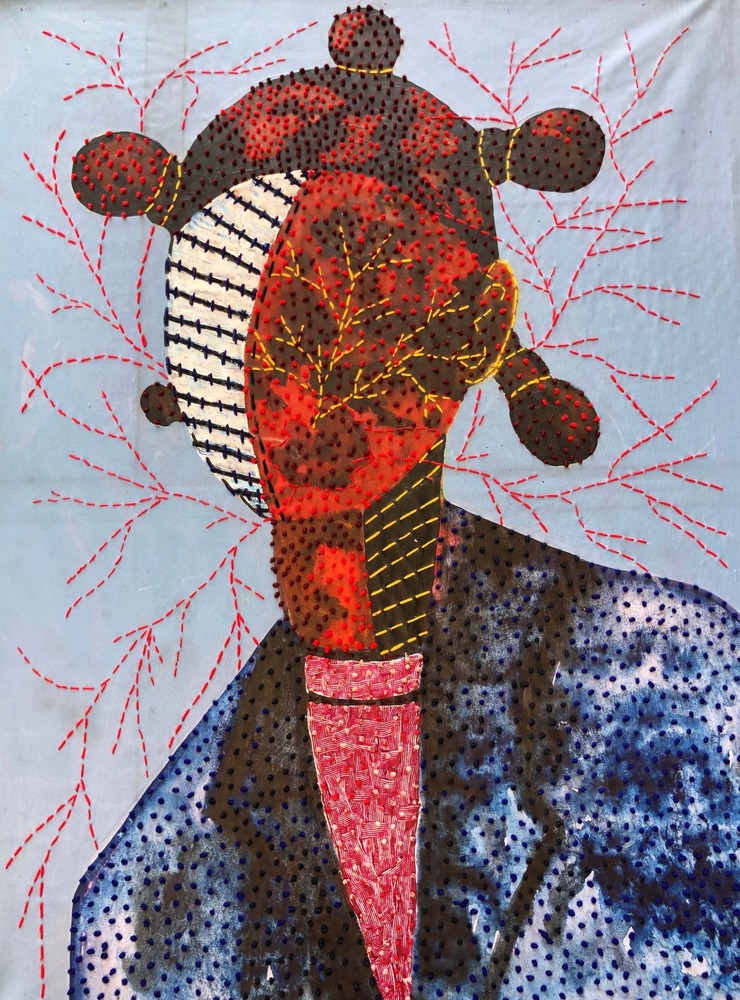
Born in 1986 in Bamako, Mali, Ibrahim Ballo is a painter whose work blends personal history and cultural tradition. Raised in an artistic family, Ballo was inspired by his grandmother’s cotton spinning technique, which he adapted into his unique weaving approach on canvas. His creations are marked by harmony and beauty, yet it is the message behind them that is most important to him. Ballo often depicts his characters with a red spot on their faces, symbolizing the hidden suffering within each person. His work explores themes of oppression, betrayal, war, and violence, offering a poignant commentary on the human condition.

Lizette Chirrime (b. 1973) is a multidisciplinary artist and fashion designer from northern Mozambique, currently living and working in Tofo. Her work delves into the strength of women in society, highlighting their crucial role in nurturing communities while addressing the challenges they face. As a single mother, these themes are deeply personal to her, often exploring generational traumas and the process of healing. She views art as not just a form of creative expression, but also a pathway to personal and universal healing.
Sustainability is at the heart of her practice. By incorporating recycling and upcycling into her work, she strives to contribute to a cleaner, healthier Universe. Using techniques like knitting, weaving, and stitching, she works primarily with fabric, which symbolizes the warmth and comfort of home. After 15 years in Cape Town, South Africa, she returned to Mozambique with a dream: to inspire teenagers through creative extracurricular activities, sharing her skills to nurture their growth and potential.

Born in 1996 in Washington, D.C., Malaika Temba is a Visual Artist based in New York. Her textile works honour the labour and resilience of the diaspora’s aunties and femmes, confronting gendered notions of softness and exploring themes of labour, care, and global trade. Using fabric as a medium, Temba addresses the complexities of responsibility, nurture, and the passage of time. Having grown up in Saudi Arabia, Uganda, South Africa, Morocco, and the United States, her work embraces intercultural connection, reflecting on the intricacies of globalization.

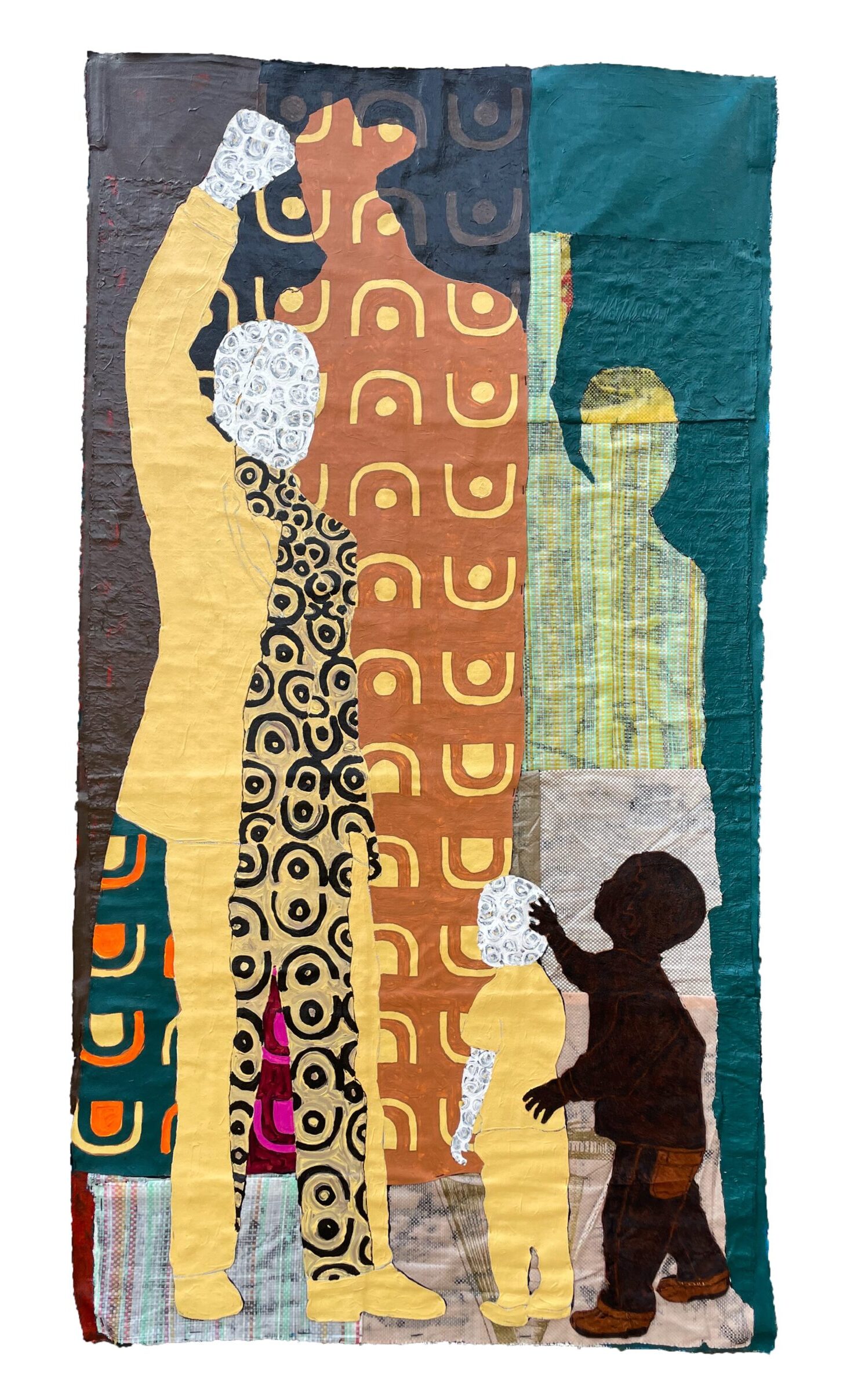
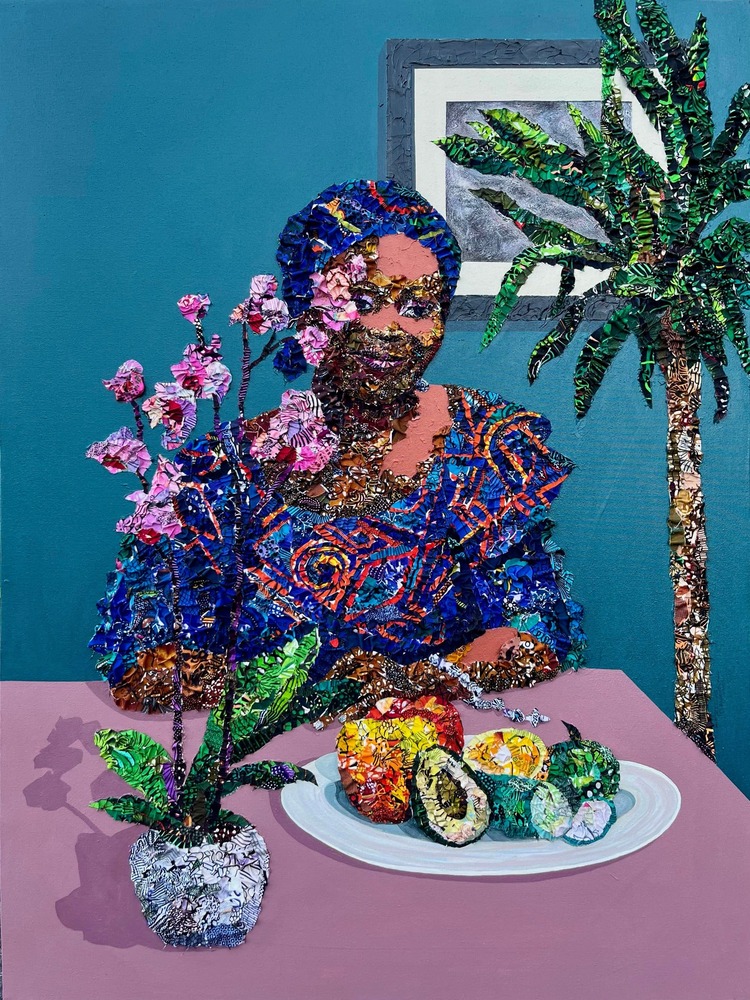
Born in Lagos, Nigeria, in 1989, Marcellina Akpojotor creates vibrant, textured works that explore femininity, identity, familial history and women’s empowerment. Trained in Art and Industrial Design, she uses discarded Ankara fabric to craft layered collages, transforming this culturally significant material into powerful visual narratives of memory and connection.

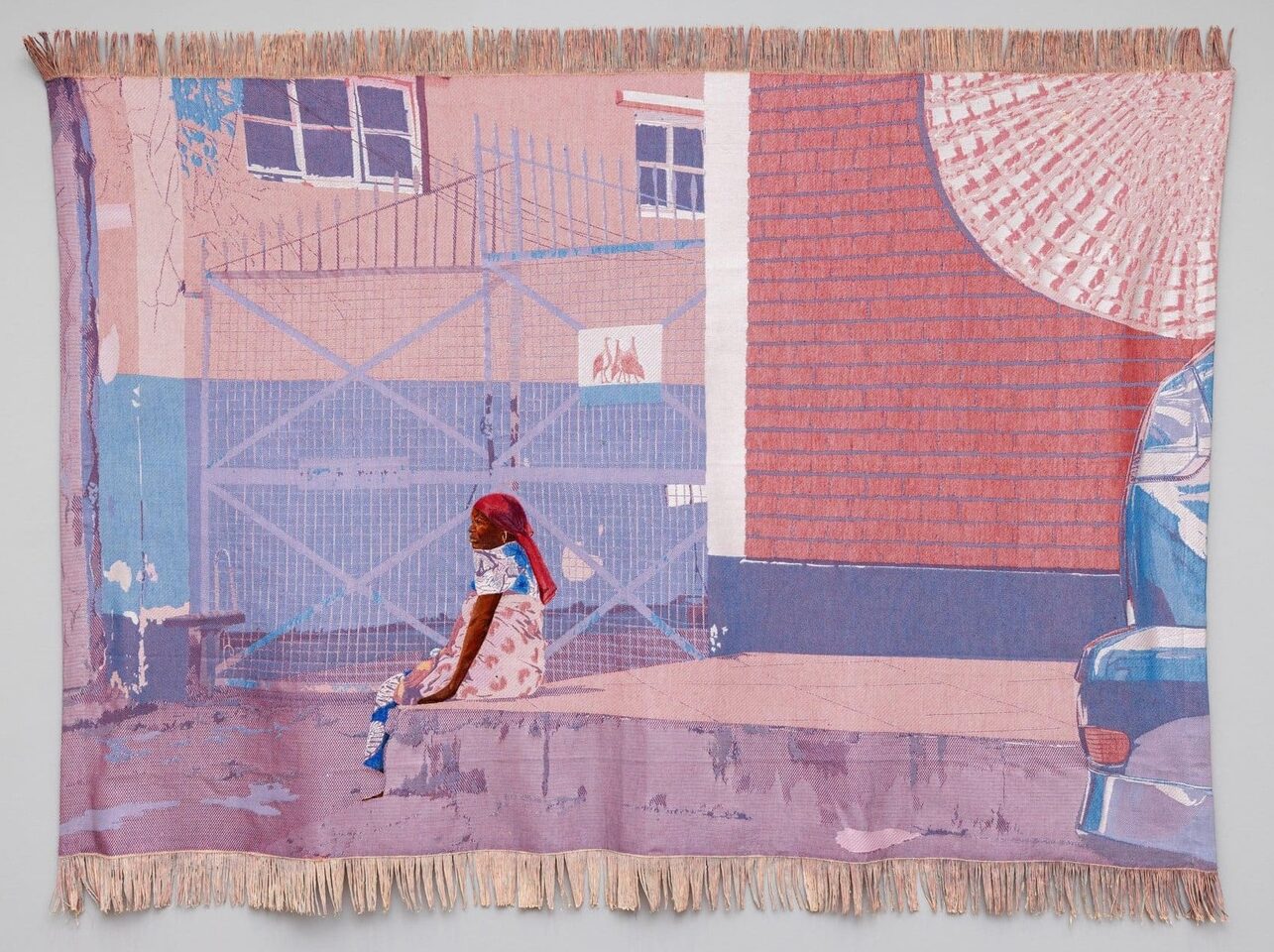
Mikhael Subotzky’s works are the results of his fractured attempts to place himself in relation to the social, historical, and political narratives that surround him. As an artist working in film, video installation and photography, as well as more recently in collage and painting, Subotzky engages critically with contemporary politics of images and their making. His first body of photographic work, Die Vier Hoeke (2004), was an in-depth study of the South African penal system. Beaufort West (2006 – 2008) extended this investigation to the relationship between everyday life in post-apartheid South Africa and the historical, spatial, and institutional structures of control. Ponte City (2008 – 2014), a collaboration with artist Patrick Waterhouse, focuses on a single 54-story building that dominates the Johannesburg skyline; the Ponte City publication was awarded the 2015 Deutsche Borse Photography Prize. His installation Pixel Interface (2013) was included in the 56th Venice Biennale, “All the World’s Futures”, Venice, 2015, and Subotzky’s most recent film, Epilogue: Disordered and flatulent (2022) premiered at Goodman Gallery London in June 2022. He lives and works in Johannesburg, South Africa.

Modupeola Fadugba is a Nigerian artist whose work bridges the worlds of art, science, and social engagement. With a background in chemical engineering and economics, she approaches her art with a structured, analytical mindset, using painting, drawing, and installations to address issues of identity, justice, and human connection. Living and working in Ibadan, Fadugba’s thought-provoking pieces offer fresh insights into the complex narratives shaping contemporary Nigeria.

Born in Soweto in 1986, Mohau Modisakeng is a South African artist whose work examines race, societal militarization, and the enduring divides of post-apartheid and post-colonial Africa. Working between Johannesburg and Cape Town, he uses his art to interrogate collective narratives, focusing on the black body as a site of fragmentation and resilience.

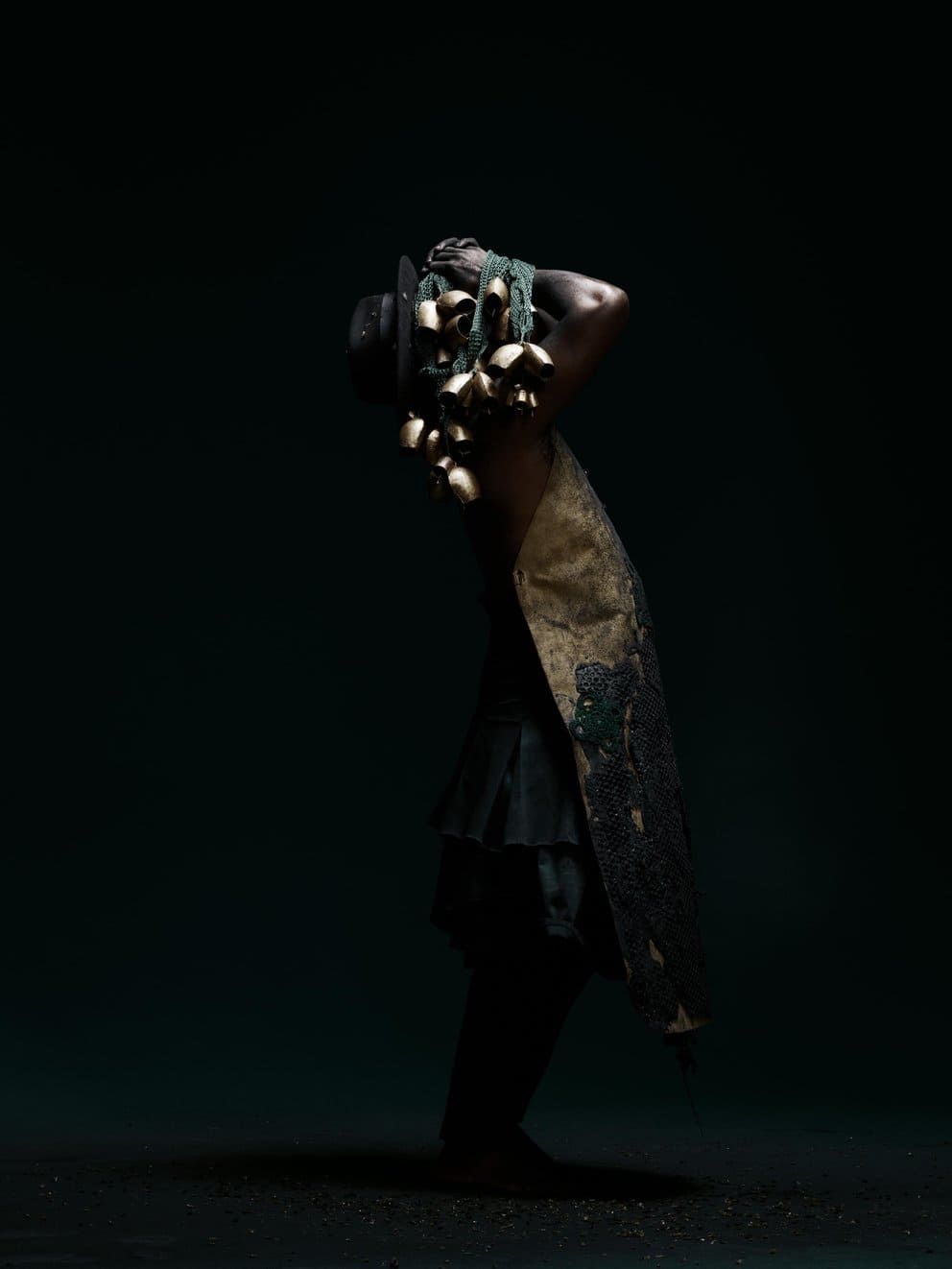
Nandipha Mntambo, a Johannesburg-based artist with a Master’s in Fine Art from the University of Cape Town, explores the human body through sculpture, photography, video, and mixed media. Known for her cowhide sculptures, Mntambo uses this material to examine the relationship between humans and animals while challenging perceptions of femininity, sexuality, and vulnerability. Her work confronts themes of identity, performance, and the interplay between life and death, often blurring the boundaries between strength and fragility.

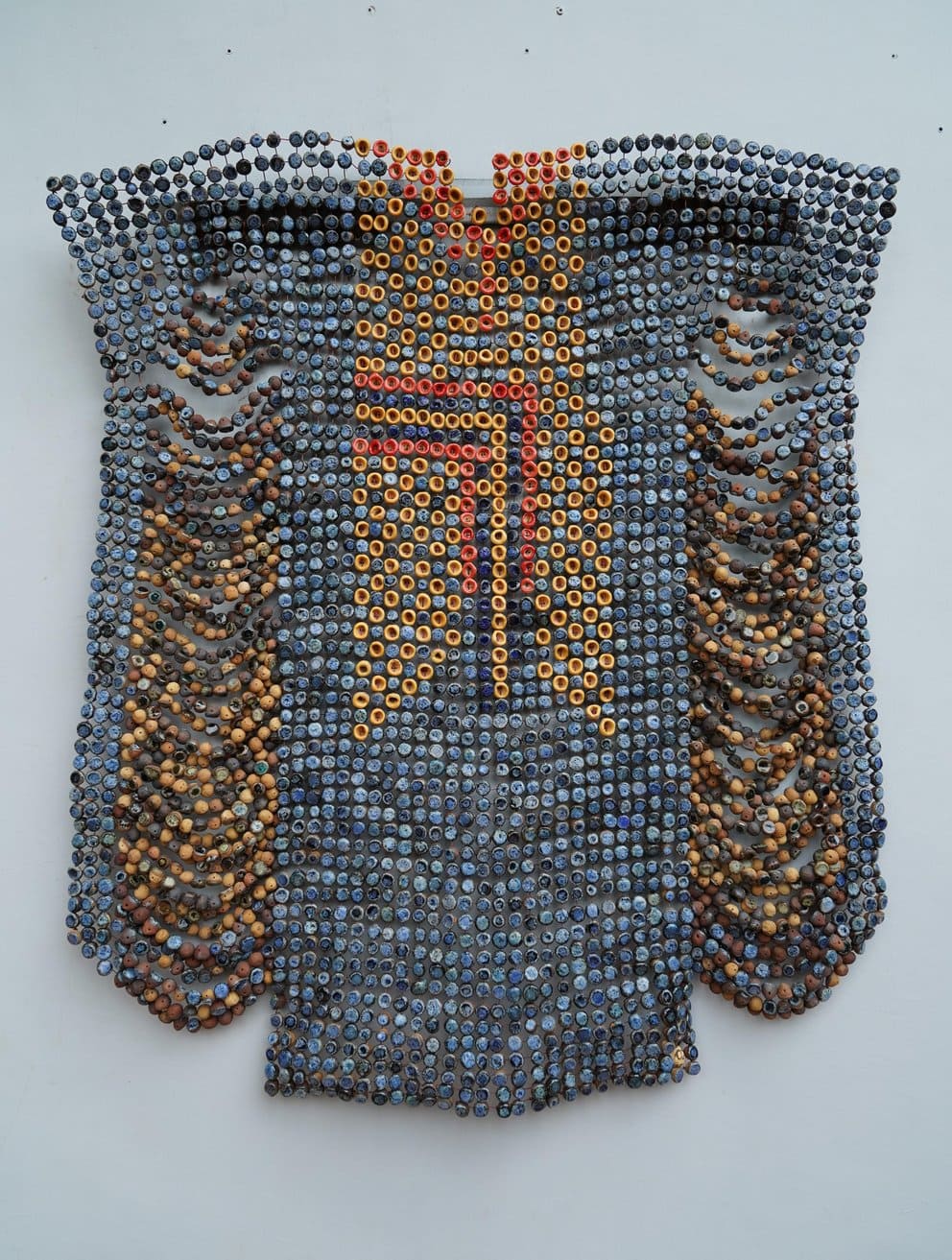
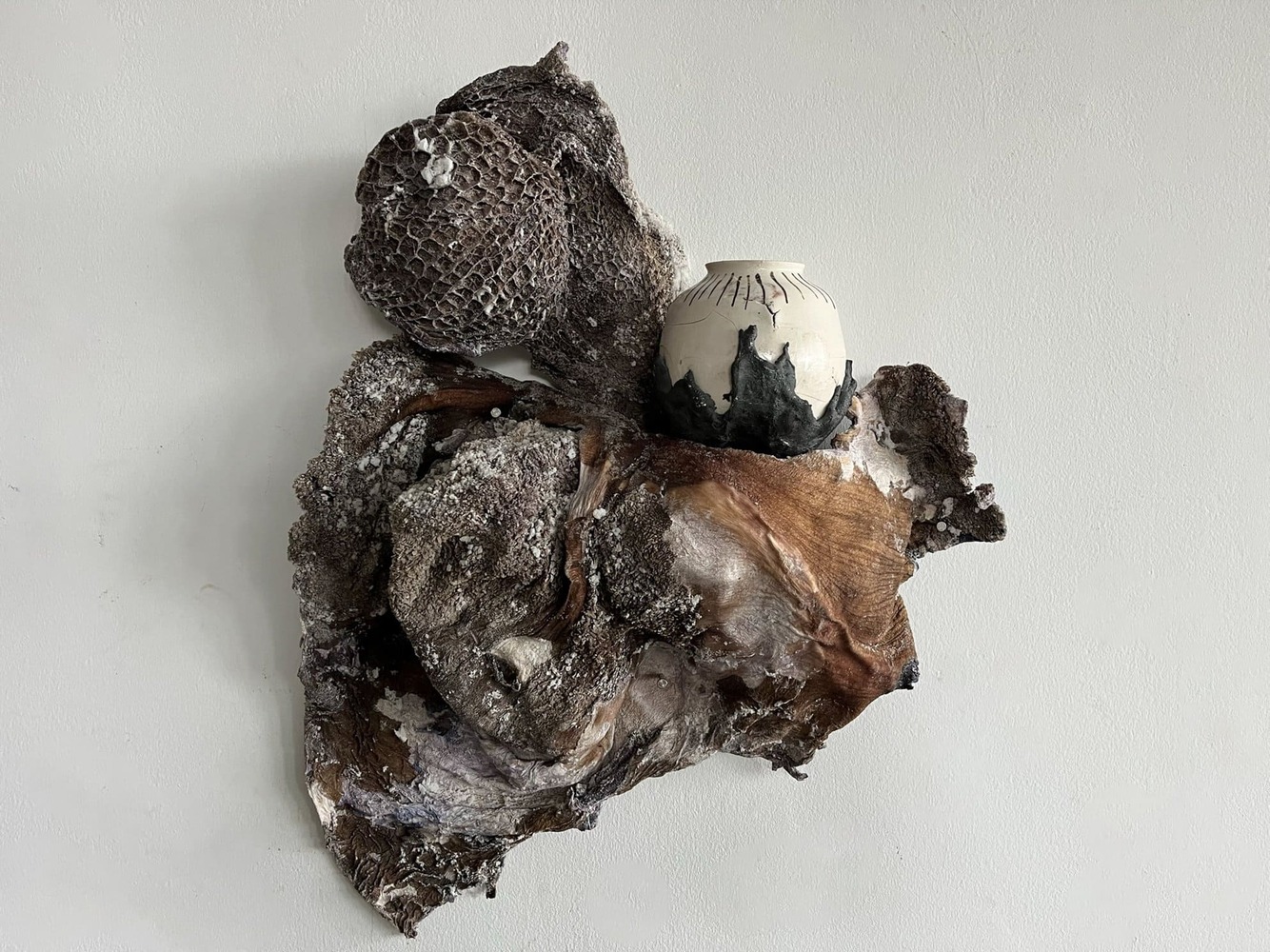
Born in 1972 in Achi, Enugu State, Nigeria, Ozioma Onuzulike is a ceramics artist and poet based in Nsukka, where he teaches at the University of Nigeria. His work examines the historical and sociological roots of Africa’s political and socio-economic challenges and their impact on daily life. Onuzulike uses clay and its transformative processes as symbolic and metaphorical tools, creating intricate mixed-media projects that reflect resilience and struggle.

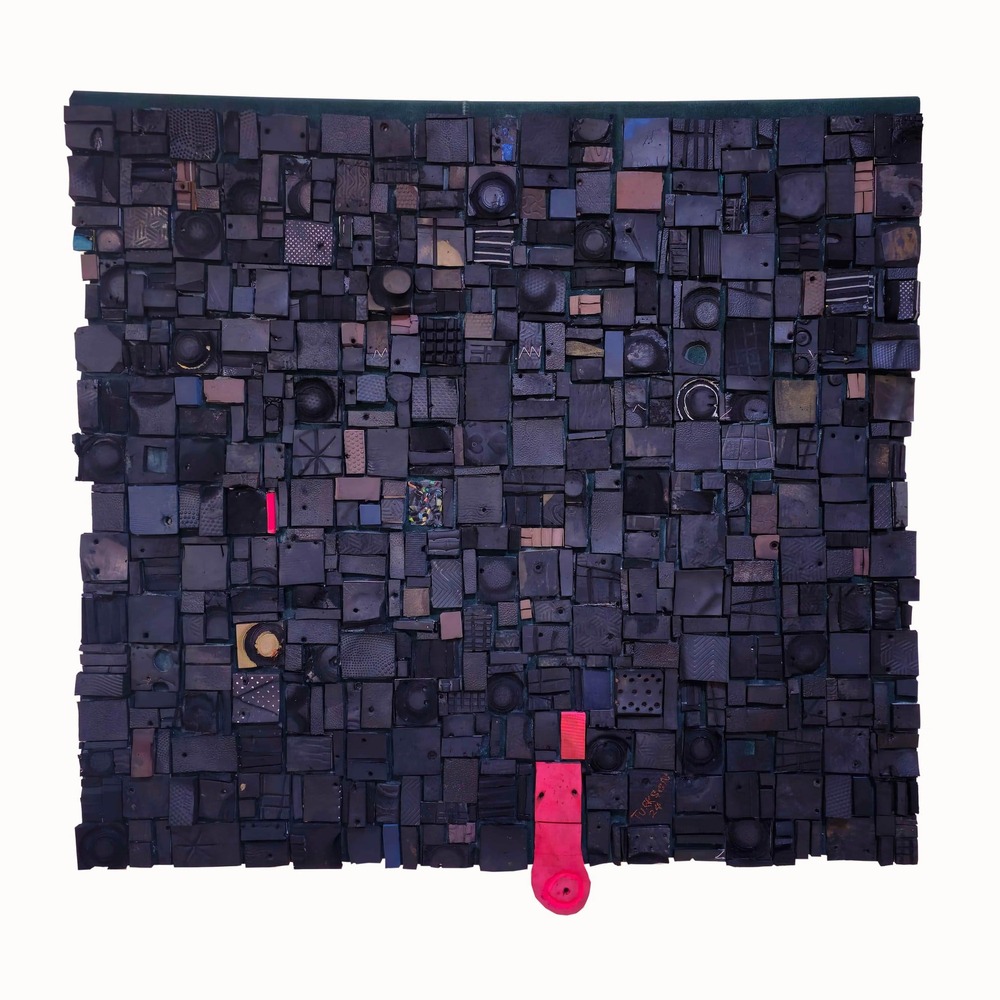
Patrick Tagoe-Turkson, a Ghanaian artist with a Master of Fine Arts from KNUST, combines vibrant elements of Ghanaian culture with innovative environmental artistry. Transforming plastic waste and discarded rubber into kaleidoscopic compositions, he reimagines flip-flops found in the Atlantic Ocean as “Objects of Value.” His work, rooted in storytelling and social commentary, explores themes of memory, migration, and recovery while reflecting the rhythmic patterns of traditional Ghanaian art, like Kente fabrics. Tagoe-Turkson’s practice bridges the mundane and the beautiful, elevating discarded materials into mesmerizing, meaningful art.

Born in 1985, Shabu Mwangi is a Kenyan artist based in Mukuru, an informal settlement in Nairobi, where he founded the Wajukuu Art Project in 2003. His work explores societal inequality, human behavior, and collective amnesia, reflecting on how deeply inequities and frustrations impact society. Mwangi’s mixed-media compositions address themes of migration, statelessness, and national misidentification, while questioning the political, social, and cultural divides that hinder unity. With a focus on structural violence and human interaction, his art seeks to spark reflection on identity, empathy, and the consequences of our egos.

Born in 1996 in South Africa, Simphiwe Buthelezi is an artist who intricately weaves ancient facets of her cultural identity into a global narrative, shaping contemporary culture while safeguarding precious artifacts for future generations. Her practice is rooted in the belief that cultural identity is dynamic and ever-evolving. Her work creates spaces where stories, spirituality, and Indigenous knowledge can thrive, inspire, and inform future generations.
At the heart of her work is a radical act of memory, reclaiming and revitalizing marginalized histories. Through this act, Simphiwe Buthelezi embodies remembrance, serving as a conduit for collective heritage.

Yacine Tilala Fall is an interdisciplinary conceptual artist whose work explores themes of heritage, ritual, and function through performance, sculpture, painting, and installation. Drawing from her Senegalese and Mauritanian roots, her practice examines the human body’s complex relationship with labor, history, and faith. Using natural materials, Fall’s art invites reflection on cultural identity and the enduring connections between the physical and spiritual realms.

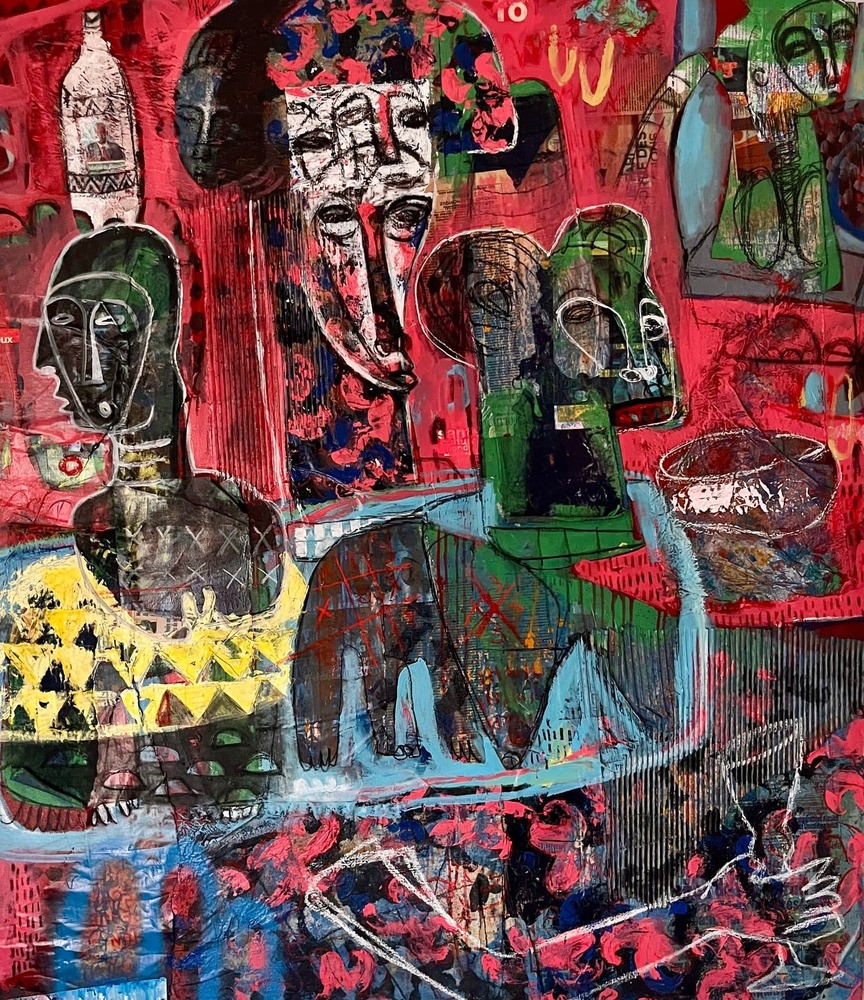
Born in 1992 in Yamoussoukro, Côte d’Ivoire, Yannick Ackah is a contemporary artist whose work blends African cultural motifs with Western art history. Drawing inspiration from African sculpture and masks, Ackah’s style evokes the legacies of Picasso and Basquiat while maintaining a distinctive voice. His collage-like compositions incorporate materials such as paper, fabric, and magazines, creating textured surfaces that emphasize the mask as a central motif. Through his art, Ackah explores themes of identity, cultural appropriation, racism, and colonialism, offering a contemporary perspective on Africa and engaging with the ongoing restitution debate on ethnological masks.

Born in 1995, Yadichinma Ukoha-Kalu is an experimental artist and illustrator based in Lagos, Nigeria. Her work explores the interplay of objects, space, and boundaries through diverse media, including drawing, sculpture, fabric, and technology. Ukoha-Kalu creates multi-dimensional environments that blend surreal and abstract elements, uncovering connections between seemingly unrelated objects. With a focus on artefacts and cultural history, especially within the African context, her practice bridges traditional and contemporary methods, fostering a dialogue about world-building and the rich tapestry of cultural heritage.

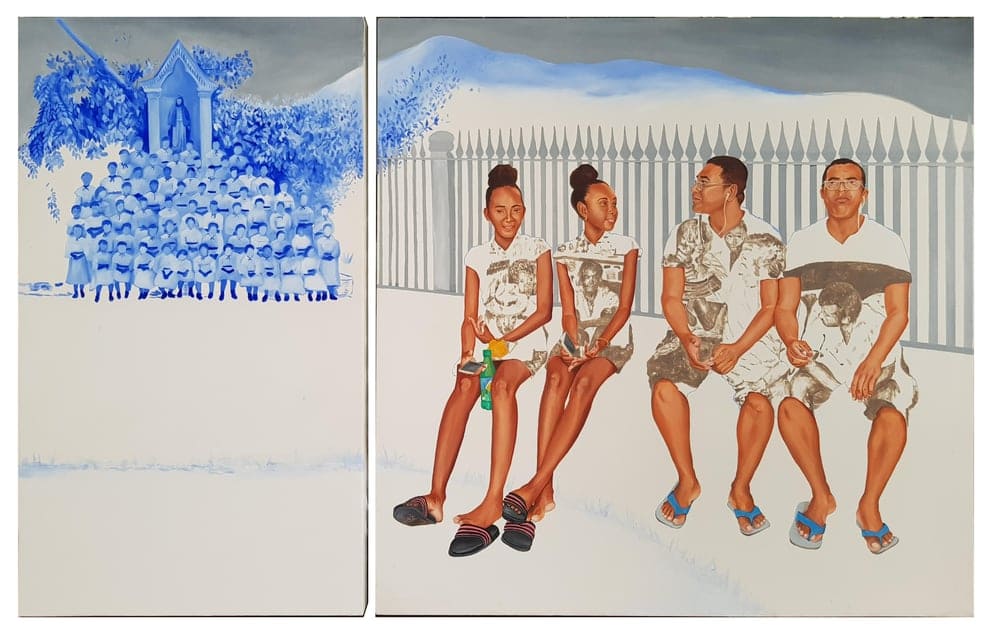
Nirveda Alleck is a multi-disciplinary artist whose work examines the psychology of human social interactions in both public and personal spaces. Her paintings blend hyperreal portraiture with elements of fiction, often stripping away backdrops to heighten focus. In her three-dimensional work, human presence—whether explicit or implied—remains a central theme, inviting reflection on our relationships and environments.