
What was the initial idea or moment that sparked this piece?
A Turn of Events was part of my solo exhibition called Burgundy Street last year (2025). This quiet image was chosen from a set of photographs that I took during my ‘photo rides.’ I collect scenery by means of photographs taken either through my cellphone or a dedicated camera during my travels. Means of mobility may also vary: walking, cycling or on my AUV.
During these excursions, I’m struck by unfamiliar forms and compelling patterns. The city is a constant source of fascination for me because it is where the alien and the mundane meet. I find this tension in Manila, which then leads me to questions.
A Turn of Events is a drawing based on my photograph of a structure being demolished. As a draftsman, I was at first drawn to its possibilities and technical challenges—composition being primary. Here, something is being constructed while another is on the verge of being destroyed. I was thinking of the city as a site for these opposing processes, which somehow hints at the volatility of our material surroundings.
Could you tell us more about A Turn of Events?
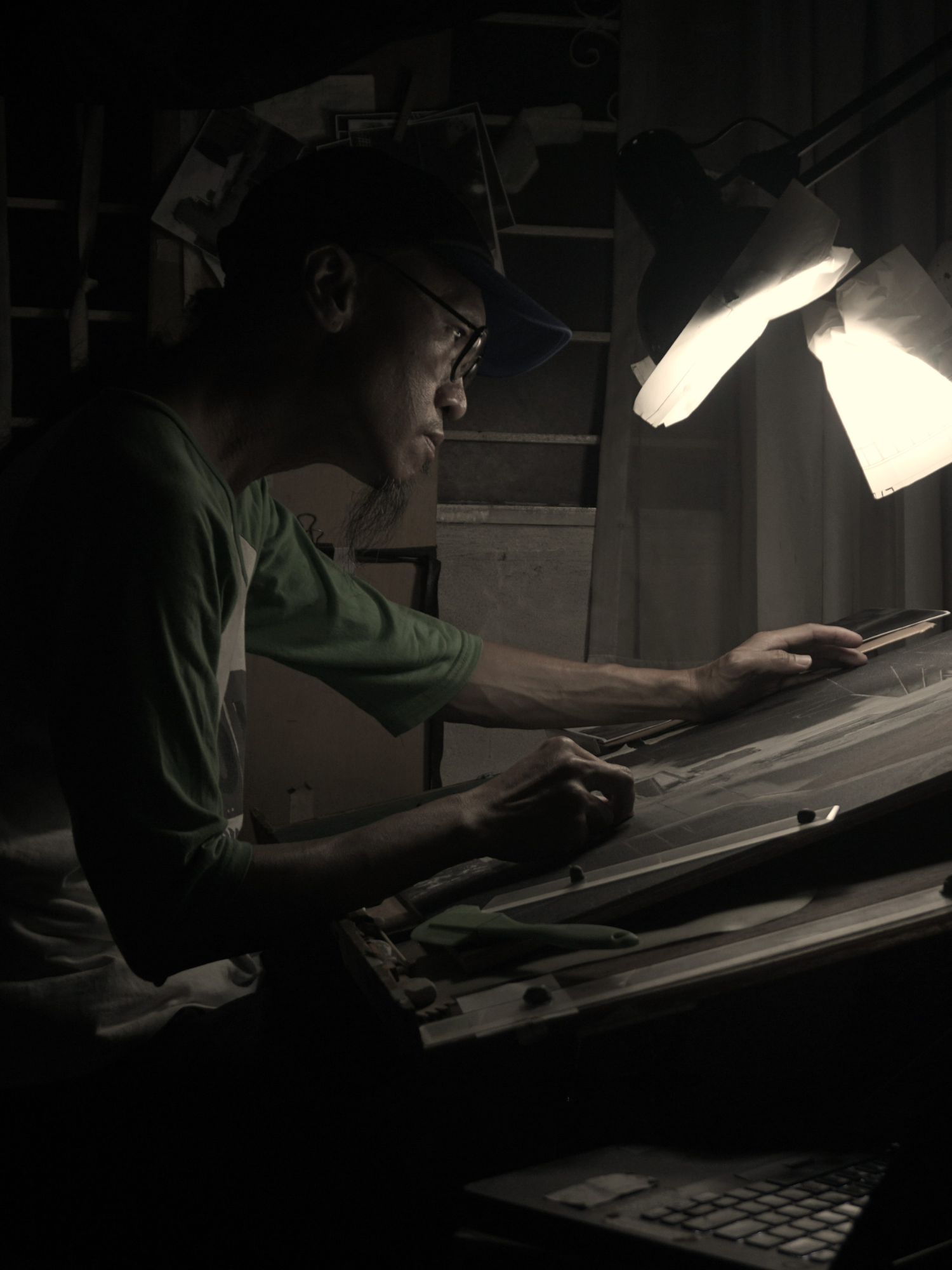
I was hoping to capture the aura of this image by using my own art technique. By making use of pebbles as drawing mediums, I employed the foundational material used in this intriguing city structure.
Stone here is both material and metaphor. Stone, which is the material upon which buildings and cities are made, stand for what endures, what is permanent. My artistic process, however, testifies against this. In order to draw, stone is diminished to dust on sandpaper. My entire technique signifies the impermanence of stone—and, by extension, the contingency of cities.
No matter how much we organize our urban environments, conflicts, urban development, and decay expose our cities and its inhabitants to material volatility. My drawing is performative, process-based: It is a performance of showing that in order to create an image, stone as material is also destroyed. These forces of creation and ruin are inherent in city-building and in art-making.
What are the recurring themes across your work? Where do these come from?
My practice as a visual artist lies at the intersection of psychogeography, process-based art and photorealistic illustrations. My art technique involves the use of found objects as drawing mediums on abrasive paper. The main theme of my work is impermanence, that even the most robust material can wear away with force and time.
Using objects has been my way of bridging the gap between art and the viewer. An object’s affinity with the tangible world gives it more leverage than oil or acrylic paint. To use objects as drawing mediums is an alternative form of mimesis. My medium is not external to the image; it is continuous with its subject. What I draw is made of the same substance I use to represent it.
In my practice, the technical arduousness of drawing is informed by my background in conceptual art. I call my technique Object/Medium, a rationale of drawing where medium and subject are not separate but one. I have always believed in the potential of the two-dimensional plane or the flat surface. Object/Medium mined the concept of the readymade and the representation into one. It has been my response to the problem of representation and image-making.
Since 2015, the city has been a recurring subject. What builds a city? What memories are embedded within it? What human forces contribute to its ruin? I have used pebble stones to draw the urban environment and to meditate on the fragility of memory and history.
Finish the sentence: Art is…
Art is making an inquiry by pushing the limits of one’s medium. That inquiry can be directed to something as abstract as religion, urban politics, and human life–but that inquiry is enacted first at the level of material.
There is strenuousness or arduous technical skill involved in art, because art to me is labor. Before art school, I learned art from my grandfather, Enrique Palomer. He did not consider himself an artist. He was a carpenter, a very skilled woodworker who could carve intricate flower motifs on wood.
Through this technical commitment, an artist can challenge the medium, its physical qualities as well as its politics.
Art is strenuous because it is made at the level of material, at the level of the body. It is labor. Like my grandfather, art is my way of making a living. It is also my means of extending an inquiry, to question the ways of being alive.
Is there a moment, person or idea that inspired you in the past weeks?
I have been looking into psychogeography and the concept of derive (drifting) by the Situationists. I feel that some Filipinos living in the big cities of our country have been practicing this unknowingly, myself included. I have been interested in tactility, friction, and mobility as ways of embodied engagement with the city. This interest took on a renewed urgency for me the more I see the effects of AI and automation. I derive my images from walking, cycling, and wandering freely around the city. Psychogeography and drifting, I believe, are human processes that help us engage more fully with our environments and with each other.
Also, I just got married in January of this year to a wonderful woman. The prospect of building a life and family with her inspires me the most.
What does it mean to you to be shortlisted for this award and play a part in supporting its charitable aims?
I am elated and humbled to have been shortlisted for this award. I have been a practicing artist for 26 years and this is an encouragement to keep going. I hope this opportunity will introduce my art to a wider audience and discussion.
I am happy that my art can be of aid to the cause of helping vulnerable children. My mother was a dedicated educator who cared for children, and even if she did not teach art therapy per se, she encouraged me to pursue art. The possibility that my artwork can help fund expressive therapy programmes for children delights my heart in immeasurable ways.
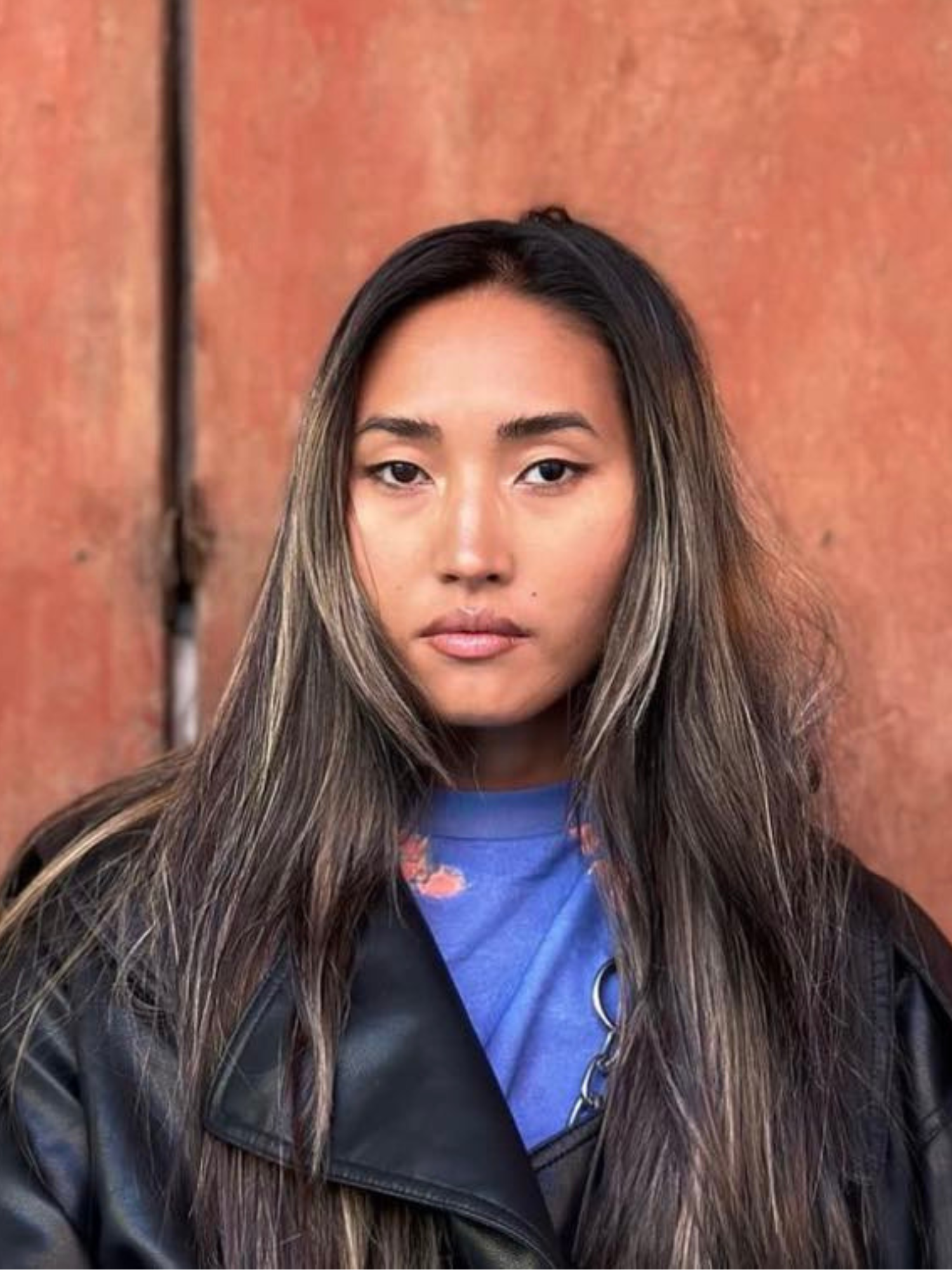
What was the initial idea or moment that sparked this piece?
The origin of this idea dates back to 2015. While preparing for my solo exhibition Metamorphosis in South Korea, I was experimenting and exploring different approaches. At one point, I adjusted my phone settings to view my face as if through photographic film. By inverting the camera on my iPhone, I saw my face transformed into emerald or deep blue tones. The marks on my skin—moles, lines, and freckles—appeared like shining stars.
This vision evoked a sense of vast space and led me to realize that a human being, though small, can reflect the structure of the universe itself. It also awakened memories from my childhood, when I used to enjoy holding undeveloped photographic film against the light. Those images revealed an inverted world—opposite colors and unfamiliar forms—inviting me to question what reality truly looks like, while also allowing space for imagination.
Over time, I developed this idea further through a series of solo exhibitions, one of which is Crescendo of Inner Nature. In this work, I approached the concept more consciously, expressing the eternal, sacred nature of human existence through a figure reminiscent of the Green Tara.
Could you tell us more about Crescendo of Inner Nature series-5?
Since childhood, I have often reflected on the meaning of existence and the nature of life. My mother’s philosophy—living in harmony with all things—has deeply influenced my artistic path and the themes I explore. These include nature, ancestry, cultural heritage, human essence, the cycle of life, and the underlying causes of existence. These themes continuously recur and form the core of my work.
What are the recurring themes across your work? Where do these come from?
Since childhood, I have often reflected on the meaning of existence and the nature of life. My mother’s philosophy—living in harmony with all things—has deeply influenced my artistic path and the themes I explore. These include nature, ancestry, cultural heritage, human essence, the cycle of life, and the underlying causes of existence. These themes continuously recur and form the core of my work.
Finish the sentence: Art is…
Art continually challenges what it means to be human, serving as a creative act of revealing essence.
What does it mean to you to be shortlisted for this award and play a part in supporting its charitable aims?
Being shortlisted for this award for the third time holds a special meaning for me. I was previously nominated by two Mongolian curators in 2020 and 2023, and this moment feels like a continuation of their trust and encouragement. I am also deeply grateful to 10 Chancery Lane Gallery for their support and for nominating me this year.
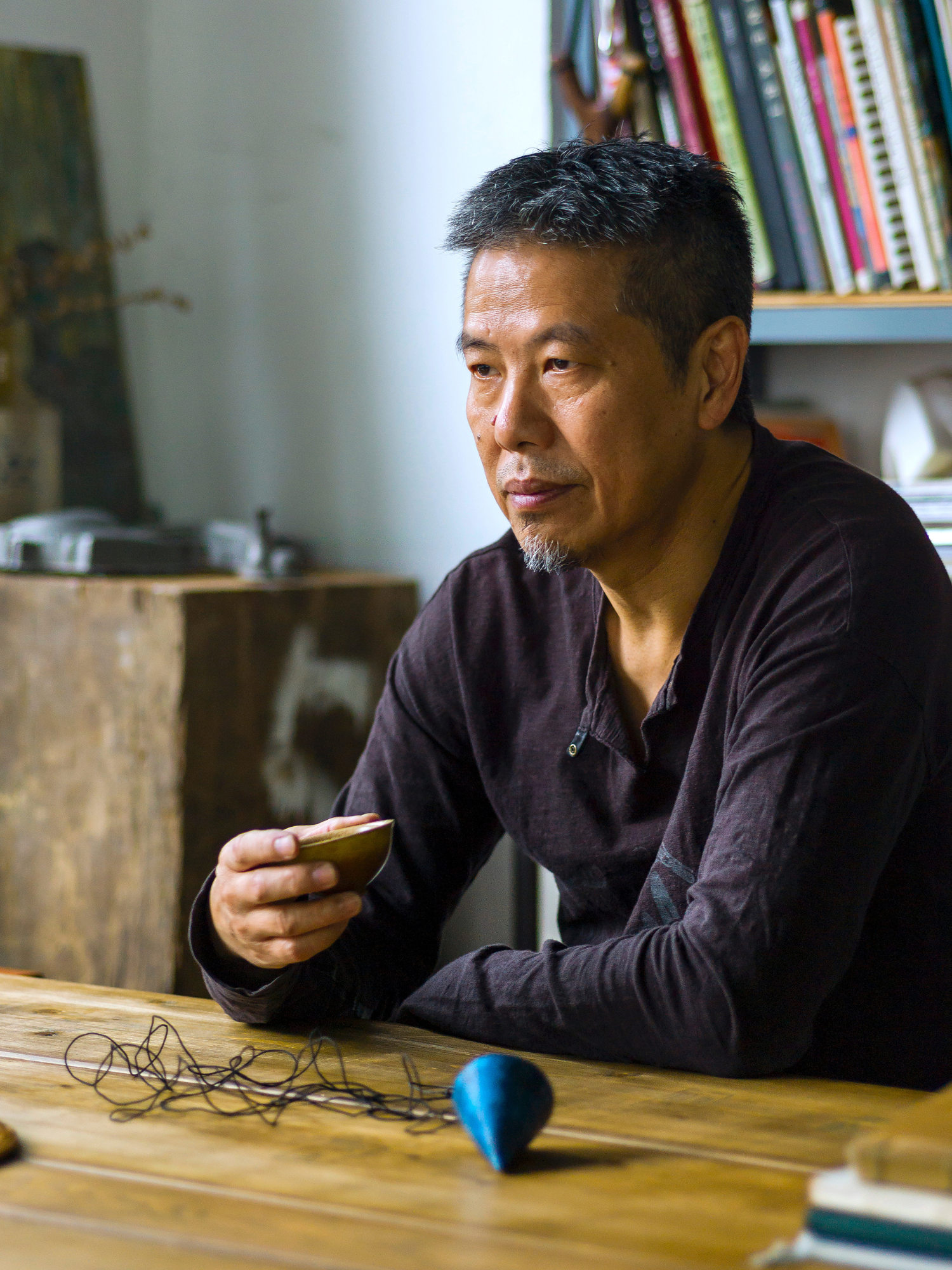
What was the initial idea or moment that sparked this piece?
I continuously explore the relationship between urban life and nature in daily living, blending traditional Chinese aesthetics with the spirit of landscape painting. I see my sculpture as a contemporary and three-dimensional interpretation of Chinese ink art. It is rooted in humble, quiet observation: “Seeing mountains as mountains. Seeing water as water,” a state of life where the viewer feels at ease.
Could you tell us more about Mountain and Stream?
This sculpture draws from the spirit of Chinese landscape painting, exploring the relationship between nature and the urban life through the interplay of emptiness and substance. The stainless-steel structure, with its smooth and reflective surface, represents the mountains within the urban environment through modern materials and techniques. The momentary pause of flowing water suggests the solidification of time, merging poetic imagery into one artistic vision—this is my interpretation of Mountain and Stream.
What are the recurring themes across your work? Where do these come from?
Landscape has consistently been my artistic theme — drifting between natural scenery and urban landscapes.
My sculptures are inspired by the spirit of Chinese ink art, giving rise to the Landscape Series, which revolves around the dual themes of nature and the city. Traveling around to enjoy nature is my way of living, and I also take pleasure in it. Through sculpture, I create a three-dimensional landscape journey, inviting viewers to pause amid their busy lives and join me in traversing these scenes. The transformation of layered visuals and meanings is itself an experience of self-reflection. With humility and calm observation, “The wise delight in water, the benevolent delight in mountains,” expressing life philosophy and the union of living and art.
Finish the sentence: Art is…
Art is daily life.
Is there a moment, person, or idea that inspired you in the past few weeks?
Knowing that I was shortlisted for this award gave me encouragement and support.
What does it mean to you to be shortlisted for this award and play a part in supporting its charitable aims?
Being shortlisted is both an encouragement and support for me. I am delighted to contribute to charitable projects, and I hope that through art, more people can be supported.
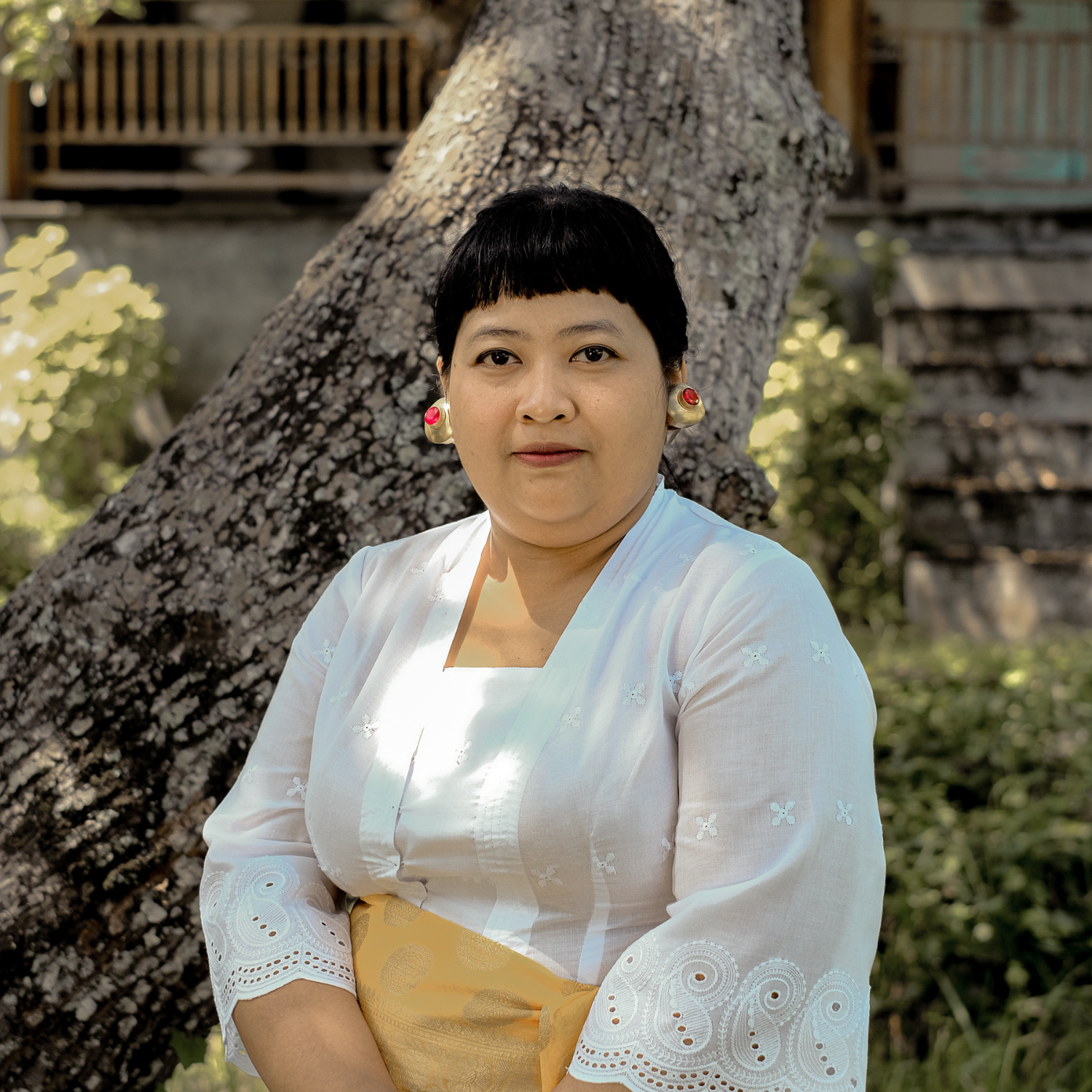
What was the initial idea or moment that sparked this piece?
Ritual is the oldest form of art, tested through centuries of human civilization. Its existence consistently calls into question its relevance to the current state of the world. Art always seeks to record the zeitgeist while offering solutions and reconciliation for specific issues. Yet, at its most fundamental essence, a work of art aims to touch the primordial human emotions through sensations and the hope for a better world.
Could you tell us more about Poetry of the Fountain?
Poetry of the Fountain is an attempt to convey a transmission of Eastern knowledge that is both rootless and endless. In experiencing visual art, the eye serves as a meditative portal, the depth of thought acts as the fountain, and perception becomes the poetic way to distribute this knowledge. Holistic rituals in Bali—incorporating various mediums, movements, and sounds—are events of knowledge transmission that have been sustained to this day. This is the artistic potential I wish to share within the global art context.
What are the recurring themes across your work? Where do these come from?
The two fundamental themes in my artistic practice are feminism and decoloniality. These ideologies help me deconstruct established perceptions of Bali that still need correction, particularly regarding patriarchal culture and the lingering effects of Dutch colonialism. This includes the dominant perspectives of modern art in Indonesia that have marginalized traditional art. I strive to critique these views and emphasize the importance of traditional art and the role of women within the context of contemporary art.
Finish the sentence: Art is…
Art is truth that transcends words.
Is there a moment, person, or idea that inspired you in the past few weeks?
I believe art can be a medium for reconciliation. My experience having a solo exhibition at Kunsthall Stavanger was profound; the institution has a difficult history where past decisions regarding their art programs caused public disagreement. However, the work I exhibited received critical acclaim and encouraged people to visit again. The curator even noted that the weekend was overwhelmed with visitors—more than any other exhibition they could remember.
What does it mean to you to be shortlisted for this award and play a part in supporting its charitable aims?
For me, being shortlisted for The Sovereign Asian Art Prize represents a step forward in challenging the conceptual and artistic production of my work and its relevance to today’s artistic spirit. Furthermore, the support from fellow nominees and the art public is a meaningful expression of appreciation for my creative process. If art can serve as a form of charity and alms, it becomes both a blessing and a spiritual investment for the artist, ultimately imbuing their work with a more profound and evocative power
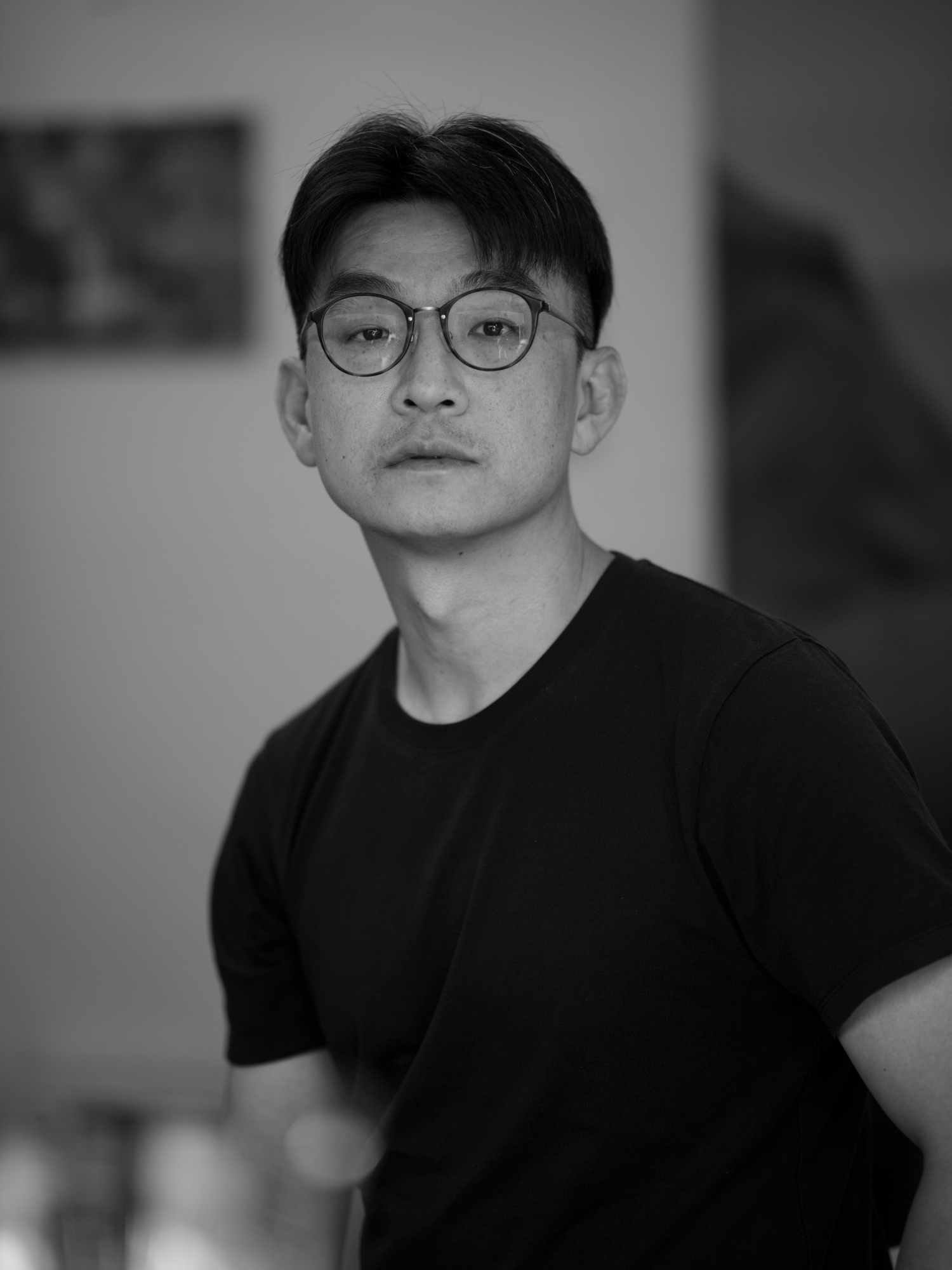
What was the initial idea or moment that sparked this piece?
My studio faces west, and there have been many evenings when I’ve worked through the day into dusk. Occasionally, I catch a sudden glimpse of the sky turning a striking orange or pink at sunset. It’s often the only moment that makes me pause and step away from the work, simply to stand and look.
As the studio gradually darkens, I tend to resist turning on the lights, allowing that last trace of natural light to linger a little longer. There is a quiet intensity in that transition, something both fleeting and deeply present.
I think Gentle Flame began from a desire to hold onto that feeling: to preserve a moment of light that interrupts time, and stays with you.
Could you tell us more about Gentle Flame?
Gentle Flame was titled after the painting was completed, which is usually how I work. The title was inspired by a line from William Shakespeare referencing “the gentle flame of love,” where warmth is contrasted with the distant light of the stars. That idea stayed with me.
While the painting takes the form of a landscape, it is less about a specific place and more about a state of mind. I was drawn to a quiet moment infused with a soft orange light that carries a sense of warmth. This painting is an attempt to hold onto that fleeting sensation, something calm, intimate, and quietly radiant.
What are the recurring themes across your work? Where do these come from?
Recurring elements in my work include mountains, water, light, and geometric forms. While they may suggest landscape, the theme of my work is less about depicting a specific place and more about exploring an internal landscape shaped by memory and perception. Both the natural forms and the geometric structures are imagined, allowing them to exist somewhere between reality and abstraction.
These images draw from a range of influences, including classical Chinese landscape painting, the coastal environment of Sydney, and architectural spaces I encounter in daily life. Light is a particularly important thread: it often comes from fleeting, everyday moments, such as a sudden sunrise or sunset, or the way sunlight enters a room and falls unexpectedly across a wall, floor, or furniture.
These experiences accumulate over time and reappear in the work as a kind of remembered atmosphere.
Finish the sentence: Art is…
Art is where the seen and the remembered meet.
Is there a moment, person, or idea that inspired you in the past few weeks?
Recently, I was reading The Letters of Vincent van Gogh and was deeply moved by a letter he wrote to his brother Theo in July 1882. He described waking at four in the morning in his new studio, sitting next to the window and quietly observing birds, rooftops, chimneys, and the distant landscape, while people nearby began their day.
There was something incredibly vivid and intimate in that description; I almost felt I could smell the morning air and the dew on the meadow. It reminded me to slow down, both in body and in mind, and to pay attention to the most ordinary moments. That kind of attentiveness is very close to what I seek in my own work.
What does it mean to you to be shortlisted for this award and play a part in supporting its charitable aims?
As my practice has largely been based in Australia, being shortlisted offers a meaningful opportunity to connect with a wider audience across the Asia-Pacific region, and to encounter the work of other artists within this context.
It is also a chance to contribute, in a small way, to the foundation’s charitable aims. I hope to share this with those who follow my work, as I believe art can act as a bridge—connecting people, experiences, and communities beyond geographical boundaries.
What was the initial idea or moment that sparked this piece?
I curate from my position as a painter. The 2025 exhibition The Other Singaporeans: Stories of Home and Identity at JW Projects is a key reference point. The exhibition brought together artists whose connections to Singapore span naturalisation, former citizenship, migration, and diasporic experience. It examined identities that exist alongside, and sometimes outside, dominant national narratives. It also reflects my own position as a former Singaporean citizen with lived experiences.
Could you tell us more about Still Living Rent-Free?
2025 marked the tenth anniversary of the death of Lee Kuan Yew, Singapore’s founding Prime Minister. His influence continues to shape national narratives and political consciousness. Often described as shrewd and formidable, his presence persists within Southeast Asian historical and cultural frameworks. The work considers how this legacy continues to occupy psychological and ideological space.
What are the recurring themes across your work? Where do these come from?
Born in postcolonial Singapore, shaped by British-influenced historiography, and migrating to Australia in 1987, I became aware of how imperial visual systems circulate across national contexts. My work approaches this material from a migrant perspective and lived experience of racism. I am structurally implicated in these histories, yet not centred within them. Working primarily through painting, I reprocess colonial-era imagery to interrogate its persistence and authority.
Finish the sentence: Art is…
Art is a method of interrogation, where inherited structures are tested, destabilised, and re-seen.
Is there a moment, person, or idea that inspired you in the past few weeks?
I have been thinking about expiration as a concept. Can foundational colonial images structurally deteriorate over time? The current global rise in nationalism makes this question urgent.
What does it mean to you to be shortlisted for this award and play a part in supporting its charitable aims?
Being shortlisted for the 2026 Sovereign Asian Art Prize affirms my ADHD-led painting practice. The process is competitive, requiring nomination and selection by a panel. I am blessed to have Sofia Coombe & Tanya Michele Amador of ArtWorld Database to nominate my practice. I strongly support The Sovereign Art Foundation and its work providing children with special educational needs, particularly those in vulnerable communities, access to the therapeutic benefits of expressive arts therapy. My own condition went undiagnosed for many years, so this support carries personal significance.
What was the initial idea or moment that sparked this piece?
The idea for this piece came when I visited the workshop of timber craftsman, Pablo Lomeli, for the first time. His passion for timber was simply infectious. When he showed me some experiments he was doing with Japanese friction fit joinery (techniques that allowed the Japanese to build entire buildings without a single nail) I knew that this was someone I wanted to work with. The possibilities for collaboration seemed endless.
In my own work I am constantly playing with dichotomies – portrait / landscape, sculpture / painting, illusion / allusion, micro / macro. Pablo’s intense rigorous hand craftsman ship with chisel and saw, seemed the perfect foil for my experimental use of digital technologies and found materials.
Could you tell us more about Presence Pr25-04?
This artwork, within the Presence series, plays with ambiguity to create brief moments of conscious awareness in the viewer. The artwork at first appears to be a painting, instead it is a low relief sculpture, carved on five sides to reveal the grain and textures of the materials from which it is assembled. What further appears, at first, to be an artwork frame of timber, is in fact an integral part of the artwork, an exquisitely crafted friction fit mantle into which further materials have been integrated. The artwork seeks to create perceptual questions, brief moments of conscious engagement, a truer seeing.
What are the recurring themes across your work? Where do these come from?
The perspectival flip and the grid are a recurring theme in my practice. A couple of years ago, I stumbled onto the concept of the former from literature (perspective flip), such as where a character shifts from hero to villain. I noticed my mind naturally flips from one reading to another of almost everything I look at, particularly in my art. In eroded rock formations, I see futuristic cities, in tiled walls I see a view through a window. I realised that this came from my training as an architect, pre-computer we used to make paper drawings with plans, elevations and details all on the same drawing. This forced a perspective flip when reading the drawing, shifting from top down to side view, then shifting scales.
I realised that this way of seeing had migrated from architecture into my art. At the same time, it became clear that we are all being retrained. As we scroll through images and videos on social media, our perception shifts effortlessly from drone views to cosmic, celestial perspectives, then down to the microscopic and into wireframe animation. We now inhabit a continual perspectival flip, opening up expansive possibilities for play within this condition.
The grid has fascinated me for many years, because the grid is literally everywhere. We take the grid for granted, chunks of our cities are grids, floor tiles are grids, windows are often grids, even the texture on a hand grip or the warp and weft of your clothing is a grid. The presence of the grid at every scale allows for a play with ambiguity, am I looking at a view through a window or is this the pattern of land ownership. The grid, and particularly the imperfect grid suggests endless possibilities to me, a life of exploration.
Finish the sentence: Art is…
Art is….. the creation of unanswerable questions. For me, in contemporary art we seem to have forgotten about engagement, or at least engagement without ‘likes’. What I am fascinated by is, given enough abstract ambiguity, everyone will see something different. According to the science of perception, this is because our minds are constantly guessing based on the inputs our senses receive – it turns out it is much more efficient to guess than to fully compute every input. This opens art up for me, to play with engagement, to create moments of mis-perception, and conscious reflection.
Is there a moment, person, or idea that inspired you in the past few weeks?
I have just finished Michael Pollan’s book – ‘A World Appears’, in which the author delves into cutting edge research on consciousness, showing how even colour can be subjectively different to people with slightly different genes. I revel in the fact that despite all of science, philosophy and spiritual investigations we still know so little. Fertile ground indeed for exploration.
What does it mean to you to be shortlisted for this award and play a part in supporting its charitable aims?
Being shortlisted for the Sovereign Art Prize accomplishes my goal to show my work outside of Australia. Despite being a highly competitive and innovative art scene, the appetite of collectors here is limited. This prize gives my art the opportunity to engage with the sophisticated Hong Kong art scene, while also helping the Sovereign Art Foundation to bring the life-giving wonder of art to kids in need.
What was the initial idea or moment that sparked this piece?
The idea that I initially had for this work is to represent elements that are present in our society and modifying our ways of communicating, like in the case of the smartphones.
Could you tell us more about Tablet (1)?
Tablet is actually a very ancient word and the very first systems of writing were called cuneiform tablets, ironically the same word and shape of modern tablets technology.
What are the recurring themes across your work? Where do these come from?
In my work, the main theme is light. I constantly research and learn how we become human through my creative process, manifested in techniques that evolve through technology.
Finish the sentence: Art is…
Art is becoming human.
Is there a moment, person, or idea that inspired you in the past few weeks?
Not particularly in the past few weeks, but certainly I spend my time admiring past and modern artists and philosophers and others. To give an example: modern artist like Janis Monello to past artists like Caravaggio.
What does it mean to you to be shortlisted for this award and play a part in supporting its charitable aims?
Surely when we are able to help a charitable event or a single person, this is the best way to feel better. That is best human action.
What was the initial idea or moment that sparked this piece?
Data streams ceaselessly every day like a waterfall. I thought of Van Gogh’s The Starry Night, and also the waterfall scenes in traditional Chinese landscape paintings — high mountains and flowing waters, all representing something surging and powerful. I decided to capture this feeling through a very slow way of expression.
Could you tell us more about Digital and Landscape – Canopy?
How do we face things that are rapidly generated or constantly flowing? Every second, countless digital tools produce immeasurable images and visuals.
As Friedrich Hölderlin (1770–1843) wrote:
“Full of merit, yet poetically, man dwells on this earth.”
I drew inspiration from classical Chinese waterfall landscape paintings. I imagine that beneath the waterfall, humans live full of achievements and labors, yet still dwell poetically on this earth, under this digital canopy.
What are the recurring themes across your work? Where do these come from?
Uncertain swirling vortex-like states. They come from watching river currents by the bank when I was little, or from Van Gogh’s The Starry Night. I imagine the stars of humanity shining brightly yet also trapped in a whirlpool.
Finish the sentence: Art is…
Art is all the vortexes in life, yet shining…
Is there a moment, person, or idea that inspired you in the past few weeks?
I saw flowers blooming…People in spring are like blossoming trees.
What does it mean to you to be shortlisted for this award and play a part in supporting its charitable aims?
I feel extremely honored and grateful to be selected. Thank you for giving more people the chance to see my slow and hard-to-categorise painting practice. It also brings me great joy and may mark a new level in my artistic career.
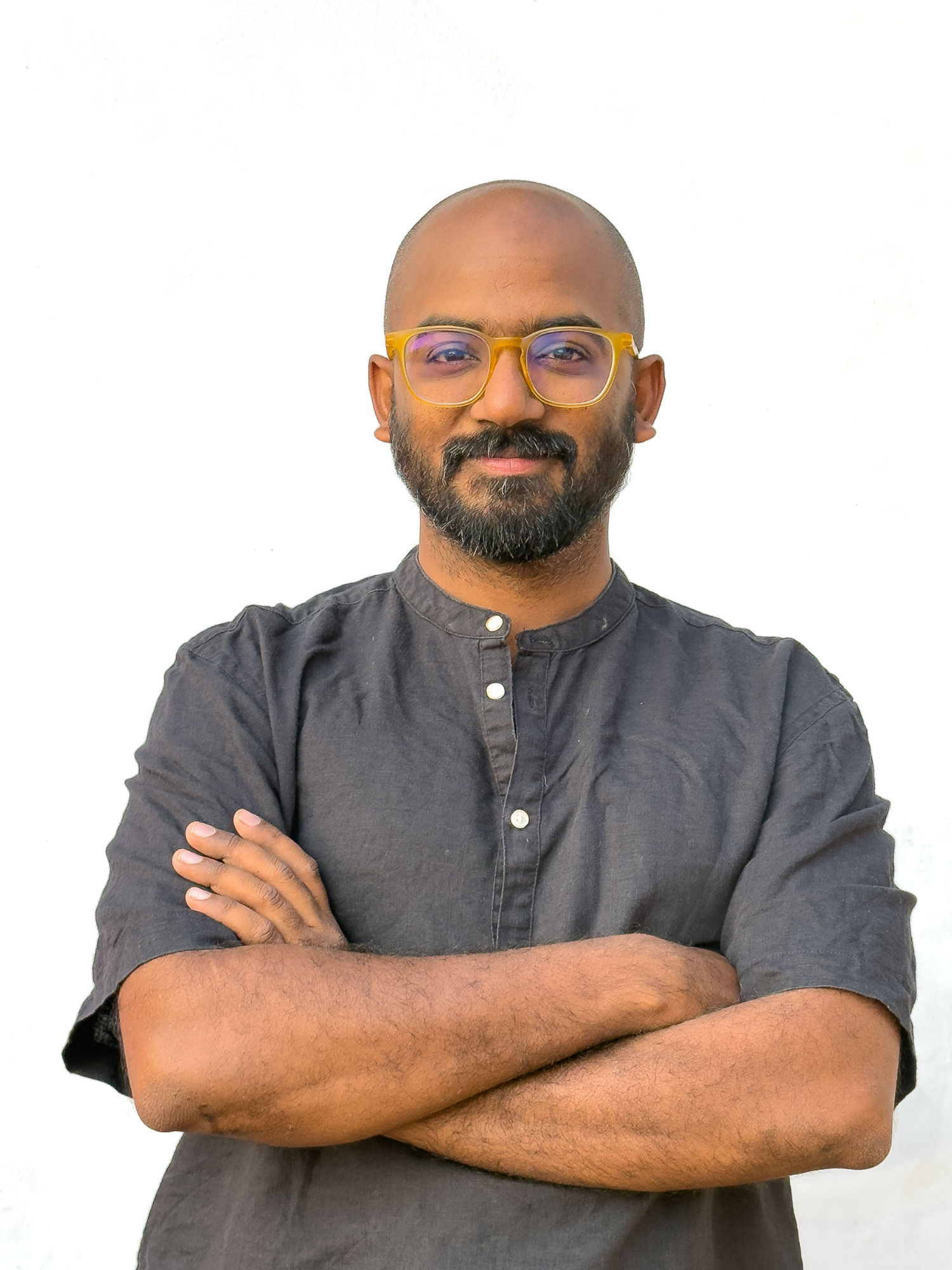
What was the initial idea or moment that sparked this piece?
This work is part of an ongoing series called The Conversations, in which I explore the internal dialogue we all experience. When we say we “talk to ourselves,” we are indirectly accepting a duality: that there is someone posing a question and someone answering. In my quest to understand this relationship, I have continued to create works that go deeper into that psychological space each time.
Could you tell us more about Meta Conversation?
Meta Conversation confronts a core dilemma of our time: What happens to our private, inner world when our thoughts and speech are instantly encoded, tagged, and analyzed as data?
The piece begins with two self-portrait heads carved in wood. Facing one another, they embody the essential human duality—the constant negotiation between the speaker and the listener that forms our identity. Connecting them is a steel spectrogram. This is not an abstract form, but a precise, objective translation of one minute of my own voice, recorded in the solitude of my studio.
By using industrial steel, I translate a moment of private, acoustic energy into rigid, undeniable data. The inner conversation, stripped of emotion, is reduced to its visible waveform—its metadata. The U-shaped, fluted stone base signifies that this entire system of self-dialogue now rests upon a digital reality. The alternating ridges and troughs serve as a metaphor for binary code: the 1s and 0s that fundamentally support our modern existence.
What are the recurring themes across your work? Where do these come from?
I strive to represent the invisible and make it tangible. I am drawn to the idea of synesthesia—the possibility of shifting senses. I explore how the audible becomes tactile, and how that physical form then becomes a metaphor for our lived experience.
Finish the sentence: Art is…
Art is a lens to love life.
Is there a moment, person, or idea that inspired you in the past few weeks?
I have been thinking deeply about the concept of “Anti-fragility” by Nassim Taleb. It refers to things that actually gain from disorder. In the studio, this resonates with the idea that every mistake leads to newborn creativity. No accident is truly an accident; it is the birth of a new idea, a new sprout.
What does it mean to you to be shortlisted for this award and play a part in supporting its charitable aims?
I am where I am today because of opportunities like this that enhance my career and provide a global platform. I am particularly glad that I can contribute to the prize’s charitable aims; it is a privilege to know my work can support a greater cause while I build new connections within the international art community.
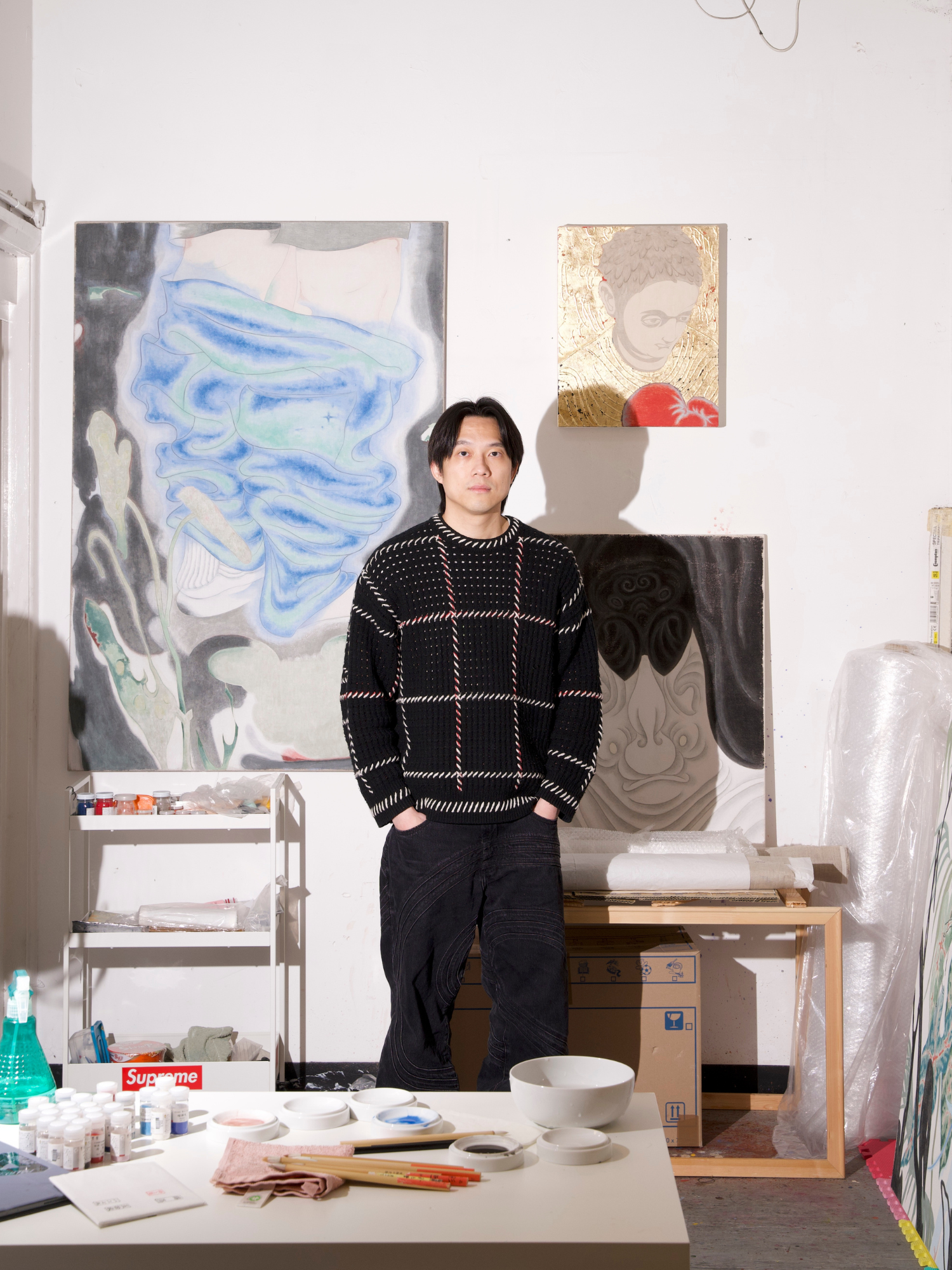
What was the initial idea or moment that sparked this piece?
I once spent a few years living in London.
When I first moved to London, I was trying to adjust to a completely new environment while also learning to communicate in English. It felt like I was moving closer to the world around me, but at the same time pulling back into myself. I wanted to belong, but I also felt uncertain and slightly out of place.
At the same time, I became aware of how climate changes the way we dress and how that, in turn, changes how the body appears. In Taiwan, the heat and humidity make clothing light and direct, so the body is clearly visible. In London, layering becomes necessary, and the body starts to blur and reshape through clothing. That space—between closeness and distance, between being seen and being hidden—became the starting point of this work.
Could you tell us more about Trousers#2?
Trousers#2 continues this line of thinking. The trousers are no longer just an object, but something closer to a shifting structure, almost like another kind of body. The way the fabric gathers around the shoes comes from current fashion trends but also from my experience of being in London, where the body is constantly layered and reshaped.
Language also plays a subtle role. When I first started using the word “trousers” instead of “pants,” it felt like a small shift—but somehow, it brought me slightly closer to the city. As if language itself could adjust the distance between my body and where I was.
What are the recurring themes across your work? Where do these come from?
My work often revolves around how we see—and how we misread what we see. I’m not just making images; I’m testing ways of looking. When something familiar is slightly shifted, it begins to feel unstable. These ideas come from my own lived experience, especially moving between different cultural contexts. Language, climate, and daily habits all shape how we understand the world. They also shape how we understand the body—something that isn’t fixed but constantly being redefined.
Finish the sentence: Art is…
Art is a misunderstanding that reveals something true.
Is there a moment, person, or idea that inspired you in the past few weeks?
My first child was just born recently. When he cries, I know he needs something—but I don’t know exactly what. I can only respond by trying: feeding him, holding him, adjusting the environment and slowly getting closer to what he might be expressing. It made me think about art in a similar way. A work doesn’t explain itself—it just sends out signals. And the viewer, in turn, tries to make sense of them, piece by piece.
What does it mean to you to be shortlisted for this award and play a part in supporting its charitable aims?
Being shortlisted is very meaningful to me. It allows my work to be seen in a broader context and shared with a wider audience. At the same time, knowing that the award supports charitable programmes for children makes it even more significant. It reminds me that art doesn’t only exist to be seen, it can also create real connections and have an impact beyond itself.
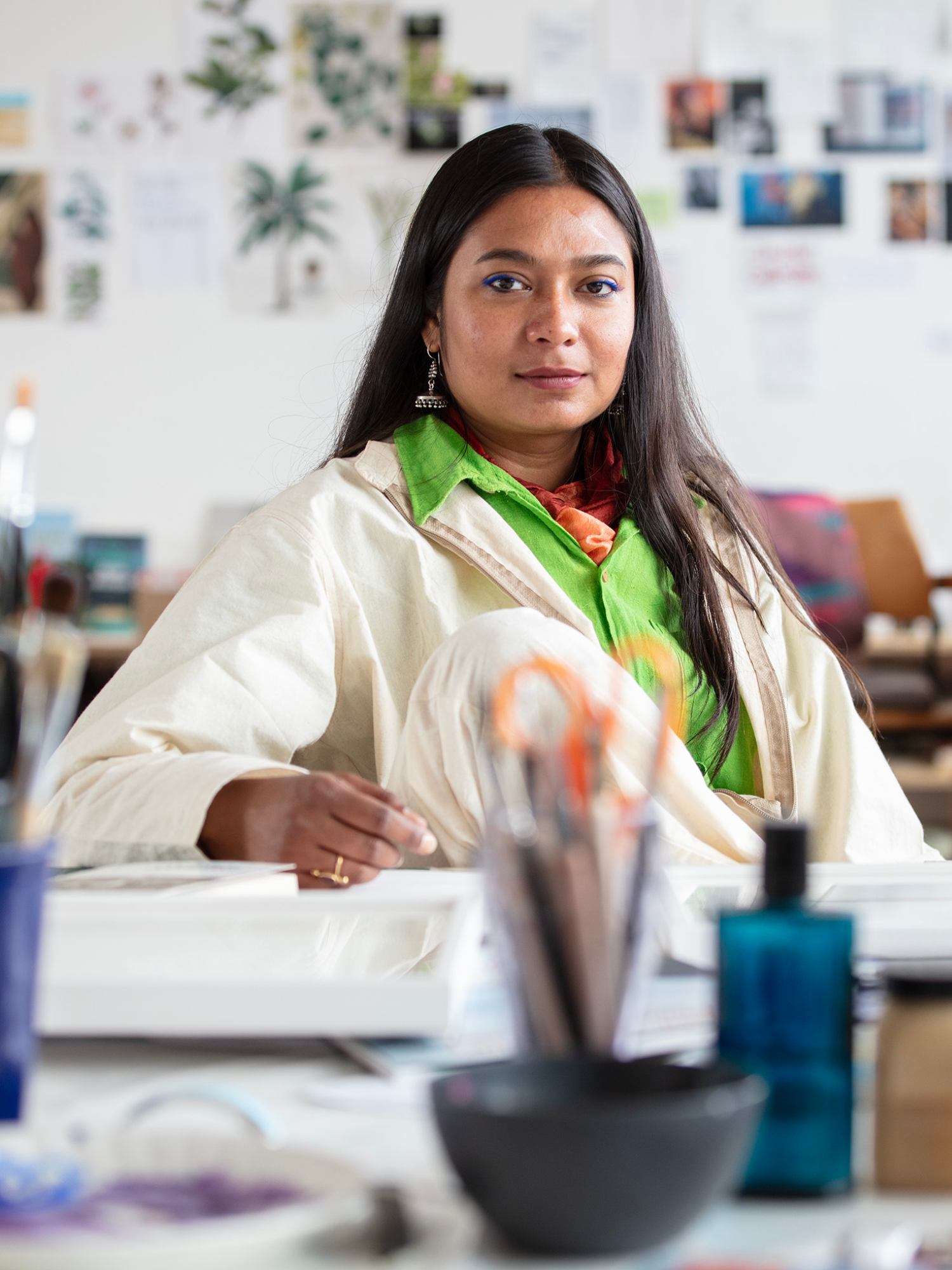
What was the initial idea or moment that sparked this piece?
Where The Wild Things Roam is an ongoing series since last year. I am interested in how existential questions of human life morph into ecological ones, and vice versa. Growing up on the riverbank of the Ganges and at the foothills of the Himalayas in India—a piece of forest I always carried inside me! I grew up in some part of my life near Assam and Darjeeling, and I have seen many Tea plantations. Therefore, The Tea plant, deeply tied to my Himalayan childhood, speculates on how Tea’s cultural significance — an integral part of daily life, art, and spiritual practice in India and China — was commodified by extractive colonial plantation practices. Through an ecofeminist lens, I merge a scientific illustration of the Tea plant with a Chaapa saree fabric that embraces brown bodies. The saree’s bold floral prints serve as a reclamation of the nuanced histories of women’s labour within the agricultural and plantation economies, recognizing that women’s contributions have been both indispensable and historically marginalized. For generations, inequality has had a significant impact on the climate emergency for racial communities. Therefore, “Climate justice can’t happen without racial and gender justice”.
My aspiration for the Sovereign Asia Art Prize is to articulate a work that resonates with our collective histories and diverse forms of resistance of South East and East Asia, and to seek an inclusive language that celebrates labour of women across the intricate political, social, and economic landscapes that shape our world today.
Could you tell us more about Where the Wild Things Roam, Tea?
Where the Wild Things Roam — is a series of plant cutouts painted on canvas with acrylic and pasted on cotton saree fabrics from India, representing the movement of plants, which is linked to colonial history. At the heart of plant migration is the concept of commodification. The title of the artwork explores how the migration of plants has served as a political tool for European settlers, driving economic growth while reshaping ecosystems and societal structures in colonized regions.
I exhibit the plant cutouts directly to the wall like a herbarium collection, showing how plants have been taken from their original environments, colonized and used in new cultural contexts. The painted plants are inspired by historical archival illustrations created predominantly by male European botanists, who were often tasked with cataloguing and transporting new species back to their home countries. The interesting process for me was making the cutouts – it was like cutting them out of context, much like cutting out images from a science or history book.
The dominance of scientific knowledge has even erased much of the native and indigenous knowledge, and local names. Scientific knowledge also has been seen as superior to women’s domain. By juxtaposing the scientifically rendered plants with the traditional saree fabric, I aim to convey that history is multifaceted, not merely binary. The Chapa prints on the saree are typical of Bengal regions, Bihar state, and Bangladesh. Chapa means Print. It’s an inexpensive cotton fabric, bold in colour, used mainly by women in rural and semi-urban areas or at home in these regions. For me, it has another importance. Hence, they are part of postcolonial female bodies. The use of the saree serves as the backbone and a skin of these scientific illustrations.
Upon first glance, these works are visually captivating, inviting closer inspection and an exploration of the ethnic saree fabrics that are inseparable from the plants. This intersection emphasizes an ecofeminist perspective, reflecting on the intricate relationships between culture, nature, and gender within a postcolonial framework, particularly concerning the roles of women in agriculture and plantations in the Global South.
What are the recurring themes across your work? Where do these come from?
My artistic practice encompasses drawings, installations, poetry, sounds, and performances. Their contexts are marked by traces of displacement, the traumas of colonialism, articulation in language, orality, and identity. It investigates strategies and discourses of resistance narrated by individuals—often the marginalized communities. I am interested in socio-political and geopolitical issues. In my recent work, I examine ‘Land’ as a site of exploitation and extraction of natural resources; on the other hand, land as a ‘site’ of man-made borders, deportations, and border violence. I am interested in Power structures and systems of control that we are constantly surrounded by.
Finish the sentence: Art is…
Art is a necessity for me.
Is there a moment, person, or idea that inspired you in the past few weeks?
Yes many, the autobiography of Arundhati Roy, the poetries of Ocean Vuong, and the sculptures of Ali Cherri.
What does it mean to you to be shortlisted for this award and play a part in supporting its charitable aims?
I am truly honored to have been shortlisted and to have the opportunity to showcase my work in Hong Kong to a new audience. It brings me hope, and I believe that supporting the charitable mission behind this event is just as essential as sharing our creative expressions.
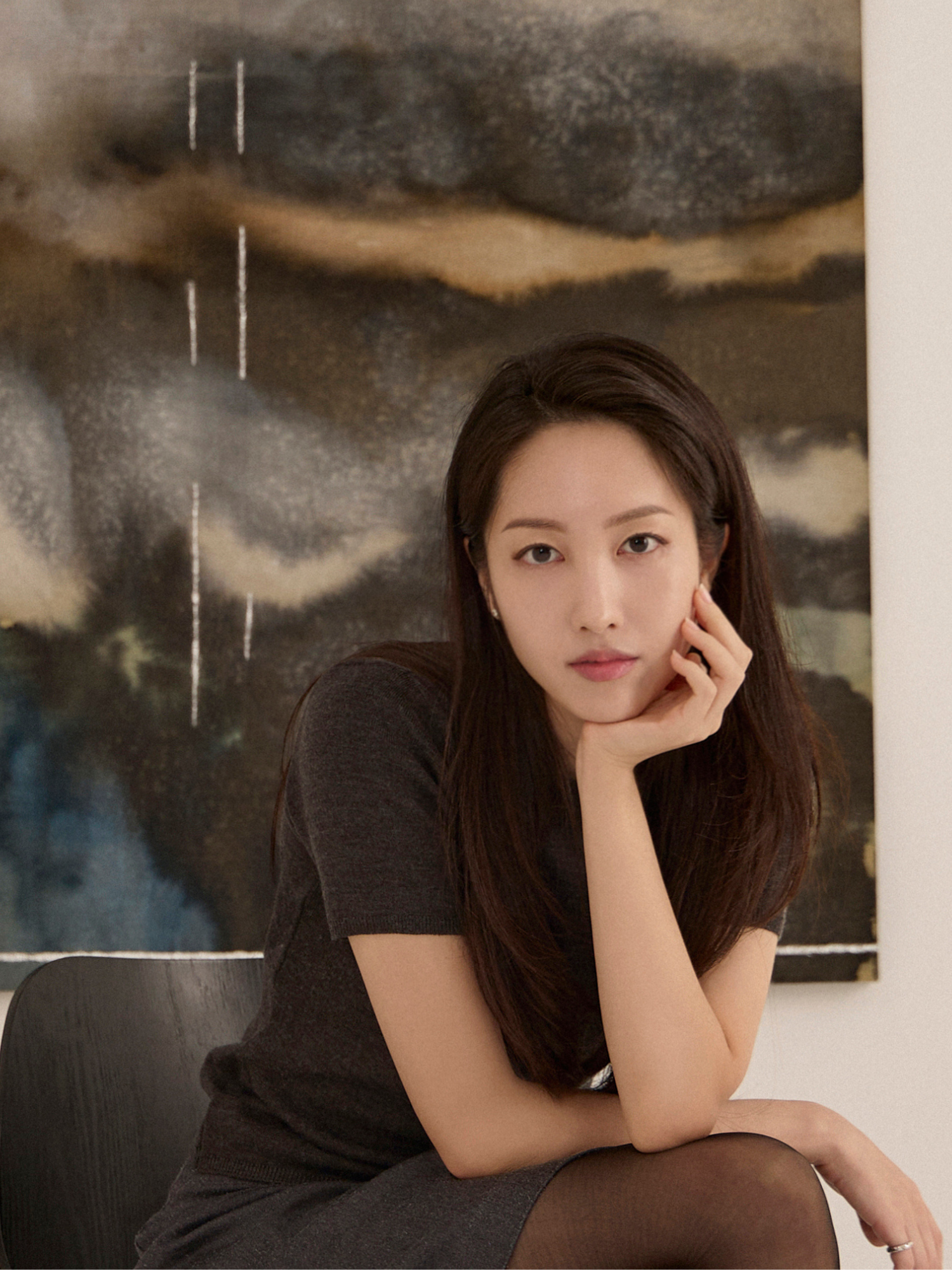
What was the initial idea or moment that sparked this piece?
It was while preparing the 2023 exhibition Nuclear Disarmament Declaration that this began. During the research process, I became deeply captivated by the image of the “red forest” that appears across sites of nuclear accidents. These are trees that, having lost their vitality in an instant, stand like mummified forms, turned red. In encountering this red forest, I found myself momentarily recalling—overlapping with it—the intensely volatile impression I had received from the ruins of ancient Rome. This imagination led to the 2024’s solo exhibition, Prototype Temple: The Murder Case.
Pompeii and Roman domestic gardens (Domus) and the structure in the space is designed based on the Compluvium and Impluvium of Roman gardens. On days without rain, the water would dry up, and the sunlight entering through the Compluvium would shift its position over time. The nostalgia for a bygone civilisation is felt through this reproduction, with sunlight streaming through the ceiling into the missing water in the middle of the exhibit. The underlying disquiet felt in contemporary life—war, and the constant threat of war, the collective trauma of post-natural disasters, and the on-going environmental crises is ever-present. The juxtaposition of ancient Roman aesthetics (nostalgia) against recent disasters creates a sense of globally familiar dread and anxiety and makes these feelings feel timeless.
Could you tell us more about No.124?
No. 124 is a painting presented in the 2024 solo exhibition Prototype Temple: The Murder Case. The exhibition installation was conceived with reference to the architectural structures of the compluvium and impluvium found in ancient Roman ruins, and within the stage-like exhibition, kinetic objects such as a chandelier consistently appear as the lead actor. The paintings function as stage backdrops that articulate a scenario that shifts with each exhibition. This particular work was developed with reference to the garden courtyards of ancient Roman houses and the yew trees depicted in their wall paintings.
What are the recurring themes across your work? Where do these come from?
I’ve been working on a series of exhibitions called, Prototype Temple since 2021, as solo exhibitions and an ongoing research project.
I’ve been continuing my journey to find the answer to the question which has penetrated my body of work. “Why do I, or do we, feel a poignant nostalgia for lost civilisations, that we haven’t experienced?”
Constantly tracing this ambiguous nostalgia and its origin, I explore ancient emotions through intersections of history, mythology, archeology, and more derived from various nations. In a space-stage constructed through the interweaving of forms from diverse civilisations and ruins, the work raises questions about the fictitious nostalgia produced by Western archaeology and colonial perspectives.
Finish the sentence: Art is…
Art is solidarity.
Is there a moment, person, or idea that inspired you in the past few weeks?
At the beginning of this year, I devoted a significant amount of time to an intensive reading of Clarice Lispector’s works. Her writing seems to contain multiple layers of consciousness coexisting within a single figure, and her texts themselves carry a polyphonic voice. Prototype Temple consistently engages with a shared set of questions, yet each exhibition shifts fluidly in its scenario and installation, repeating a movement akin to a living citadel. Each exhibition contains the stories of unnamed fictional figures, and these narratives unfold not as a single voice, but as an interweaving of multiple voices, including those of others.
What does it mean to you to be shortlisted for this award and play a part in supporting its charitable aims?
Being shortlisted for the Sovereign Asian Art Prize is meaningful not only as a recognition of my practice, but also because it situates my work within a wider social context. My work often engages with memory, displacement, and the reconstruction of histories—questions that are closely tied to how we care for one another and how we imagine recovery. In that sense, knowing that the work can contribute, even indirectly, to supporting others through art-based programmes feels particularly resonant.
What was the initial idea or moment that sparked this piece?
The work began with a reflection on how human existence is embedded within much larger systems of time and matter. I was thinking about the relationship between the body, natural history, and the invisible structures that shape life—such as neural networks, circulation, and cosmic forces. This idea gradually evolved into an image of the Earth as a vast organism where traces of life, memory, and ancestry continue to circulate.
Could you tell us more about Digesting Planet IV: Ancestors?
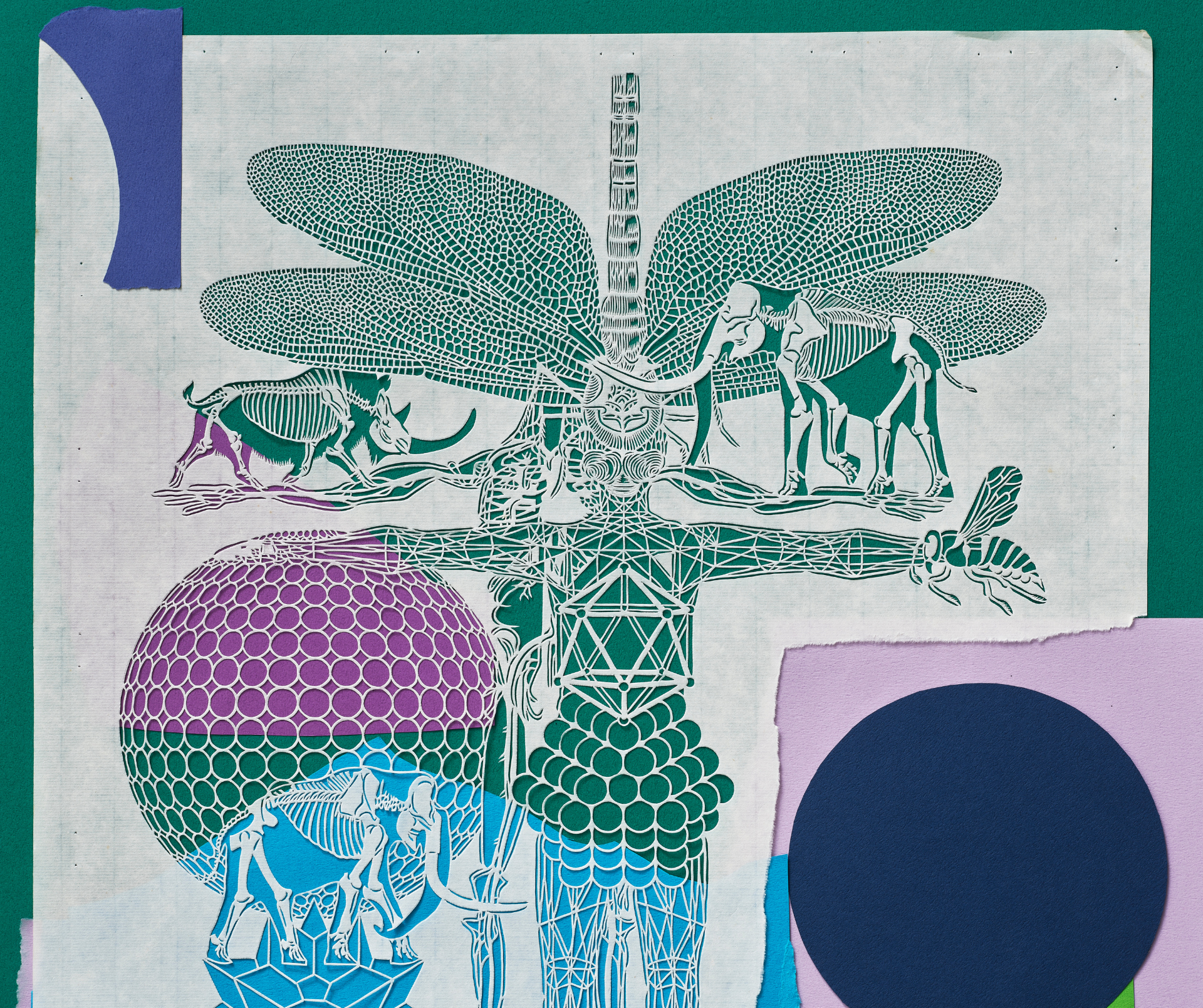
In this work, humans are placed within a surreal framework that combines natural history and physics. Abstract neural and circulatory networks are transformed into geometric structures that coexist with skeletal remains of ancient mammals and insects, closely connected to the head and limbs of the human figure.
The composition creates a kind of logical tension—something like the distortion of space and time inside a wormhole—which reshapes how we imagine the past and the future. The title refers to the metaphor of human origins: the source of our ancestors may seem buried in the dust of time, distant as if among the stars, yet those traces are always carried within our bodies.
The work is created through an extremely delicate hand-cut paper technique. Paper cutting has long traditions in both China and the Netherlands, and I am interested in how this shared craft language can connect different cultural histories while carrying very contemporary ideas about the body, memory, and the universe.
What are the recurring themes across your work? Where do these come from?
Transformation is a recurring theme in my work. I am interested in how myths, natural systems, and human imagination continuously reshape one another. My thinking is influenced both by classical Chinese cosmology and mythology, and by scientific perspectives on life and evolution. Through these different lenses, I try to explore how humans situate themselves within the larger cycles of nature and the universe.
Finish the sentence: Art is…
Art is a way of observing the invisible transformations that shape our world.
Is there a moment, person, or idea that inspired you in the past few weeks?
Recently I have been thinking about how ancient mythologies and contemporary scientific ideas often intersect in unexpected ways. Both attempt to describe forces that are much larger than ourselves, and that shared curiosity continues to inspire my work.
What does it mean to you to be shortlisted for this award and play a part in supporting its charitable aims?
It is a great honour to be shortlisted for the prize. I especially appreciate that the award connects contemporary art with charitable initiatives that support disadvantaged children. It is meaningful to know that artworks can also help contribute to a broader social purpose
What was the initial idea or moment that sparked this piece?
The impetus for Feb. News emerged from my experience of living between China and the United States and from repeatedly encountering television and online news in both contexts. Over time, I became increasingly aware of how the same global event could be framed in radically different ways depending on the ideological and institutional structures of the media system presenting it. What interested me was not only this divergence of narrative, but the formal language of news itself, its staged authority, its performance of neutrality, and its ability to transform political reality into image, affect, and spectacle. Feb. News began as an attempt to give sculptural form to that condition.
Could you tell us more about Feb. News?
Feb. News is a mixed media sculptural work constructed within the shell of a vintage 1990s television set. I chose the television deliberately, not simply as a nostalgic object, but as a historical device of authority, domestic ritual, and collective spectatorship. It is a medium through which reality has long been packaged and delivered, and therefore an apt structure for examining how truth is staged and consumed.
Within that frame, I built a compressed theatrical world. In the foreground, a highly realistic news anchor occupies the desk, embodying the visual rhetoric of credibility and institutional control. Behind him, however, the scene opens into a fictional and unstable pictorial space populated by Chinese mythological and animated figures alongside American cartoon characters, accompanied by sensational headlines and an atmosphere of heightened visual drama. The work deliberately brings realism and fantasy, authority and absurdity, into the same field of vision.
The piece is less concerned with any single event than with the conditions through which events become legible to us. The anchor, desk, and broadcast format propose coherence and trust; the background destabilizes those assumptions, exposing how easily spectacle, ideology, and emotional manipulation can inhabit the same frame as supposedly factual information. In this sense, Feb. News considers contemporary news not only as a vehicle of information, but also as an apparatus of narrative control and affective management.
The work is created through an extremely delicate hand-cut paper technique. Paper cutting has long traditions in both China and the Netherlands, and I am interested in how this shared craft language can connect different cultural histories while carrying very contemporary ideas about the body, memory, and the universe.
A central component of the work is its internal lighting system, which the viewer can alter externally. The changing light functions conceptually rather than decoratively, suggesting that truth is never encountered in a neutral state but is always inflected by tonal, ideological, and emotional framing. White light invokes the rhetoric of neutrality; red intensifies crisis and alarm; green points to both fabricated image space and sanctioned visibility; blue evokes technological authority and institutional trust; yellow introduces caution, ambiguity, and the softening of seriousness into infotainment. By allowing the viewer to shift the internal light, the work implicates them in the act of framing itself: one does not simply receive the image, one participates in its conditions of meaning.
What are the recurring themes across your work? Where do these come from?
Several themes recur throughout my practice, particularly media, contemporary social events, politics, sports, and personal memory. I am often drawn to subjects that have already entered the collective consciousness through their circulation as images, events such as the G20 summit, the pandemic, the U.S. Capitol riot, or the scenes at Kabul airport during the withdrawal from Afghanistan. What interests me is not only their historical significance, but their mediated existence: the way they are photographed, broadcast, repeated, reframed, and absorbed into public memory. I am interested in this dual condition, the event as lived reality and the event as image.
Football is another recurring subject in my work, though it emerges from a more intimate register. It comes from my enduring attachment to the sport and from its deep connection to memory and lived experience. For me, football is never simply competition; it is bound to specific times, places, emotions, and relationships. A match can carry the atmosphere of adolescence, the intensity of desire, or the melancholic texture of retrospection. That personal dimension is what continually returns football to my work.
More broadly, these themes arise at the intersection of collective history and private experience. Having lived and worked across different cultural contexts for many years, I have become especially attentive to the ways reality is shaped by mediation, perspective, and remembrance. Through sculpture and relief, I seek to transform these tensions into compact staged worlds in which the social and the personal, the historical and the theatrical, are held in productive tension.
Finish the sentence: Art is…
Art is a mode of activating imagination and perception so as to generate critical reflection. It constitutes a space of autonomy for both artist and audience: for the artist, the freedom to articulate thought, affect, and experience in material form; for the audience, the freedom to interpret, assimilate, and enter into a singular relation with the work.
Is there a moment, person, or idea that inspired you in the past few weeks?
In the past few weeks, I have been inspired by the film Run Lola Run. I am deeply drawn to its treatment of time, repetition, chance, and consequence. What I find particularly compelling is the way the film suggests that even the smallest variation in timing, movement, or decision can produce an entirely different reality. Its structure feels both psychological and philosophical, transforming urgency into a meditation on fate, contingency, and human agency. That idea resonates strongly with me, especially in relation to how I think about narrative and image making. A single moment can contain multiple possible outcomes, and that instability is something I often find intellectually and artistically generative.
What does it mean to you to be shortlisted for this award and play a part in supporting its charitable aims?
To be shortlisted for this award is both an honor and a meaningful affirmation of my practice. I value the opportunity to place my work within a broader regional and international conversation and to present it alongside other contemporary artists working from distinct perspectives. Recognition of this kind is significant not only as encouragement, but also as a way of opening the work to new audiences and new contexts of interpretation.
I also deeply value the charitable dimension of the award. It affirms that art does not exist in isolation from wider social and institutional structures, but can contribute to larger frameworks of education, access, and cultural support. That aspect is especially meaningful to me, because it connects artistic practice to a broader public value and social purpose.
What was the initial idea or moment that sparked this piece?
The title is a play on words. “Wag kang kukurap” (don’t blink) references “Wag kang magnanakaw” (Thou shall not steal) from the Ten Commandments. It’s also inspired by a joke from the late Philippine Senator Miriam Defensor Santiago, who once said that whenever she saw certain politicians, she couldn’t help but blink.
What are the recurring themes across your work? Where do these come from?
My work is deeply affected by global and local struggles: the war in the Middle East, rising oil prices, and the corruption within the Philippine Department of Public Works and Highways, and the government. These issues are directly linked to poverty and constant flooding in our country, where “Juan dela Cruz” (the common man) and the youth—the hope of our nation—suffer the most. These themes come directly from my own daily struggles.
Finish the sentence: Art is…
Art is a life full of surprises, much like printmaking. You never truly know the outcome until it’s finished; there is an element of surprise in every “pull” of the work, and that is what I love about it. It teaches us to pray fervently that the result will be beautiful, so that the paper, canvas, ink, and time exerted aren’t wasted. But whether the result is good or bad, you keep going. Whatever comes your way is the will of God—a form of spiritual or divine intervention.
Is there a moment, person, or idea that inspired you in the past few weeks?
I have been inspired by prayer, humor, and the energy of Art Basel Hong Kong. Just after stretching my work in our room on Hennessy Road, I prayed over the painting. I whispered, “Lord, whatever happens, let your will be done—win or lose.”
Then, my friend Raffy joked “Whether you win… or you win!” which made everyone burst out laughing, even those who were pretending to sleep. It was a joyous moment while waiting for the transport van to pick up my work.
What does it mean to you to be shortlisted for this award and play a part in supporting its charitable aims?
It means a great deal. This is my third time being recognized in a major Asian competition—first in Vietnam for graphic arts, then at STPI Singapore during the pandemic, and now the Sovereign Asian Art Prize in HK. I am both excited and nervous. Exhibiting at the Phillips building and having the awarding at M+ is a massive privilege.
Being part of a cause that supports charitable institutions is also very meaningful. My friends tease me, saying I’m the only Filipino showcasing work at M+ right now. They are proud of me, and I am humbled to represent Filipino artistry and to be the pride of Mandaluyong City. It truly feels like a dream come true.
What was the initial idea or moment that sparked this piece?
This piece came out of my long engagement with the sea. I have returned to it in different ways over the years, not just as a landscape, but as a place of life, myth, tension, and memory. With The Cables She Wears, I was thinking about the internet not as something abstract or cloud-like, but as something physical that runs under water. That shift interested me. Our need for connection has weight, infrastructure, and consequence, and the sea has to carry it.
Could you tell us more about The Cables She Wears?
In this work, I imagine the sea as a living environment that has to absorb human systems. The painting includes hybrid marine creatures, stitched leather forms, a cable moving through the composition, and spent brass casings. I also wrote technical terms directly onto the surface, words linked to transmission, interference, and latency, because I wanted the hidden language of digital infrastructure to become visible.
The cable is important to me because it can suggest connection, but also pressure, intrusion, and dependence. The brass casings are also part of a material language that appears across my work. I use them not just as symbols of violence, but as traces of history, residue, and transformation. In this painting, I wanted these elements to sit inside the seascape almost as if they already belong there, which is also the unsettling part.
What are the recurring themes across your work? Where do these come from?
Yes. I often return to the sea, to myth, to memory, and to the way larger social and political forces are carried through bodies, objects, and environments. I am drawn to materials that already come charged with meaning, and to forms that can hold beauty and discomfort at the same time.
These themes come from lived experience, but also from long-term research and making. I don’t always begin with a full concept. Sometimes I begin with an image, a material, or a feeling, and the work slowly reveals what it is trying to hold. I move across different media for that reason. Some ideas need to be stitched, some need to be performed, and some need to be painted.
Finish the sentence: Art is…
Art is a way of connecting to other people through what cannot yet be fully said.
Is there a moment, person, or idea that inspired you in the past few weeks?
Lately, I’ve been thinking a lot about how materials hold memory. A surface can record pressure, repair, damage, touch, and time. That has stayed with me recently, especially in relation to works that carry both beauty and weight.
What does it mean to you to be shortlisted for this award and play a part in supporting its charitable aims?
It means a great deal to me to be shortlisted, especially in Hong Kong and within a regional context. I’m glad to be part of a platform that brings together artists from across Asia, because that context matters to how I think about my work and where it sits.
I also appreciate that the prize is tied to a charitable purpose. It is meaningful to be part of something that supports artists while also extending outward in a way that values access, education, and care.
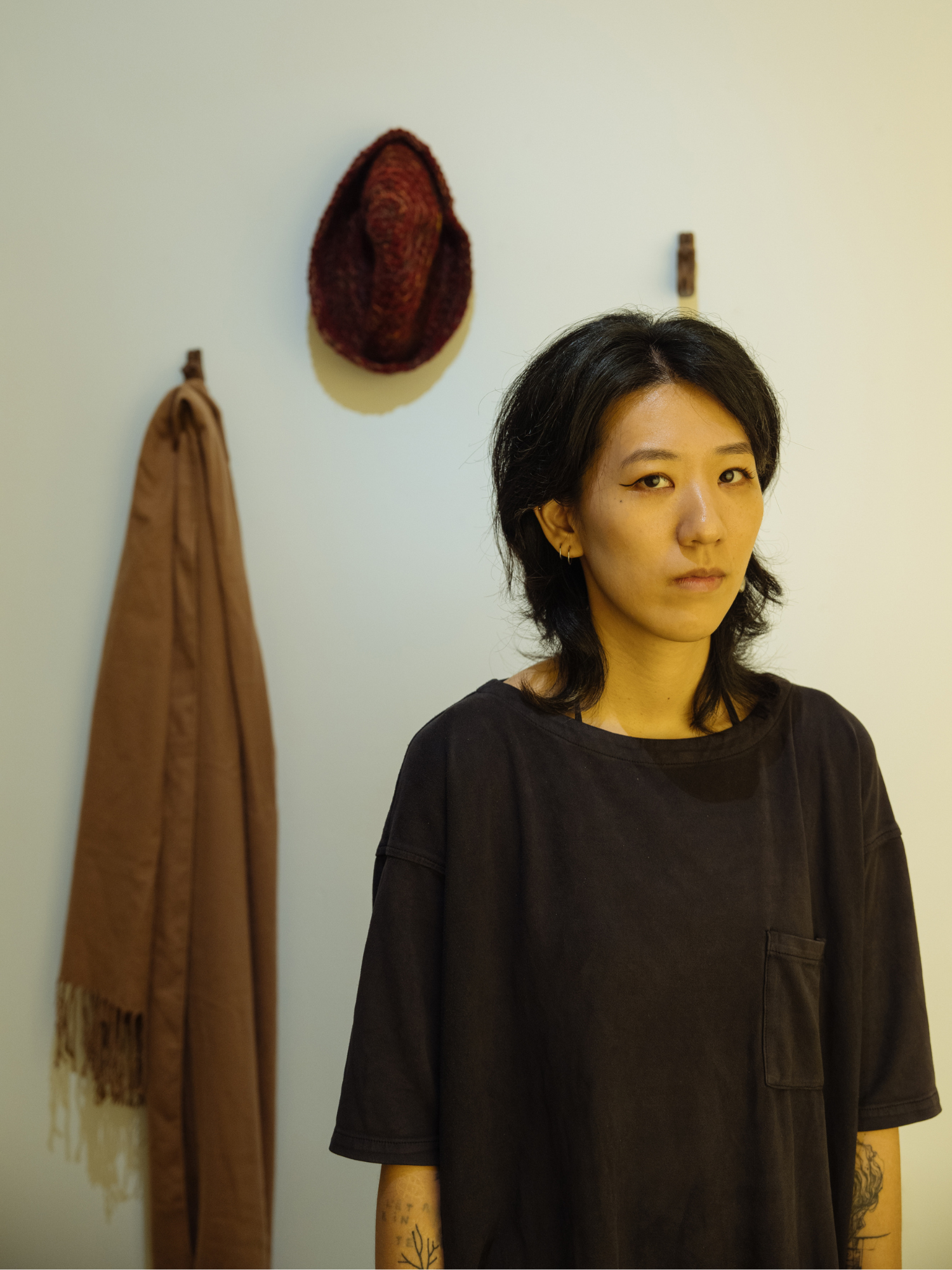
What was the initial idea or moment that sparked this piece?
The initial spark came during a metalsmithing class when I learned the technique of metal repoussé. I immediately wanted to make permanent the intimate, tender gesture of tracing—like tracing letters on someone’s skin or the bumps of a scar. That idea culminated into using repetitive hammering to trace the pattern of my late mother’s scars, blisters, and rashes whilst she was sick, transforming memory and grief into a physical, forged love letter.
Could you tell us more about tracing your veins and blisters?
Drawing from Banana Yoshimoto’s novel Kitchen and Rirkrit Tiravanija’s social art practice, tracing your veins and blisters work reimagines the kitchen as a sanctuary for communal grief, exploring its intersection with gastronomy. The copper pots and pans are transformed through the repoussé technique, their surfaces hammered with patterns traced from the blisters and veins on my late mother’s hands and feet. These impressions become tactile records of care, sacrifice, and the invisible work that sustains domestic life. The work invites viewers to consider how domestic labour shapes emotional landscapes, transforming ordinary tools into vessels of shared remembrance.
What are the recurring themes across your work? Where do these come from?
Recurring themes in my work include fleeting intimacy, somatic memory, and grief. These themes come from personal life experiences, or special interests.
Finish the sentence: Art is…
A mirror.
Is there a moment, person, or idea that inspired you in the past few weeks?
Nature inspires me a lot. It reminds me that we, like nature, need all four seasons— spring, summer, fall, winter. We have periods of contraction and expansion, times of inspiration, but also times for rest, hibernation and letting ideas ferment.
What does it mean to you to be shortlisted for this award and play a part in supporting its charitable aims?
It means a huge amount. Both the recognition, and the chance to contribute to something larger than myself — especially a cause that’s about protecting the dignity of vulnerable people.
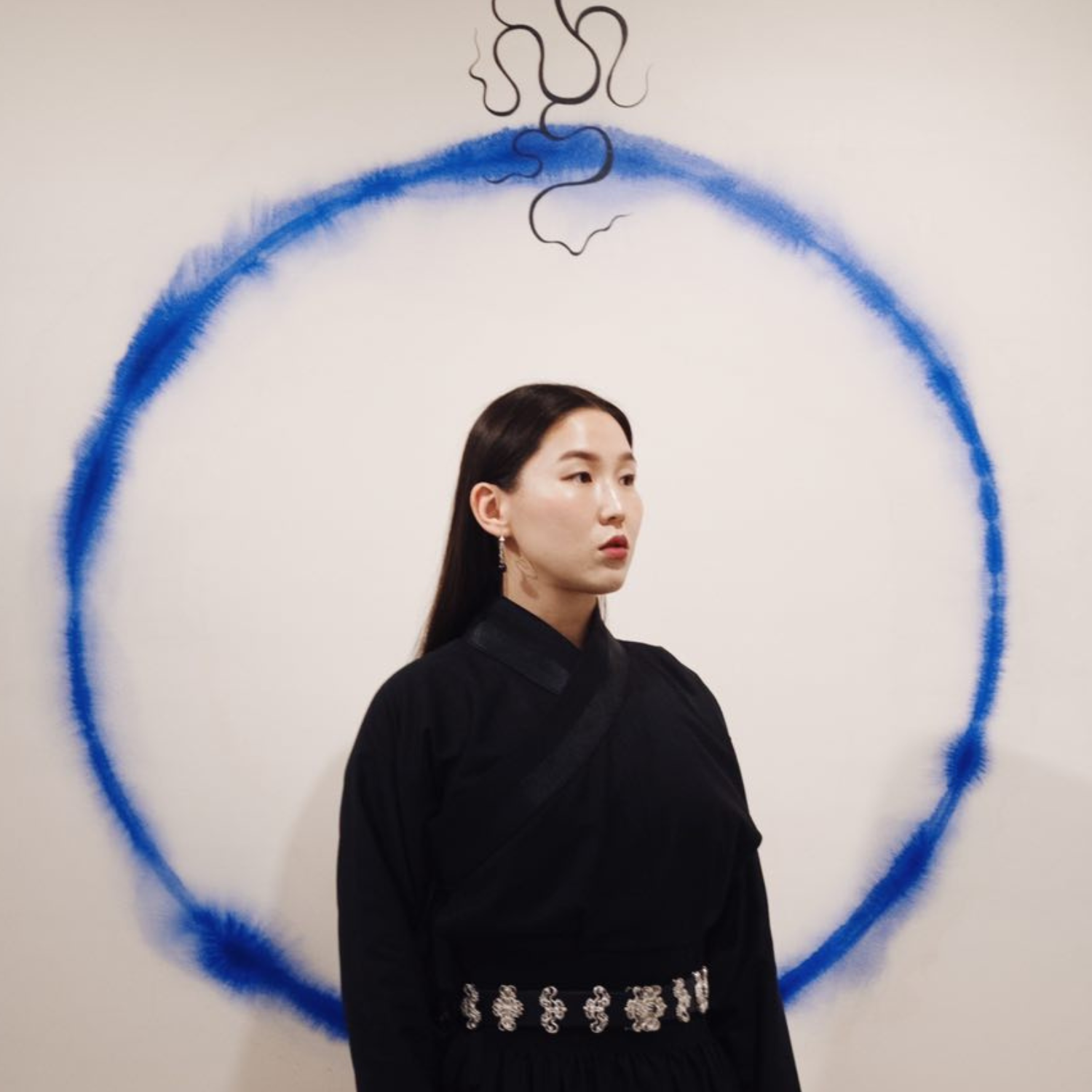
What was the initial idea or moment that sparked this piece?
Soul threads. Encounters shared across life times—carnations, incarnations, reincarnations.
The mother tongue as a vessel of knowing oneself and finding the soul’s calling. To put it simply and directly.
These thoughts carried within me found the right time-place to be invoked.
During my residency in Mexico City at Casa Snowapple, I found the time to retreat into my inner world and dive deep into studio practice. In a way, my time in Mexico City as well as the creation of A Million Petals of Rebirth itself, felt like a rebirth—as a human, as a woman, as an artist—I am grateful for my time in Mexico City, and grateful for this piece that allowed me to challenge myself once again. Hence, A Million Petals of Rebirth is a profound piece in the evolution of my artistic journey.
Could you tell us more about A Million Petals of Rebirth?
My approach was to keep it simple, raw and pure as possible, as a challenge to my artistic faculties.
For context, I just had returned from my biggest project to date, which was a large-scale installation piece for the inaugural Bukhara Bienniale. So to return to myself, a single entity, in a studio space felt like a homecoming.
I worked with cotton and blue, black and white inks. To create the “raw” material for this very physical and embodied piece, I set on a journey of daily calligraphic practice on big spread-out, wet sheets of cotton. I wrote in traditional Mongolian script, Mongol Bichig, the words “Tenger” (Sky), “Gazar” (Earth), and “Ui Olon Delbee” (A Million Petals) repeatedly for days on. Layers and layers and layers of words soaking into the very fabric of the cotton. Until the overall writing practice and painterly interventions were fulfilled. This formed the foundation of this work’s metamorphosis.
What could have become eight autonomous paintings were layered and sewn together. The frayed edges trace life’s material threads and the invisible soul-threads connecting beings across incarnations. The central, serpentine pattern reflects Mongol cosmology: every soul begins as a single cell and, through lifetimes of evolution and wisdom, reaches human incarnation. Inspired by Earth Mother, Etügen Eej or Gazar Eej, the eight layers mirror cyclical evolution: matter into spirit, writing into silence, creation flowing into dissolution.
On the reverse, melted copal in all its states—solid resin, ashes, fragrant smoke, and infused essence—transforms, turning earth into air/spirit and bridging worlds, carrying prayers and intentions to gods and ancestors, a ritual gesture shared across cultures.
What are the recurring themes across your work? Where do these come from?
I hope my work-worlds invite to contemplate the very connection we have to our multispecies world, material as well as immaterial—a delicate umbilical cord.
My artistic undercurrent is deeply informed by ancestral knowledge passed down by the ancient ancestor spirits that speak to us through shamans. The numerous outings and explorations in nature, specifically the sacred Bogd Khan Mountain, form the deep soil of my mind to wander, dream and recharge.
Finish the sentence: Art is…dialogue and monologue. Transformation and transmutation. The moment I birth an artwork into the world, my dialogue with the work becomes a dialogue shared with everyone. But every single human’s inner dialogue, exchange, conversation, reflection with my work is intimate, sacred and hermetic—I bare a part of my soul and share it with the world and you to see it.
Finish the sentence: Art is…
Art is…dialogue and monologue. Transformation and transmutation. The moment I birth an artwork into the world, my dialogue with the work becomes a dialogue shared with everyone. But every single human’s inner dialogue, exchange, conversation, reflection with my work is intimate, sacred and hermetic—I bare a part of my soul and share it with the world and you to see it.
Is there a moment, person, or idea that inspired you in the past few weeks?
Every day, the sky, the mountain, the sun and moon show fleeting new faces. Every season shows a different side of the world. I find constant enjoyment and awe in those.
What does it mean to you to be shortlisted for this award and play a part in supporting its charitable aims?
I am honoured for my work to be shortlisted, and that the many stories within A Million Petals of Rebirth can be shared with a wide audience.
Even more so, I am honoured and grateful if my work can contribute to a more horizontal accessibility to art and art education, which is a vision I hope one day to contribute to in Mongolia’s most rural areas.
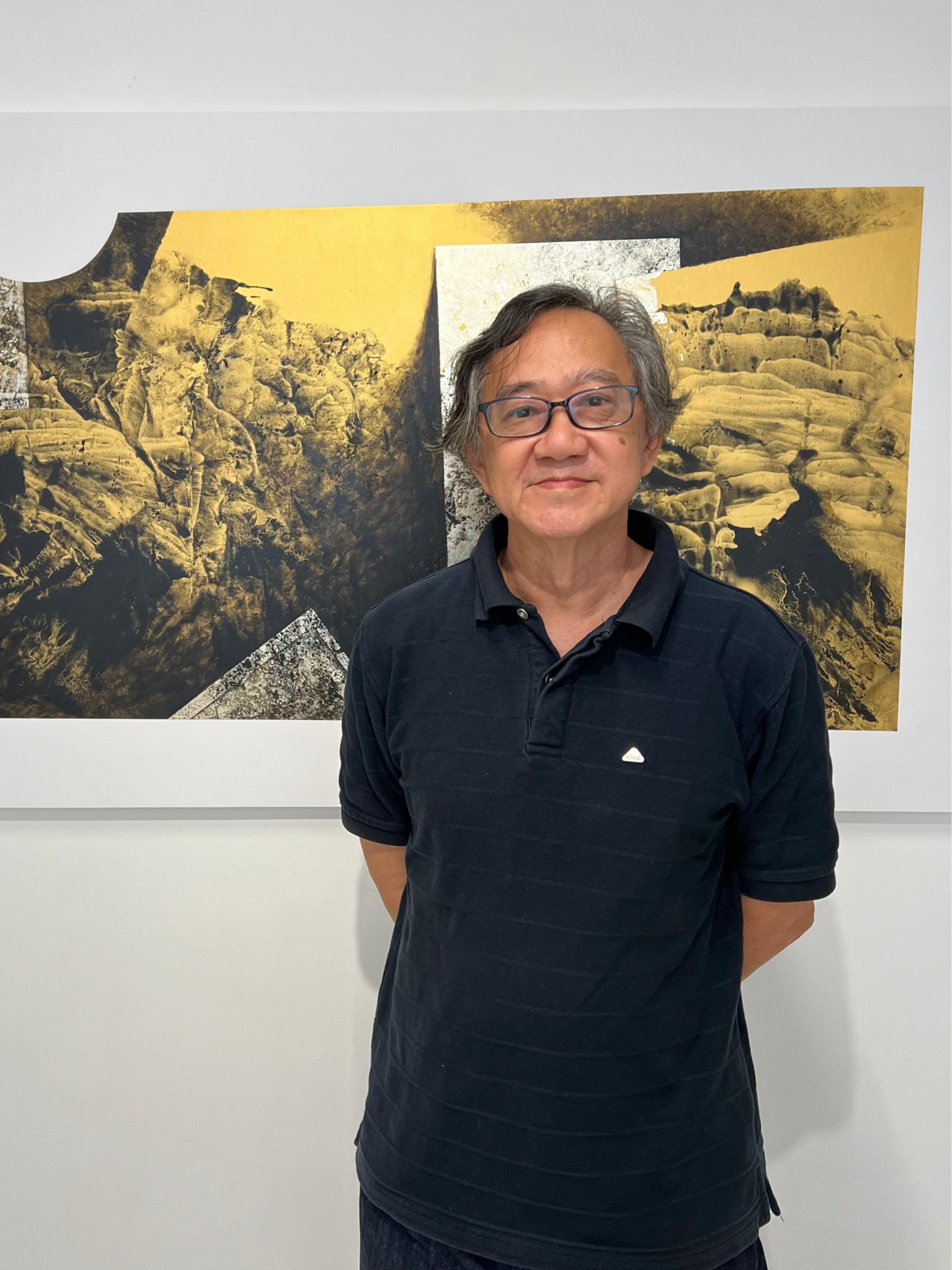
What was the initial idea or moment that sparked this piece?
The inspiration behind this piece came from an instance of emotion, when I observed the sunlight shining brightly across the entire mountain forest.
Could you tell us more about Into the Unknown?
This painting was created to depict layers of the mountains, forests, and the brilliance of light, so different shades of gold and gilding were used to enhance the expression of this theme
What are the recurring themes across your work? Where do these come from?
This theme has been my main focus in recent years, mainly taking inspiration from the scenery around my home. Although there are no famous mountains and rivers, the streams and hills have their own unique charm.
Finish the sentence: Art is…
Art is the outward manifestation of inner life.
Is there a moment, person, or idea that inspired you in the past few weeks?
A deep connection with nature always inspires creativity.
What does it mean to you to be shortlisted for this award and play a part in supporting its charitable aims?
Being shortlisted for this award means that my work has received some attention, that the beauty of nature has not been overlooked, and that the sun is still shining brightly
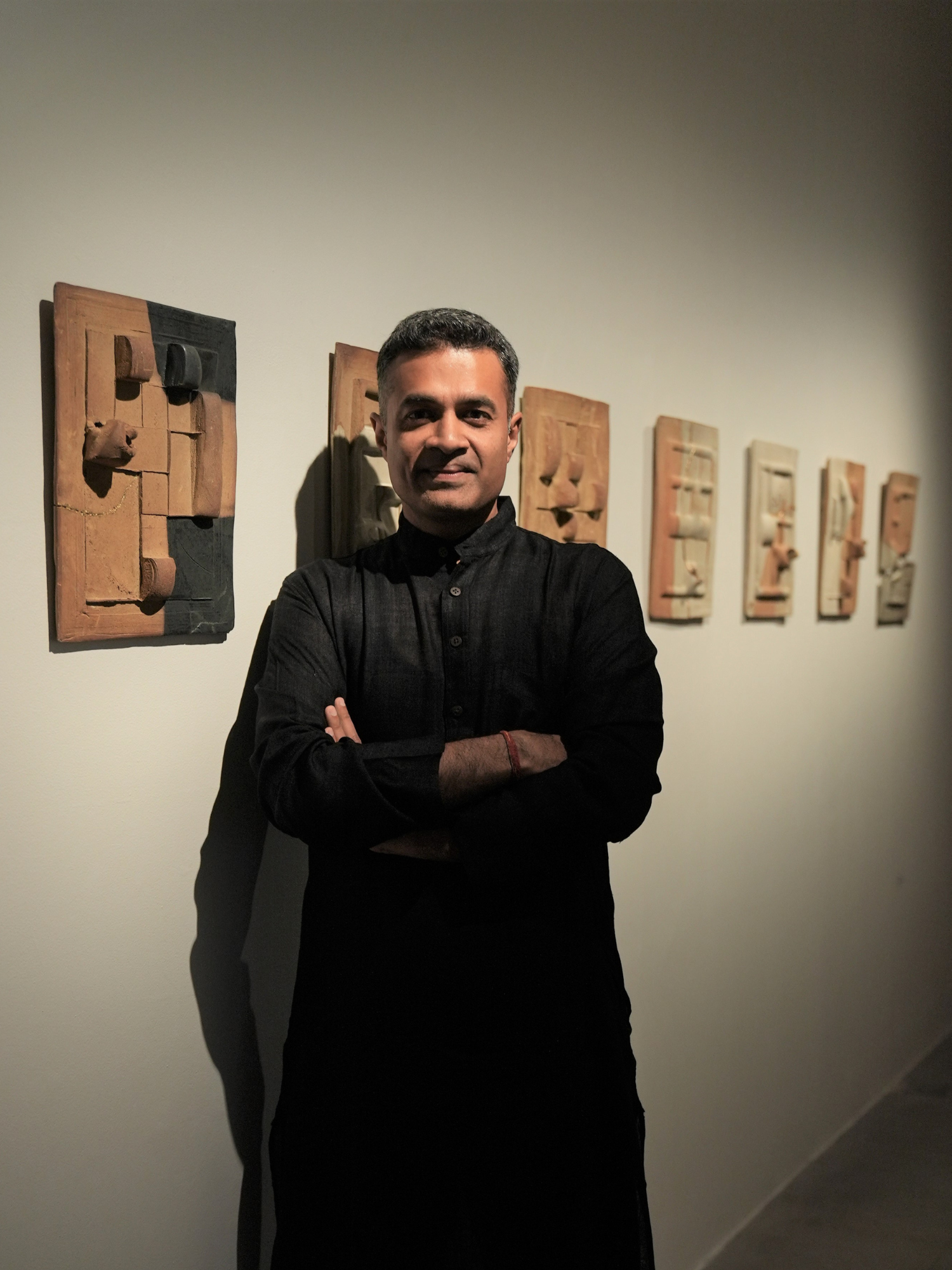
What was the initial idea or moment that sparked this piece?
The idea of the incomprehensibility of script emerged while working with a clay slab in my studio. After removing a form I needed, it was intriguing to observe the ‘negative’ portions left behind. It almost felt like letters forming words, albeit unintentionally, in a newly invented script. Later, I also researched a few ‘dead’ scripts.
Could you tell us more about pages from my diary?
The series uses clay and ceramic pigments in an unconventional style that defies logical norms. What is meant to be formed with water and fire is used in dry form on paper. Some of the text can be deciphered with close observation, but most is illegible or the script is invented. I am interested in what gets conveyed and what remains untold, using language as the medium.
What are the recurring themes across your work? Where do these come from?
A lot of my work often revolves around impermanence and fragility. This is probably owing to my chosen medium – clay. However, the themes took a metaphorical reference over time. Associations have also been shaped by what clay offers in terms of its treatment. For instance, textures, solid and void, and carbon absorption in the firing process lend new meanings to be interpreted through my work.
Finish the sentence: Art is…
Art is a fiercely individualistic expression.
Is there a moment, person, or idea that inspired you in the past few weeks?
My current explorations are focused on breaking the rules! As odd as that sounds, I am keenly focused on doing things that defy reason. Negotiating thermal expansion of putting a disproportionately thick chunk of solid clay in the fire, or navigating the thermal shock of molten metal merging with fired clay. Developing creative solutions can lead to selective success, and it is exhilarating.
What does it mean to you to be shortlisted for this award and play a part in supporting its charitable aims?
I understand that only ~12% of the applications make it to the finals. I feel deeply honored to be considered for this award and see it more as an opportunity and responsibility to push the boundaries of my medium and process. It is a great privilege for me to support the foundation’s charitable aims.
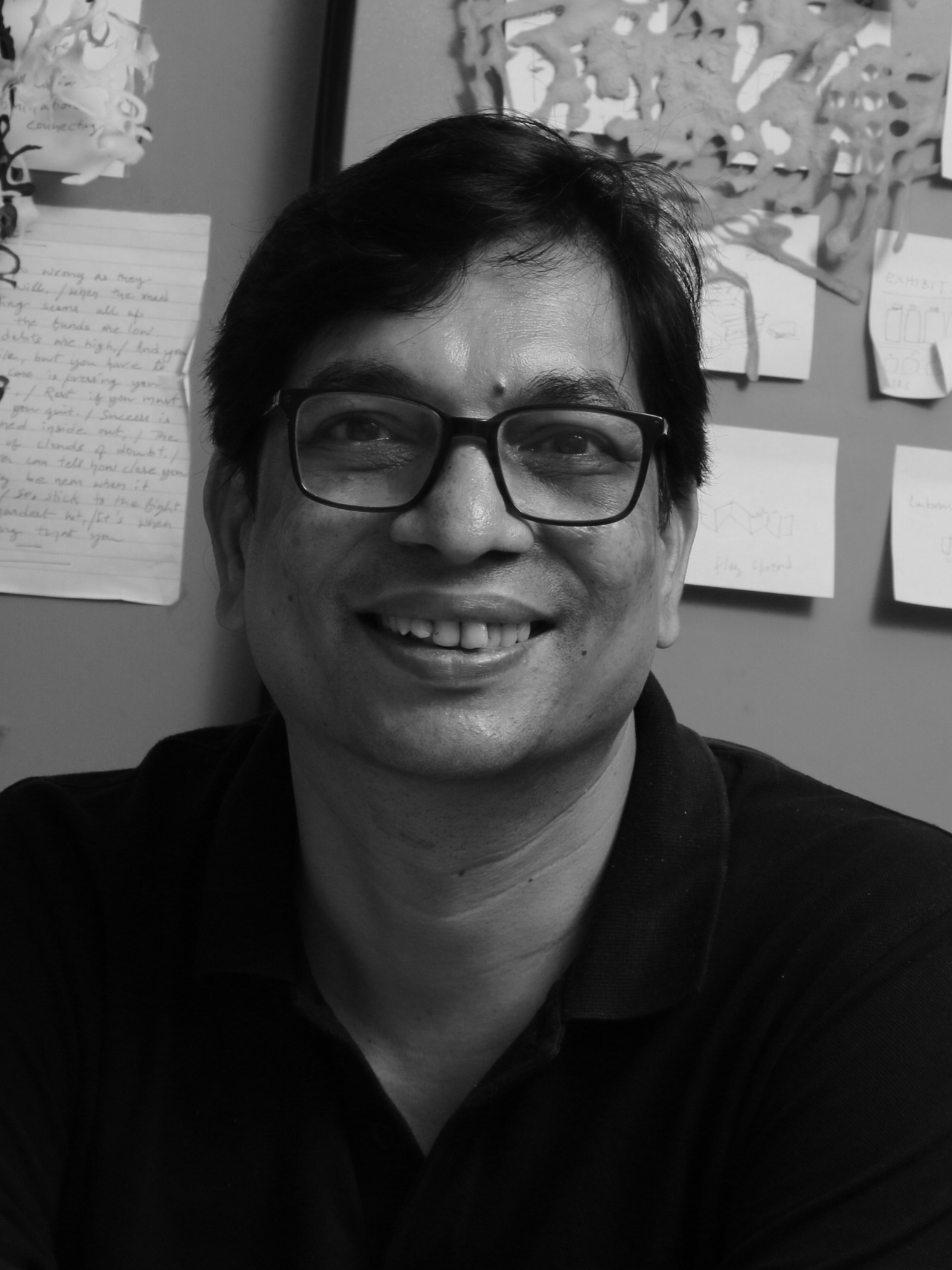
What was the initial idea or moment that sparked this piece?
I am an avid reader, often drawn to disciplines far beyond art history. While immersed in books about the human anatomy, I was struck by a profound sense of wonder at our internal architecture—the way life-giving blood courses through a delicate web of arteries, veins, and capillaries, while the nervous system pulses with unseen information. We carry within us a staggering 60,000 kilometers of blood vessels and an intricate, 850,000-kilometer tapestry of neural networks. That sudden, overwhelming realization of our inner vastness was the spark that ignited this work.
Could you tell us more about Visceral Paths 7?
As I mentioned, our physical bodies are defined by these complex, vital pathways. But beyond flesh and bone, there are invisible threads tethering us to one another as human beings. We share ideas, fleeting thoughts, and raw emotions that are absorbed and carried deep within us. I wanted to create a piece that breathes life into these unseen, visceral connections.
However, I intentionally avoided making the piece too literal. Bathing the work in pure white introduces a quiet abstraction, allowing it to remain open and inviting multiple interpretations. In its current form, one might see the sprawling roots of a tree, pulsing veins, or a labyrinth of complex pathways. There is a hidden, poetic layer here as well: if you place a piece of handmade paper under a microscope, its tangled, interconnected fibers mirror the very structure of my sculpture. In this way, the artwork materializes the invisible, making the unseen tangible to the naked eye.
What are the recurring themes across your work? Where do these come from?
Over the last few years, my work has continually returned to the vulnerability and fleeting nature of the human body. Through its raw tactility and delicate materiality, handmade paper has become my language for expressing this fragile beauty. The body is both resilient and tender, existing as a porous boundary where a constant, silent exchange occurs between our inner selves and the outer world. The porous, breathing nature of handmade paper serves as the perfect metaphor to capture this existence.
I also weave text—specifically from my mother tongue, Kannada—into many of my pieces. Language forms the bedrock of our identity; it is the lens through which our worldview takes shape and the bridge that connects us to the world around us. In my art, the porousness of language dissolves into the porousness of physical form. Paper, traditionally just a passive surface waiting to be inscribed, awakens. It becomes an active, living element that physically morphs into the text itself.
These themes are the harvest of over two decades of intimate engagement with handmade paper. My art is deeply rooted in process; it is never born overnight. I believe in “making as thinking”—a philosophy where initial whispers of an idea evolve and bloom entirely through the physical act of creation. My enduring fascination with the body, language, ephemerality, and the soul of handmade paper has been slowly nurtured over this long, quiet gestation period.
Finish the sentence: Art is…
Art is a profound way of understanding oneself deeply.
Is there a moment, person, or idea that inspired you in the past few weeks?
I recently read a beautiful thought: for a creative spirit, a compass is far more valuable than a map. I find that deeply inspiring. When I have a spark of an idea—a “true north” to guide me—I dive headfirst into the act of creation. I never possess a rigid map dictating exactly how a piece will take shape, but that surrender to the unknown makes the exploration truly exhilarating.
What does it mean to you to be shortlisted for this award and play a part in supporting its charitable aims?
I am absolutely thrilled to be shortlisted for this award. To me, it feels like a beautiful validation of a quiet, four-decade-long devotion to my artistic practice. It represents the opening of new doors and the promise of fresh opportunities to breathe further life into my work. I am filled with excitement and eager anticipation for the final announcement.
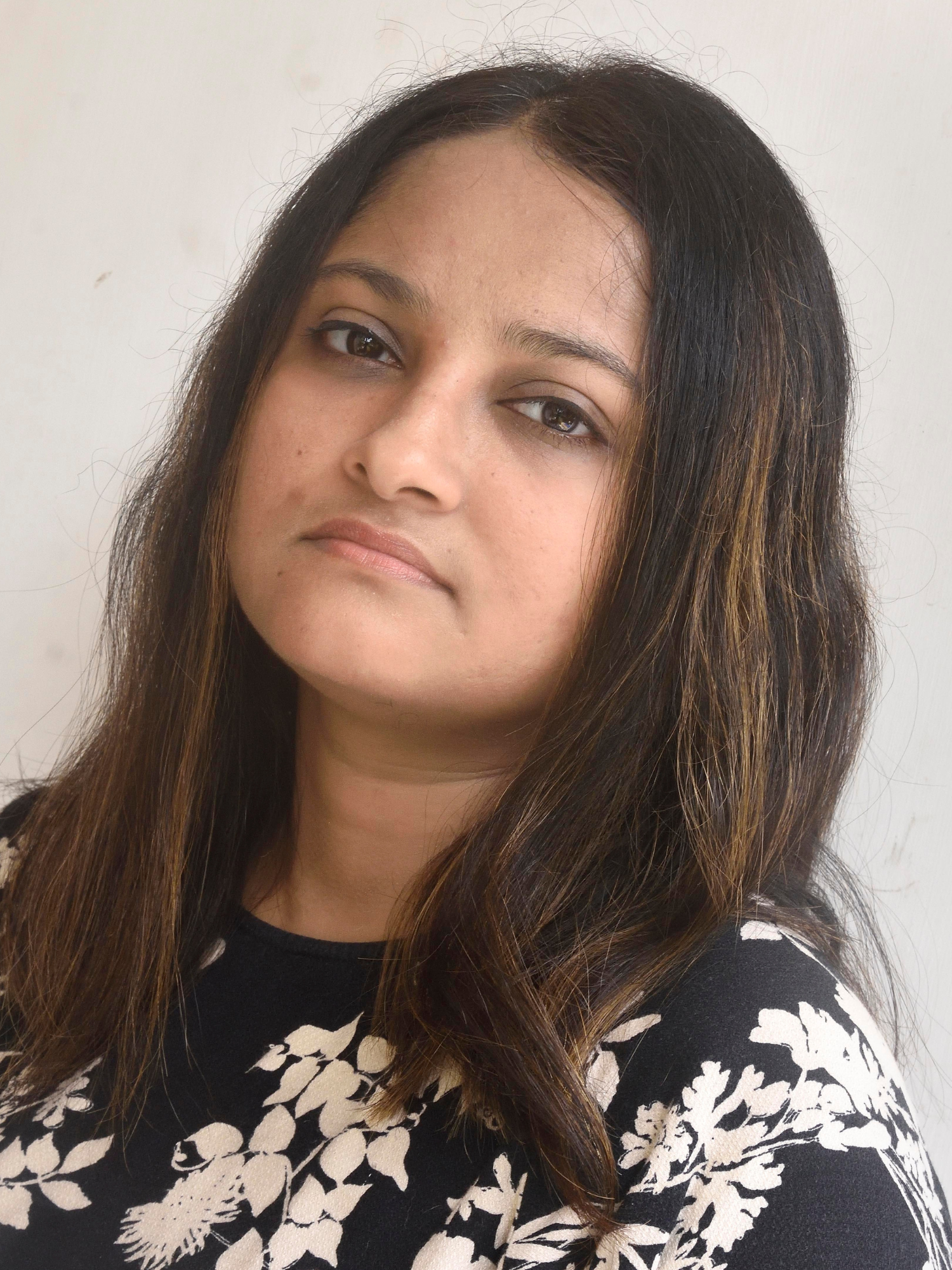
What was the initial idea or moment that sparked this piece?
This work is based on the numerous settlements of indigenous people around Chotonagpur plateau region bordering Indian states of Jharkhand, Orissa and West Bengal, known for its natural resources like ores and minerals. Since the colonial era, mines and industrial setups kept evicting those people belonging to the landscape. In recent years, the situation has accelerated more than ever.
Could you tell us more about Restricted areas?
This work was based on a village, which is part of southwestern region of West Bengal in Chota Nagpur plateau. One mining company has taken over more than half of the land in this village to excavate iron ore. Hence, the indigenous people have lost their agriculturally fertile lands, the resources from the adjacent forest and mountains gradually decreasing on which they are dependent for centuries.
What are the recurring themes across your work? Where do these come from?
I have been working on this project for more than a decade now. In those years, I have documented not just the transforming landscapes in that region, but also closely noticed the impact of implementing various mining and industrial policies. Or often, ill-implementation of the policies woefully disturbs the environment, thus the marginal class of people get deprived even their basic rights.
Is there a moment, person, or idea that inspired you in the past few weeks?
I recently read a beautiful thought: for a creative spirit, a compass is far more valuable than a map. I find that deeply inspiring. When I have a spark of an idea—a “true north” to guide me—I dive headfirst into the act of creation. I never possess a rigid map dictating exactly how a piece will take shape, but that surrender to the unknown makes the exploration truly exhilarating.
What does it mean to you to be shortlisted for this award and play a part in supporting its charitable aims?
It is indeed a great honour being shortlisted for The Sovereign Asian Art Prize. Not just for being recognised my work, being part of The Sovereign Asian Art Prize charity is truly an honour.
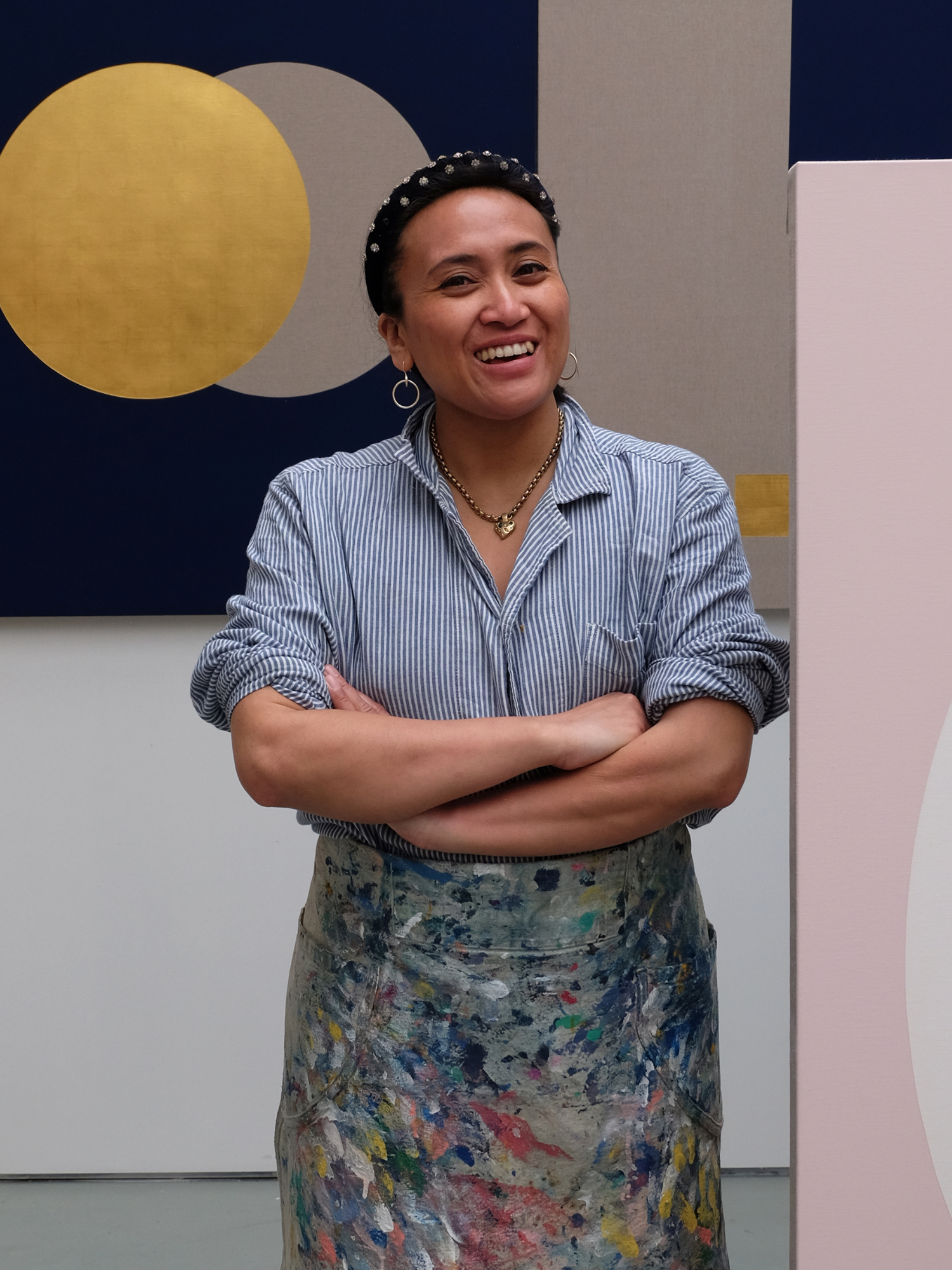
What was the initial idea or moment that sparked this piece?
I had previously been working with the colour blue and was drawn to its celestial qualities. In contrast, the colour red sparked my interest—particularly for its spiritual and earthy associations, as well as its prominent use in Balinese painting.
Could you tell us more about In My Memory for Life?
In My Memory for Life reflects how personal experiences and truths shape memory, which—although fluid—can sometimes take on a sense of permanence. The title is taken from a line in the letters of Raden Adjeng Kartini, a key figure in Indonesian history known for her writings on education, women’s rights, and cultural identity.
Are there any recurring themes across your work? Where do these come from?
Yes, there are recurring themes across my work, including abstraction, spirituality, balance, and the cyclical nature of life. These stem from personal reflection growing up in between Bali and Britain.
Finish the sentence: Art is…
Freedom… There is also a Balinese philosophy that I quite like, which suggests that art finds you—you cannot turn away from it, only accept it as it is.
Is there a moment, person, or idea that inspired you in the past few weeks?
In my studio in London, I swim in the nearby Hampstead Ponds throughout the year, including winter. Now that it’s spring, I feel even more connected to nature—the warmer temperature, the green leaves on the trees, swimming alongside ducklings – being in tune with mind and body and understanding that beyond our own individual lives, the cyclical nature of the universe continues.
What does it mean to you to be shortlisted for this award and play a part in supporting its charitable aims?
It feels amazing and a real honour to be part of it, and to be able to contribute to its wider charitable aims.
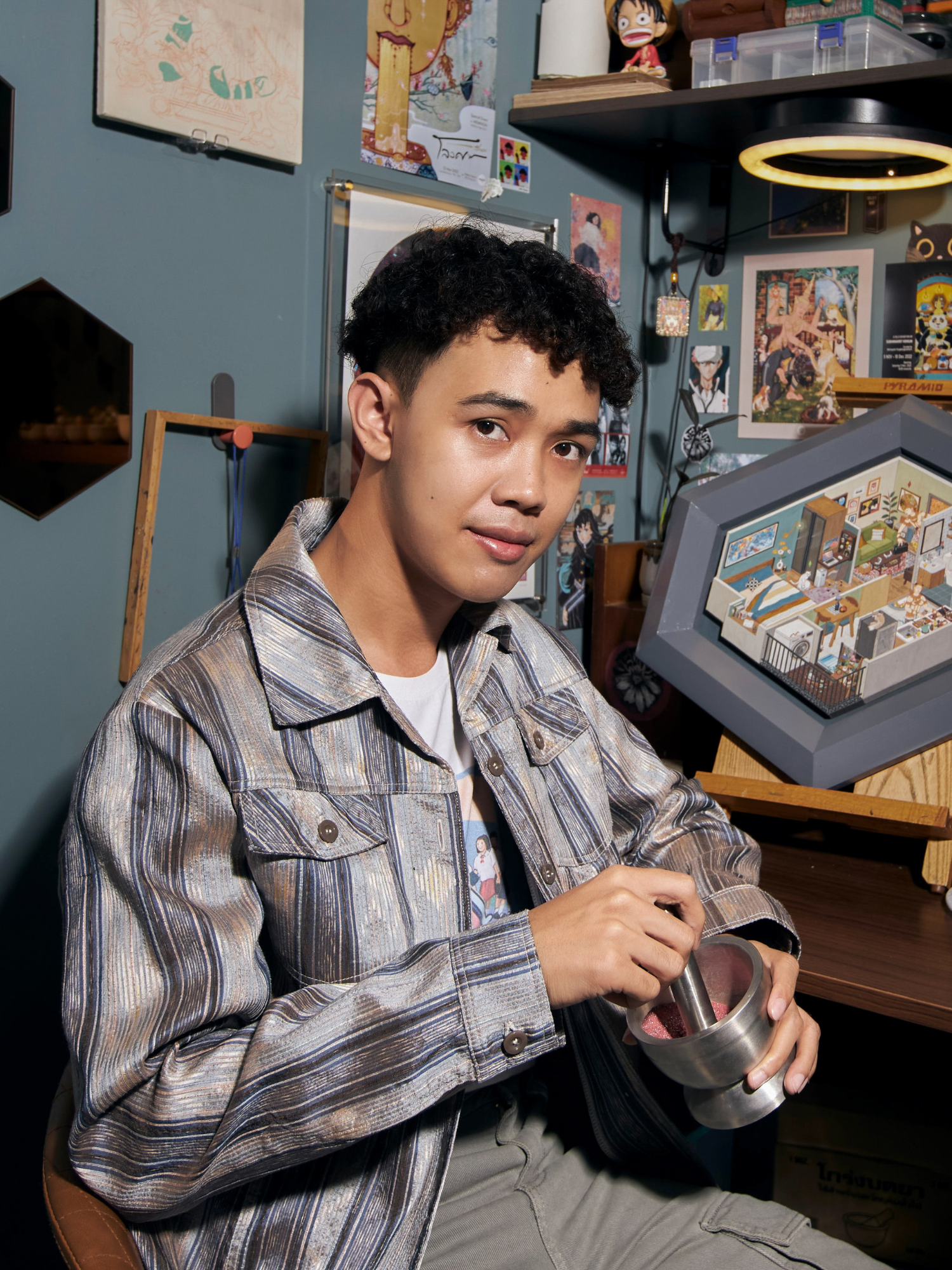
What was the initial idea or moment that sparked this piece?
The idea began in 2023, during Bangkok’s dry season. One morning, I looked out my window and found the city completely swallowed by dust—so dense that even the suspension bridge outside my condominium had disappeared. In that moment, I had a simple but unsettling thought: what if I collected this dust and turned it into paint?
I began gathering particles from the air and transforming them into pigment using traditional Thai techniques. The result was a grey tone that physically carries the weight of what I witnessed. Using this material, I started documenting Thailand’s recurring air pollution crisis—often from the perspective of an airplane window, where the boundary between sky and dust collapses.
With Divine Air Pollution Control, I expanded that perspective. This is no longer just Thailand’s problem—it belongs to all of us.
We are not just looking at the sky anymore. We are breathing the consequences of what we have done to it.
Could you tell us more about Divine Air Pollution Control?
At its core, the work explores the tension between technological progress and human belief.
The cityscape below is modeled on Hong Kong—a place known for both advanced infrastructure and deeply rooted spiritual practices. This coexistence reflects a larger contradiction: even as we develop increasingly sophisticated solutions, we continue to rely on faith when those solutions fail us.
In the sky, a mechanical elephant—ERA1—vacuums toxic air from the atmosphere. Its form draws from Erawan in Buddhist and Hindu mythology, combined with the logic of robot vacuum cleaners and Gundam mecha aesthetics. The name suggests both mythology and a new era—one in which humanity is finally forced to confront the scale of this crisis. Its immense presence also echoes “the elephant in the room”: a problem too large to ignore, yet still left unaddressed.
Piloting the machine is Grumpy Cat—an internet meme figure—a sardonic reflection of those tasked with solving the crisis, carrying out their role with the quiet exhaustion of someone who no longer believes it can be solved.
Like much of my work, the piece moves through subtle absurdity—because sometimes reality becomes most visible when it stops making sense.
What are the recurring themes across your work? Where do these come from?
A recurring theme in my work is the use of dark humor as a form of social commentary.
I am drawn to the contradictions within contemporary Thai society—where traditional belief systems, political instability, environmental crises, and globalized pop culture exist side by side in ways that often feel surreal. These tensions are not abstract—they are part of everyday life, yet rarely confronted directly.
Working in traditional Thai painting allows me to use a familiar visual language, while quietly destabilizing it from within. I often take small, overlooked frustrations—something personal, even trivial—and expand them to a scale that feels almost mythological.
The absurdity is not constructed. It is already embedded in reality.
I simply make it impossible to ignore.
Art is…
Art is a grain of dust that weighs a ton.
Is there a moment, person, or idea that inspired you in the past few weeks?
Recently, I’ve been navigating several disparate realities simultaneously.
On one screen, I follow the seasonal surge of wildfires and toxic smog—a crisis that peaks every April across the region. On another, I track the rapid, almost clinical development of AI and its growing role in military systems. Simultaneously, my social media feed is filled with TikToks of people making wishes at Che Kung Temple in Hong Kong—a place I am preparing to visit—while BTS and BLACKPINK provide a constant pop soundtrack in the background.
This might appear chaotic, but to me, it feels remarkably precise. The ultra-modern and the deeply traditional are not in conflict; they are happening at once, constantly bleeding into and reshaping each other. That collision without resolution—that specific state of dissonance—is exactly where my work exists.
What does it mean to you to be shortlisted for this award and play a part in supporting its charitable aims?
Being shortlisted already feels beyond anything I ever dared to dream. My number one dream has always been simple: to see my paintings hanging in a world-class gallery or museum, where strangers stop, look, and begin a conversation they might not have had otherwise. That moment—when art creates a dialogue between people who have never met—is everything to me.
I come from a background in traditional Thai painting, a form often seen as distant or inaccessible. But I have always believed that art has no boundaries—of style, language, or belief. Being shortlisted does not just recognize my work; it affirms that this belief still holds.
For the past three years, I have been using my work to speak about air pollution. To see this conversation move beyond Thailand, into a wider regional and global context, is deeply meaningful.
Because in the end, this was never just a local crisis.
Air is the most invisible thing we depend on—and the easiest thing to take for granted.
Until it is no longer there.
What was the initial idea or moment that sparked this piece?
As artists, we are part of an ongoing initiative in our village to regenerate forests and explore sustainable ways of living in balance with the rapid development around our Warli community. Large-scale infrastructural development projects are continuously cutting through our forests and impacting our ancestral land, rivers and ocean, as a community, we are trying to protect and preserve our way of life that has existed for thousands of years.
Through our paintings, we have been speaking about our forests and native land using our ancient art as a language. As nature worshippers, we believe we are not separate from nature—we are nature itself. The forest is our family. Today, as we witness its destruction, it feels as if the forest is watching us, trying to communicate with us. These moments deeply inspire our work.
Could you tell us more about The Eyes of the Forest?
The Eyes of the Forest grows from this lived experience. As a Warli community, we coexist with the forest and believe that energies live all around us. There is also a belief in intangible, parallel worlds that exist alongside us we are all connected.
The trees in this painting are not imagined; they are drawn from real flora and fauna of our native land. They form a visual vocabulary of the forest. The placement of each element—trees, creatures, people—is carefully composed, reflecting how nature presents itself geographically and spiritually.
The eyes symbolize awareness and presence—the forest observing us, reminding us of the balance we are part of.
What are the recurring themes across your work? Where do these come from?
Our themes come from deep observation and lived experience within our own tribal community. We grew up speaking the Warli language, which has no written script. For us, painting becomes a form of writing—a way to record, narrate, and communicate.
We use this art as a vocabulary to speak for the forest, for people, and for the world. Recurring themes include land, farming practices, ecological balance, shamanic beliefs, and community life. At the same time, the changing world is bringing new perspectives into this centuries-old practice, allowing it to evolve while staying rooted.
Art is…
Art is a language that connects the tangible and the intangible.
Is there a moment, person, or idea that inspired you in the past few weeks?
Living in a small village, we find our strongest inspiration within our own Indigenous community. The people around us, their knowledge, and their ways of living continue to guide us.
Our collective team, who share a vision of cultural preservation and resistance against deforestation, inspires us deeply. Working within the community and for the community gives purpose to our practice and constantly shapes our thinking.
What does it mean to you to be shortlisted for this award and play a part in supporting its charitable aims?
It is truly an honour. Coming from a small Indigenous community, this recognition gives us a voice to share our thoughts and concerns with the world.
As a new generation from an oral tradition, “It also allows us to stand for our community, our land, and our knowledge systems on a larger platform, while sharing this knowledge and wisdom with the world.”
What was the initial idea or moment that sparked this piece?
I wanted to honour the everyday gestures of care that became so visible during the COVID-19 pandemic. So many unseen heroes worked tirelessly to keep everyone safe—often quietly, without recognition.
I was drawn to the idea of transforming these acts of care into deity figures, protective beings that watch over us.
What are the recurring themes across your work? Where do these come from?
I’m always drawn to making work that is accessible, positive, and beautiful. These three elements run through everything I do. They come from my desire to connect with people in a direct and open way. I want the work to feel welcoming at first, and then slowly reveal deeper emotions.
Art is…
Art is a way to hold joy and complexity at the same time.
Is there a moment, person, or idea that inspired you in the past few weeks?
Walking into Art Central Hong Kong and Art Basel Hong Kong.
The energy, the scale, and seeing so many different voices in one place was really inspiring.
What does it mean to you to be shortlisted for this award and play a part in supporting its charitable aims?
It means a lot to be recognised in such a highly competitive and international context. Opportunities like this help bring visibility to different voices and practices. I also value the charitable aspect, as it reminds me that art can reach beyond the gallery and contribute to something meaningful in the wider community.
What was the initial idea or moment that sparked this piece?
The idea of creating this piece of work originated from my yearning for vigorous vitality and my exploration of inner drive, as well as my respect for nature and all living beings.
Could you tell us more about Living Organism?
This work was created after my exploration of the Galapagos Islands along the equator of the Pacific Ocean in South America. The diverse climate and volcanic landforms of the archipelago, as well as its unique natural environment, allow animals and plants with different living habits to coexist and thrive on this land. There, rare flowers and exotic plants abound, and strange birds and beasts gather, earning it the title of ‘A living museum of biological evolution’ and ‘the birthplace of the earth’. It was also the inspiration for Darwin’s writing of ‘On the Origin of Species’. The wild growth of the islands’ everywhere is full of vitality, leaving me with an indelible and profound impression, and prompting a strong desire to express myself, which eventually led to the creation of the series of works on life. ‘Living Organism’ is one of them. The shapes and color blocks in the painting resemble the flora and fauna of the sea and land, as well as the tissues of the human body, jointly constructing a fantastical and beautiful scene through the language of abstract expressionism.
What are the recurring themes across your work? Where do these come from?
Now and for a long period to come, my creations are centered around the two themes of nature and life. Over the past three years, I have been creating around the world in a traveling manner, inspiration from nature and diverse human environments. The way of traveling has allowed me to converse with ‘myself’ within the context of humanity and nature. The longer the journey, the more I feel the insignificance of humanity, and the humility makes me observe and comprehend this world more attentively.
Art is…
Art is freedom.
Is there a moment, person, or idea that inspired you in the past few weeks?
Last month, I went to Turkey and hiked in the Cappadocia Valley, which is known as ‘the place on Earth most similar to the moon’. The sedimentary rocks and volcanic lava underwent weathering, forming cone-shaped, mushroom-shaped, and spire-shaped rock formations. The locals call them fairies’ chimneys. The caves, monasteries and underground cities dug out by humans on these soft rocks amazed my eyes and senses. Recently, I have also been creating abstract painting works inspired by this magical landscape.
What does it mean to you to be shortlisted for this award and play a part in supporting its charitable aims?
The significance of participating in this activity for me is that my artwork and time can be transformed into more valuable traces of life. It would be an even greater honor to help more people through the art.
What was the initial idea or moment that sparked this piece?
I have always found a deep sense of peace in hiking and being immersed in the forest. Beneath the Gold was inspired by my curiosity and close observation of the forest. I became fascinated by how trees interact and how the entire ecosystem functions. Beneath a surface that seems perfectly still, a subterranean network of mycelium reaches out to relay information and transport nutrients, weaving the forest into a symbiotic reality of interdependence. This made me realize that a similar, subtle symbiosis exists between people and architecture. I began to see buildings not as cold structures, but as living entities. The people within them act like mycelium, connecting separate spaces through their movement and energy to form an organic urban network. The city lives through its people, just as the people are shaped by the city’s rhythm, with every structure and cultural layer constantly evolving through our shared life and interaction.
Could you tell us more about Beneath the Gold?
In this work, I use the image of a tree to represent buildings and people, with roots extending like patterns of memory seeping into the layers of the earth. These roots symbolize connections between individuals and communities, and the continuous flow of energy between life and space. Beneath the Gold takes the shophouses of Kuala Lumpur as its starting point, sites that carry memories of daily life and labor alongside the city’s transformation over time. I explore tensions between preservation and development, integration and division, transforming the horizontally extended form of shophouses into vertically growing structures to reflect how community spaces are gradually replaced by capital-driven development.
I transform the wrinkles on local residents’ faces into tree roots; these wrinkles carry traces of time and express a deep connection with the land, buildings, and community. As the city expands outward, the wrinkles on our faces grow with time. These extending and aging patterns form layers of memory, resonating across both land and body.
The upper half of the work is rendered through silkscreen, while the lower half is created with embroidery. The dividing line comes from a 1920 postcard depicting the Malay Mosque in Kuala Lumpur, symbolising the intersection of tradition and modernity, print and handcraft. Gold thread transforms cracks into traces of life, revealing tensions between hope and capital, connection and division. Each passage of needle and thread becomes a struggle, seeking balance between pull and resistance. Ultimately, the work speaks of the flow of time and the resonance of life, as we continue to live within the layered fabric of the city.
What are the recurring themes across your work? Where do these come from?
A recurring theme in my work is the mutual pull between individuals. I hold a contradictory stance toward relationships, balancing a deep longing for connection with a persistent resistance to intimacy. For me, creating art is a form of exploration and experimentation that provides a safe and tangible way to express this desire and conflict. Through my work, I present the interaction, exchange, and fluid connections between people, reflecting on our place within society, space, and time. Each piece is an observation and a meditation on these delicate dynamics, serving as a bridge for my own interaction with the viewer and the world.
Art is…
Art is a bridge that transforms distilled fragments of reality and imagination into stories where we understand ourselves and the world, and in them, we find our connection to one another.
Is there a moment, person, or idea that inspired you in the past few weeks?
Over the past few weeks, I’ve found myself returning to the ideas in the book Humankind by Rutger Bregman, which I read last year. The concept has stayed with me, especially his belief that the best way to confront hatred, injustice, and prejudice is through contact. We often generalize about strangers because we do not truly know them, and it takes time to become familiar with one another. To believe that humans are naturally curious is not naïve or sentimental. On the contrary, believing in peace and forgiveness requires courage and feels deeply practical. In a time that feels increasingly chaotic and divided, the idea that people are fundamentally good has been comforting. It has led me to want to create a work about contact, about connection, and about the possibility of understanding.
What does it mean to you to be shortlisted for this award and play a part in supporting its charitable aims?
To be shortlisted for this award is an honour and a meaningful moment of reflection. It recognises not only my work, but also the people and the shared moments and connections behind it. Playing a part in supporting its charitable aims is especially meaningful to me. I believe art has the ability to bring people into closer contact, to open conversations, and to create spaces of understanding. Being part of something that extends beyond the artwork itself and contributes to a wider social good feel deeply aligned with why I make work.
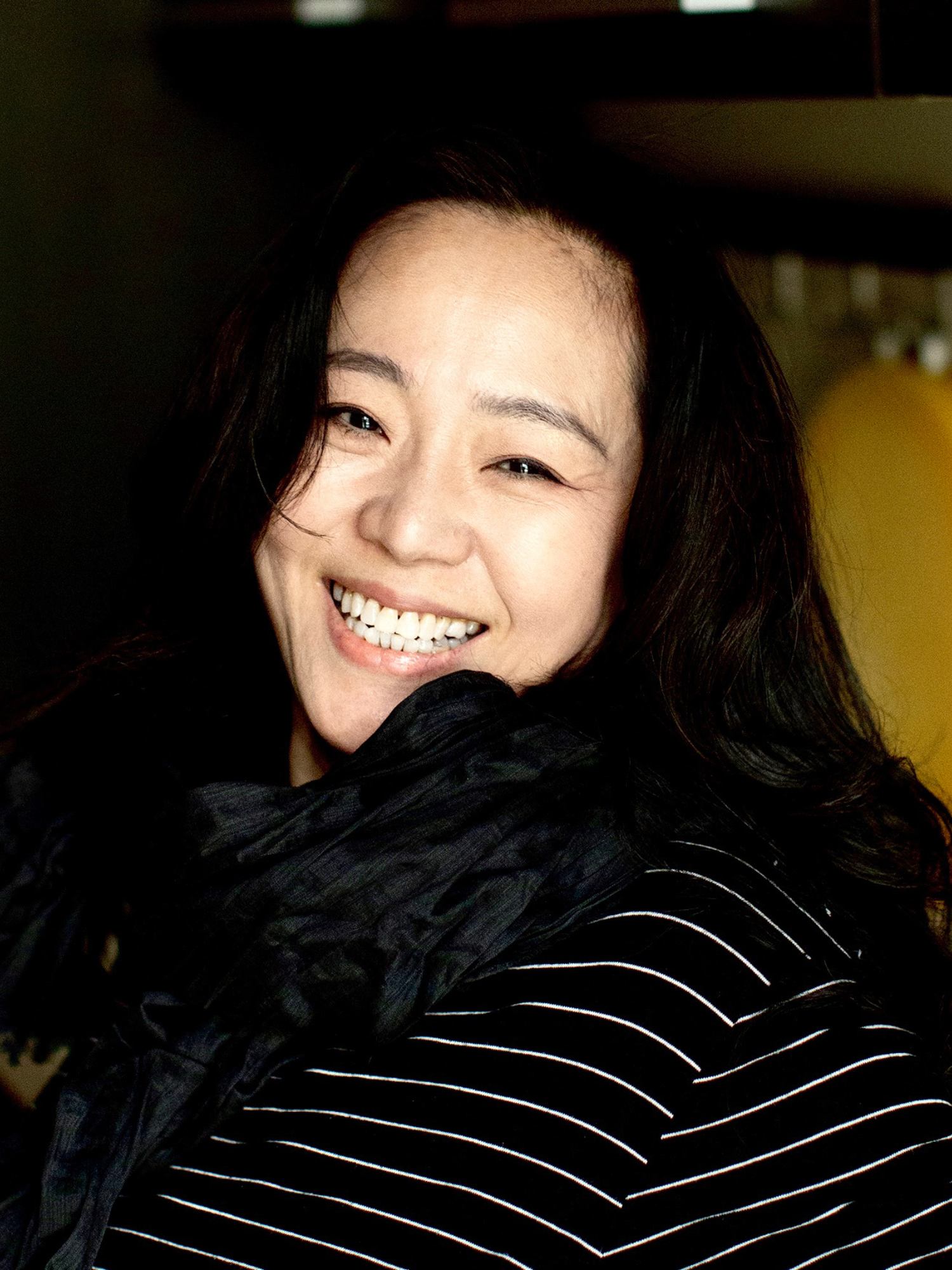
What was the initial idea or moment that sparked this piece?
I occasionally take the subway or high-speed train. Every time I pass through the ticket gates pressed tight against the crowd, I feel deeply unsettled. Looking back at the people lined up along the long escalator, they look like one enormous centipede on a conveyor belt.
Could you tell us more about Beneath the Sky《苍穹之下》?
That feeling of being stuck on the escalator — carried up and up by the flow of people, unable to move — became the starting point of this work.
One day, I came across a video of a morning run at a middle school known for its extremely high university entrance rates. The students were arranged in a perfectly square formation, packed together with almost no space between them. To keep this block — solid as tofu — from falling apart, every student had to move in complete unison, knees pressed against knees, squirming forward together as one body.
That moment struck me. It connected to everything I had been feeling, and this work was born.
Through an assembly of gauze, screws, and figurines, the piece expresses the passive, silent state of each wordless individual beneath the great wheel of history. Beneath the Sky is not only a portrait of the mind swept along by invisible forces — it is an ultimate questioning of the universal fate of humankind.
What are the recurring themes across your work? Where do these come from?
Yes. I am drawn to human suffering. It comes from life.
Art is…
Art is a path to the temple.
Is there a moment, person, or idea that inspired you in the past few weeks?
At the end of March, I visited Yangzhou. At Slender West Lake there is an arched bridge, crowded with people standing on it. I thought — take away the bridge, and what remains is a bridge made entirely of people. I find that interesting, though I haven’t yet worked out how to turn it into something.
What does it mean to you to be shortlisted for this award and play a part in supporting its charitable aims?
Being shortlisted is a form of recognition. To support charitable causes and help more people, that is my life’s ideal goal.